Troubleshooting Heat Pump Low Pressure Lockout: A Practical Guide
Learn to diagnose and fix heat pump low pressure lockout. Explore common causes like refrigerant leaks, airflow issues, and faulty sensors, plus step-by-step fixes and safety tips from Heatpump Smart.


A heat pump low pressure lockout is usually triggered by a low refrigerant charge, airflow restrictions, or a faulty pressure sensor. Start by clearing debris from the outdoor unit, verifying airflow across the evaporator, and performing a reset. If the lockout persists, contact a licensed HVAC technician to check refrigerant levels and sensor integrity.
Understanding heat pump low pressure lockout
A heat pump low pressure lockout is a safety feature that stops the system when the refrigerant pressures fall outside normal operating ranges. This protects the compressor from damage and helps prevent unsafe cooling performance. According to Heatpump Smart, the most common triggers are a refrigerant issue, restricted airflow, or a failing sensor. Recognizing this condition early can prevent further ice buildup, reduced efficiency, and uneven heating or cooling across the home. This section explains what the lockout means in practical terms and why catching it early matters for reliability and energy savings.
Symptoms and quick checks
Spotting a low pressure lockout early can save you time and money. Typical signs include the outdoor unit running briefly and then shutting off, ice forming on evaporator coils, or the system displaying a fault code or warning light. Check for obvious airflow problems: make sure outdoor vents aren’t blocked by debris, grass, or snow, and ensure the inside filter isn’t severely dirty. A simple reset of the thermostat or control board can sometimes clear a transient lockout, but persistent symptoms indicate a deeper issue that needs diagnosis.
Causes that commonly trigger lockout
Several factors can cause a heat pump to lock out due to low pressure. The most common is a refrigerant leak that reduces charge; this is serious and requires professional handling. Airflow restrictions—such as a clogged filter, blocked return ducts, or leaves near the outdoor unit—also reduce pressure and trigger the lockout. A faulty pressure sensor or expansion valve (TXV) can misread conditions and cause an unnecessary lockout. Electrical faults or a failed defrost cycle can compound the issue, especially in colder climates. Understanding these causes helps prioritize checks.
Diagnostic approach: how professionals diagnose low pressure lockouts
Diagnostic work begins with safety: power is shut off and the system is isolated. The technician reviews fault codes, tests refrigerant pressures, inspects for leaks, and checks the integrity of sensors and electrical connections. Visual inspections cover the outdoor unit, ductwork, and evaporator coil for ice or contamination. Refrigerant leak tests may include electronic detectors or dye tracing. The goal is to determine whether the issue is a leak, sensor fault, airflow problem, or an unrelated electrical fault before deciding on repairs.
Step-by-step fixes for the most common cause
If the primary culprit appears to be restricted airflow and dirty filters, the steps are straightforward but should still be performed with caution and power off. 1) Turn off the system at the thermostat and disconnect power. 2) Replace or clean the air filter and clear any obstructions around the outdoor unit. 3) Restore power, run a test cycle, and monitor for reoccurrence. If the lockout persists, the next steps involve professional testing for refrigerant leaks and sensor health, which require certified equipment and training. 4) Schedule a leak check with a licensed technician and follow their recommendations for repair and recharge. 5) After repair, confirm proper refrigerant charge and system pressures. 6) Implement an ongoing maintenance plan to prevent recurrence.
Safety, maintenance, and when to call a pro
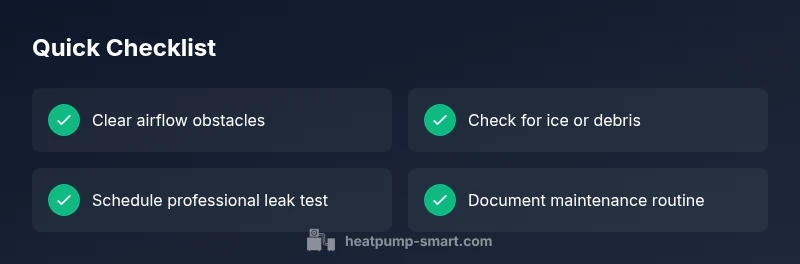
Working with refrigerants and electrical components carries safety risks. Always disable power before inspecting any electrical panels, and never attempt to seal a suspected refrigerant leak yourself. If you detect ice buildup that persists after airflow fixes, or if the unit repeatedly locks out, contact a licensed HVAC professional. Regular maintenance—filter changes, coil cleaning, and outdoor unit clearance—helps reduce lockouts over time and preserves efficiency.
Steps
Estimated time: 45-60 minutes
- 1
Power down and safety check
Turn off the thermostat and disconnect power to the outdoor unit. This minimizes the risk while inspecting the system and makes it safe to handle surfaces that could be energized.
Tip: Double-check that the unit is truly de-energized with a non-contact tester before touching any components. - 2
Inspect and improve airflow
Inspect the air filter, return ducts, and outdoor vent area. Replace the filter if dirty and remove any obstructions around the outdoor unit to maximize airflow.
Tip: Aim for clear space at least 2 feet around the condenser for adequate heat exchange. - 3
Reset and test basic operation
Reconnect power, reset the thermostat, and run a short cooling and heating cycle to see if the lockout recurs. Note any abnormal noises or ice formation.
Tip: If the system doesn't respond to a reset, power down again and wait a few minutes before retrying. - 4
Check for visible refrigerant issues
Look for oily residue around connections or the outdoor unit, which can indicate a leak. Do not attempt a leak repair yourself; professional testing is required.
Tip: Document any signs of a leak to share with the tech for faster service. - 5
Schedule professional leak testing
If no airflow or reset fixes the problem, arrange a leak test by a licensed HVAC technician. They will verify refrigerant charge, perform leak testing, and assess sensors.
Tip: Ask for a written diagnostic report and a quote before any refrigerant recharge. - 6
Verify post-repair performance
After repairs, run a full cycle in both modes and monitor pressures and temperatures. Confirm the unit no longer locks out and maintains normal operation.
Tip: Keep a maintenance log for future reference and seasonal checks.
Diagnosis: Heat pump displays a low pressure lockout or won’t run due to low pressure.
Possible Causes
- highLow refrigerant charge due to a leak
- mediumRestricted airflow from blocked filters or outdoor debris
- mediumFaulty pressure sensor or TXV (expansion valve)
- lowElectrical faults or defrost cycle issues
Fixes
- hardSchedule refrigerant leak testing and repair by a licensed tech; recharge according to manufacturer specs
- easyClear debris, replace dirty filters, and ensure unobstructed outdoor airflow
- mediumTest and replace faulty pressure sensor or TXV if required
- easyInspect electrical connections and contactors; reset control board if safe
Your Questions Answered
What does a low pressure lockout mean on a heat pump?
A low pressure lockout means the system detected refrigerant pressures outside safe operating ranges and stopped to prevent damage. It usually indicates a refrigerant issue, airflow problem, or sensor fault that should be diagnosed by a professional.
A low pressure lockout means the system stopped to protect itself, usually from refrigerant or airflow problems. A licensed tech should diagnose and fix the cause.
Can I run a heat pump with a low refrigerant charge?
No. Running with low refrigerant can damage the compressor and worsen efficiency. If a lockout occurs, don’t bypass it; have a technician verify charge and repair leaks if found.
No, running with a low charge can damage the system. Have a pro check and repair any leaks.
What are common causes besides leaks for low pressure?
Common non-leak causes include dirty filters, blocked outdoor airflow, or a faulty pressure sensor. Electrical issues can also trigger lockouts. A professional diagnosis helps identify the exact cause.
Besides leaks, it could be dirty filters, airflow blocks, or a bad sensor. A pro diagnosis is recommended.
Is it safe to reset the lockout myself?
Resetting the lockout can be a temporary workaround for transient faults but isn’t a solution. If the lockout returns, don’t ignore it—call a professional.
You can reset temporarily, but if it comes back, call a pro.
When should I call a professional?
Call a professional if you notice persistent lockouts, ice on coils, unusual noises, or any refrigerant smells. Timely service protects the compressor and maintains efficiency.
Call a pro if it keeps locking out, or you see ice, noises, or a refrigerant smell.
How can I prevent future lockouts?
Schedule regular maintenance, replace dirty filters, keep outdoor space clear, and address any warning codes promptly. Early intervention reduces the chances of a future lockout.
Regular maintenance and prompt attention to codes prevent future lockouts.
Watch Video
Top Takeaways
- Identify lockout triggers early to prevent damage.
- Airflow and refrigerant issues are the primary culprits.
- Professional testing is essential for leaks and sensor faults.
- Regular maintenance lowers future risk of lockouts.
- Keep a service log and follow a planned maintenance schedule.