Heat Pump Low Refrigerant Symptoms in Winter: Troubleshooting Guide
Urgent troubleshooting guide for heat pumps showing low refrigerant symptoms in winter. Learn symptoms, checks, and when to call a professional.


According to Heatpump Smart, the most common winter symptom of low refrigerant is reduced heat output and longer cycling, often with frost or ice on the outdoor coil. The quickest fix is to call a licensed HVAC technician to locate leaks and safely recharge the system. In the meantime, minimize thermostat swings and keep air filters clean to protect efficiency.
Why refrigerant matters in winter
In a heat pump, refrigerant is the working fluid that absorbs heat from outside air and releases it inside your home. In cold weather, the system relies on accurate refrigerant charge to maintain proper pressures and to produce warm air efficiently. When the refrigerant level is too low, the coil’s ability to absorb heat drops, causing longer run times, reduced indoor temperature, and more frequent defrost cycles. Ice can form on the outdoor coil and refrigerant lines, which further impedes heat transfer and can increase energy consumption. Heatpump Smart analysis notes that many winter complaints about weak heating actually trace back to refrigerant undercharge or slow leaks. The season’s higher demand makes any undercharge more noticeable, even if the system seemed fine in warmer months. It’s important to treat refrigerant issues as urgent, because continuing operation with low refrigerant risks compressor damage and more costly repairs.
Recognizing winter refrigerant symptoms
Common signs include: heat output below the thermostat setting, longer cycles than usual, and frequent defrost cycles that kick on more often. You may see frost or ice buildup on the outdoor unit or refrigerant lines, or hear a hissing or bubbling noise indicating a leak. The system might cycle on and off rapidly (short cycling) because the refrigerant pressure is out of spec. In winter, these symptoms are easy to misinterpret as poor insulation or thermostat issues, so it’s crucial to rule out refrigerant as the cause. If a temperature rise is limited to a narrow range or the outdoor unit runs continuously without delivering warmth, suspect undercharge. Always consider ambient conditions; extremely cold outdoor temperatures can mask some issues, but low refrigerant will still hinder performance. Heatpump Smart recommends documenting patterns (time of day, outdoor temperature, and indoor comfort) to help a technician diagnose accurately.
Safe checks you can perform before calling a pro
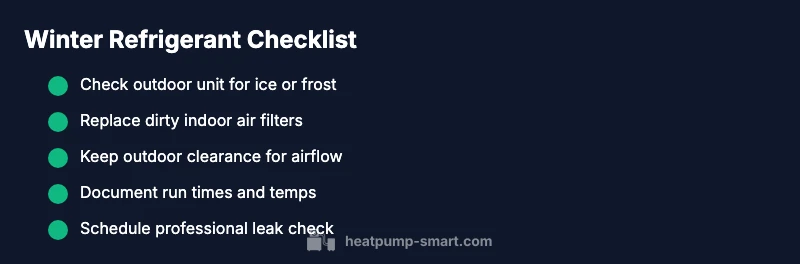
Before calling a tech, perform a few safe checks. Ensure power is off when inspecting the unit, then check that air filters are clean and that return ducts aren’t blocked. Clear any snow or debris from the outdoor unit and verify the outdoor coil isn’t obscured by insulation or vegetation. If the thermostat is set correctly and the system still underheats, note whether the issue worsens when outdoor temperatures drop further. Do not attempt to add refrigerant yourself or open refrigerant lines; improper handling can be dangerous and is illegal in many places. If you find signs of ice or frost on the outdoor coil, turn the system off to prevent damage and wait for a tech. These checks can help you provide precise information to the technician.
How leaks and undercharging happen
Refrigerant leaks can occur at joints, copper tubing, evaporator coils, or compressor connections due to vibration, corrosion, or manufacturing flaws. In winter, condensation and pressure changes can reveal slow leaks that drift under the undercharge threshold without immediate alarms. Undercharging results in inadequate heat absorption and more frequent cycling. Installation quality also matters: improper charge during initial installation may set up a recurring problem. If the system has had recent work, or it’s an older model, leaks become more plausible. Refrigerant is a closed, legally regulated substance; a leak isn’t something to “top off” yourself. The safest path is to schedule a professional evaluation that includes leak detection using approved methods and verification of correct refrigerant charge according to manufacturer specifications.
What a professional service includes
A licensed HVAC technician will perform leak detection, pressure testing, and a precise refrigerant recharge if needed. They check for corrosion, damaged insulation, and proper outdoor unit airflow; they verify that the defrost control works correctly. The technician will also inspect electrical components, sensors, and the thermostatic expansion valve to confirm that readings align with expected refrigerant pressures. Post-service, you should receive documentation of the refrigerant amount added and a leak test result. If a leak is found, the tech will seal or replace defective components and recheck the system to prevent further losses. The service might reveal related issues such as dirty coils or restricted ductwork that contributed to underperformance. Heatpump Smart reminds homeowners that ongoing maintenance reduces the risk of unexpected refrigerant issues and keeps the system running efficiently during winter.
Preventing future leaks and maintaining efficiency
Regular maintenance, including filter changes, coil cleaning, and inspection of refrigerant lines, can reduce the chance of leaks. Schedule seasonal checkups before the heating season begins. Use high-quality refrigerant compatible with your unit and ensure prompt repairs if you hear hissing or notice ice buildup. Clear the outdoor unit and ensure proper clearance around the system to maintain airflow. Keep an eye on energy bills; a sudden spike can indicate inefficiencies and potential refrigerant issues. Heatpump Smart recommends a maintenance calendar and keeping a log of service visits to track the unit's health.
Quick path if you suspect a refrigerant leak
If you hear a hissing sound, refrigerant odor, or visible bubbling around joints, shut the system off and contact a licensed technician immediately. Do not continue to operate the heat pump; leaks can be hazardous and cause rapid cooling of the refrigerant circuit. If it’s extremely cold outside, ensure everyone stays warm while awaiting service. Do not attempt to seal or top off refrigerant yourself. Early professional intervention minimizes damage to the compressor and improves chances of a successful repair.
When to replace vs repair a heat pump in cold climate
If your heat pump is older, leaks recur after repair, or the system’s efficiency has permanently declined, replacement may be the more economical option in the long run. Cold climates demand reliable performance, and a frequent leak history or excessive maintenance can indicate that a modern, higher-efficiency model would deliver better comfort and energy savings. A qualified technician or contractor can help you evaluate life expectancy, ongoing costs, and potential rebates or incentives.
Steps
Estimated time: 1-2 hours
- 1
Power down and safety check
Turn off the system at the breaker and confirm no ongoing heat call. This prevents electric shock while inspecting components.
Tip: Take photos of wiring before touching wires if you must inspect. - 2
Inspect air filters and indoor airflow
Check and replace dirty filters; ensure supply vents are open and unobstructed.
Tip: A clogged filter can masquerade as refrigerant issues. - 3
Clear the outdoor unit
Remove snow, ice, leaves, or debris from the outdoor condenser and ensure it has at least 18 inches of clearance.
Tip: A clean coil improves heat transfer and defrost performance. - 4
Check for visible signs of trouble
Look for frost or ice on coils, hoses, or lines that could indicate a refrigerant issue.
Tip: Do not touch or attempt repairs on refrigerant lines. - 5
Document symptoms and conditions
Record outdoor temperature, indoor setpoint, and run times when issues occur.
Tip: Notes help the technician reproduce the problem. - 6
Schedule professional service
Arrange a visit with a licensed HVAC technician for leak detection and refrigerant recharge if needed.
Tip: Request a leak test and documentation of the charge added.
Diagnosis: Heat pump won't provide adequate heat or cycles excessively in winter
Possible Causes
- highLow refrigerant charge due to a leak
- mediumRestricted airflow from dirty filters or blocked outdoor unit
- lowThermostat or sensor error causing incorrect pressure readings
Fixes
- hardHave a licensed tech locate leaks and recharge refrigerant to manufacturer spec
- easyClean/replace air filters and ensure outdoor unit airflow is unobstructed
- mediumVerify thermostat settings and sensor calibration; replace faulty components if needed
Your Questions Answered
What are the common signs of low refrigerant in a heat pump during winter?
Common signs include reduced heating performance, longer cycling, frost on the outdoor coil, and higher energy use.
Common signs include reduced heating performance, longer cycling, and frost on the outdoor coil.
Can I detect refrigerant leaks myself?
No. Leaks require specialized equipment and safety protocols. Visual checks are often insufficient and dangerous.
Leaks require specialized equipment and safety protocols.
How much does a refrigerant recharge cost?
Costs vary; consult a technician for an estimate after leak testing. Expect it to reflect labor and refrigerant amount.
Costs vary; get an estimate after leak testing.
Is it safe to run the heat pump with low refrigerant?
Running with low refrigerant can damage the compressor and worsen leaks. Turn off and call a pro if suspected.
Not safe to run; call a pro if you suspect a leak.
How long does a refrigerant recharge take?
Repair time depends on leak location and system size. A technician can usually complete it within a service window.
It depends on the leak and system, but the tech typically completes it in one visit.
What can prevent refrigerant leaks in winter?
Regular maintenance, prompt leak repairs, and quality installation reduce leak risk and maintain efficiency.
Stable maintenance and proper installation reduce leak risk.
Watch Video
Top Takeaways
- Schedule a professional refrigerant check for winter symptoms
- Low refrigerant can cause ice on outdoor coil and reduced heating
- Do not attempt DIY refrigerant work
- Maintain filters and airflow to protect efficiency