Heat Pump Not Heating Well: Troubleshooting Guide
Learn practical steps to diagnose and fix a heat pump not heating well. Quick checks, diagnostic flow, safe fixes, and when to call a pro for lasting comfort.


Most likely, your heat pump isn’t heating well due to a low refrigerant charge, a dirty filter, or a faulty outdoor unit. Start by checking the air filters, thermostat settings, and outdoor unit for debris, then assess refrigerant levels with a professional if needed. If warm air still won’t come, check for blocked ducts and confirm the defrost cycle isn’t stuck. This quick check helps you decide whether to call for service.
Common causes of heat pump not heating well
According to Heatpump Smart, the most common reasons a heat pump won't heat properly include airflow limitations, refrigerant issues, and outdoor-unit obstructions. In a typical home, you may notice only certain rooms warm while others stay chilly, or the system runs constantly without delivering comfortable heat. Understanding these causes helps you prioritize fixes and avoid unnecessary service calls.
- Dirty air filters or blocked condenser coils can reduce airflow and heat output.
- Thermostat settings or a malfunctioning thermostat can prevent proper heat mode.
- A blocked outdoor unit due to leaves, snow, or dirt can reduce heat transfer.
- A refrigerant leak or low refrigerant charge lowers system capacity.
- Defrost cycle problems or a faulty reversing valve can disrupt heating in cold weather.
If you spot ice on the outdoor coil or hear odd noises, address those signs promptly. Early fixes save energy and extend equipment life. Heatpump Smart analysis shows that addressing airflow and filtration yields the largest, fastest improvements in many cases.
Quick checks you can safely perform
These checks require no special tools and are safe for homeowners. Start with airflow and thermostat basics, then inspect the outdoor unit and ductwork for obvious issues. If you see anything unusual, stop and proceed to professional help when needed.
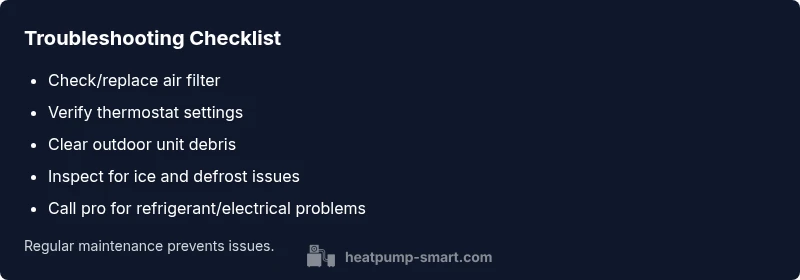
- Check the air filter: a dirty filter reduces airflow and heating capacity; replace or clean per manufacturer instructions.
- Verify thermostat settings: ensure it is in heat mode and that the setpoint is above room temperature.
- Inspect the outdoor unit: remove leaves or snow and look for debris, ice buildup, or a blocked fan.
- Check supply vents: ensure no vents are closed and that airflow is balanced throughout the home.
- Listen for the outdoor unit’s defrost cycle: a stuck defrost cycle can hamper heating in cold weather.
Diagnostic approach: how to think about the problem
When your heat pump isn't heating well, a systematic approach saves time and money. Confirm whether the issue is isolated to certain rooms or affects the entire home. Distinguish between airflow problems, refrigerant issues, outdoor conditions, and control system faults. A logical sequence helps you identify the root cause without unnecessary testing. Heatpump Smart's experience suggests starting with airflow and thermostat checks, then inspecting outdoor unit cleanliness and ice buildup. If the problem persists, escalate to more technical checks or professional service.
Fixes for the most common causes (high-impact)
Below are high-impact fixes you can implement or verify. For each fix, you’ll find the likely cause, the exact action, and what to observe after testing. If the fix involves electrical components or refrigerant, stop and contact a licensed technician.
- Clean or replace the air filter regularly to restore proper airflow and heat output.
- Recalibrate or replace the thermostat if it isn’t communicating correctly with the heat pump.
- Clear debris and ensure at least 2 feet of clearance around the outdoor unit for adequate airflow.
- Check for ice buildup on the outdoor coil; if present, run the defrost cycle and confirm it clears promptly.
- If refrigerant levels are low or you suspect a leak, do not attempt repairs yourself; call a licensed HVAC technician for diagnosis and recharging.
Safety, warnings, and when to call a pro
Working with heat pumps involves electrical components and refrigerants. Always shut off power at the breaker before inspecting electrical connections. Do not attempt to repair refrigerant leaks or recharge a system yourself; refrigerant handling requires certification in many regions. If you hear hissing, smell refrigerant, or notice frost around connections, contact a pro immediately. When in doubt, prioritize safety and professional assessment to prevent fire risks or environmental harm.
Prevention and maintenance tips
Regular maintenance reduces the chances of a repeat issue and keeps your heat pump running efficiently. Schedule seasonal inspections, replace filters every 1-3 months during peak seasons, and keep the outdoor unit clear of debris. Consider upgrading to a smart thermostat for better control and energy savings. Heatpump Smart analysis shows that proactive maintenance yields noticeable energy and comfort gains over time.
Steps
Estimated time: 30-60 minutes
- 1
Power down and safety check
Before touching any components, switch off power at the breaker to prevent shock. Verify the outdoor unit isn’t energized and that you have a clear workspace.
Tip: If you’re unsure about wiring, skip to step 4 and call a pro. - 2
Check and replace air filter
Locate the air filter in the air handler or furnace. Replace dirty filters with the correct MERV rating as recommended by the manufacturer.
Tip: A fresh filter improves airflow in as little as 5-10 minutes. - 3
Inspect thermostat and controls
Ensure the thermostat is set to heat, not emergency heat, and that the setpoint is clearly higher than room temperature. Check the wiring for loose connections.
Tip: Consider a quick reset or replacement if the unit is old. - 4
Clean and check outdoor unit clearance
Remove leaves, snow, and debris from around the outdoor unit. Ensure at least 2 feet of clearance on all sides and that the fan can move air freely.
Tip: Clean coils only when power is off and with gentle brushing to avoid damage. - 5
Assess for ice and defrost operation
Look for ice on the outdoor coil; if present, allow the defrost cycle to run and monitor for timely clearing. If ice persists, there may be a refrigerant or airflow issue needing professional attention.
Tip: Do not hit ice with sharp objects; this can damage fins.
Diagnosis: Heat pump not heating well
Possible Causes
- highLow refrigerant charge or refrigerant leak
- highDirty air filter or blocked coils
- highOutdoor unit blocked by debris, snow, or ice
- mediumThermostat misconfiguration or malfunction
- lowDefrost cycle issue or faulty reversing valve
Fixes
- easyInspect and replace air filter; inspect coils for dirt; clean if accessible
- easyVerify thermostat settings and wiring; replace faulty thermostat if needed
- easyClear outdoor unit debris and ensure clear airflow
- easyTest for ice buildup and defrost cycle function; address iced coils promptly
- hardHVAC refrigerant leak repair and recharge by a licensed pro
Your Questions Answered
What is the most common reason a heat pump stops heating?
Airflow restrictions or refrigerant issues are the most common culprits. Start with filters, thermostat, and outdoor unit checks before calling a pro.
The most common culprits are airflow problems or refrigerant issues. Start with filters, thermostat, and outdoor unit checks before you call a technician.
Can a dirty air filter cause a heat pump not to heat well?
Yes. A clogged filter reduces airflow and system efficiency, leading to weak heating. Replace the filter and monitor performance.
Yes. A dirty filter reduces airflow and can weaken heating. Replace the filter and see if performance improves.
Should I insulate more to fix heat pump performance?
Insulation helps overall comfort and reduces heat loss, but it won't fix refrigerant or airflow problems. Combine insulation improvements with proper heat pump maintenance.
Better insulation helps, but it won't fix refrigerant or airflow issues by itself. Use it with proper maintenance.
When is defrost cycle a problem for heating?
If the defrost cycle runs too often or doesn't clear ice, it can reduce heating efficiency. A technician should diagnose potential sensor or control faults.
If defrost runs too often or doesn't clear ice, it can hurt heating. A pro should check sensors and controls.
Is it safe to check refrigerant levels myself?
No. Refrigerant work requires certification and proper equipment. If you suspect a leak, contact a licensed HVAC pro immediately.
No, refrigerant work requires certification. If you suspect a leak, call a licensed pro.
How long does a heat pump typically last?
Most heat pumps last 10-15 years with regular maintenance. If your unit is older and failing to perform, replacement may be more cost-effective.
Most heat pumps last 10 to 15 years with good upkeep. If yours is older and failing, replacement could be worth it.
Watch Video
Top Takeaways
- Inspect airflow and filters first for quick gains
- Check outdoor unit and defrost cycle for faults
- Avoid refrigerant work; call a pro for leaks
- Maintain filters and ducts to prevent future issues