Heat Pump Noise Inside the House: Troubleshooting Guide
Urgent, actionable troubleshooting for heat pump noise inside the house. Learn safe steps, diagnose common causes, and know when to call a pro with Heatpump Smart for lasting quiet.


Most common cause of heat pump noise inside the house is improper installation or worn components like fan blades or compressor mount, leading to rattling or banging. Start with a quick check: confirm outdoor unit is level and secured; inspect ductwork for loose connections; if the issue persists, schedule a professional inspection.
Understanding heat pump noise inside the house
Noise from a heat pump can come from several sources, and distinguishing indoor from outdoor sounds is the first step. The keyword heat pump noise inside the house refers to rattling, buzzing, or thumping you hear inside the living space rather than outside near the unit. According to Heatpump Smart, most indoor noise starts with a simple issue: loose components or airflow restrictions. Start by confirming that the indoor air handler is mounted securely, that the mounting bolts are tight, and that the cabinet is free of vibration. While some noises are harmless, persistent rattling or banging can indicate a mounting problem or a failing fan, which warrants closer inspection. Keep in mind that most practical fixes are reversible and do not require specialized tools at this stage.
Common noise profiles and diagnostic clues
Different sounds point to different problems. A soft buzzing or whirring often means normal operation with slight airflow, but a louder buzz can indicate loose duct connections or a vibrating panel. Rattling might be caused by loose mounting hardware or a warped fan blade. A metallic clank can signal a worn compressor mount or debris in the outdoor unit. A high-pitched screech could come from a belt or pulley, while a hissing sound usually means airflow restriction or refrigerant-related issues. For homeowners, distinguishing these profiles helps you triage quickly and decide whether to tighten screws, replace a filter, or call a professional. Heatpump Smart analysis shows that addressing loose parts early prevents more expensive repairs later.
Safe quick checks you can perform today
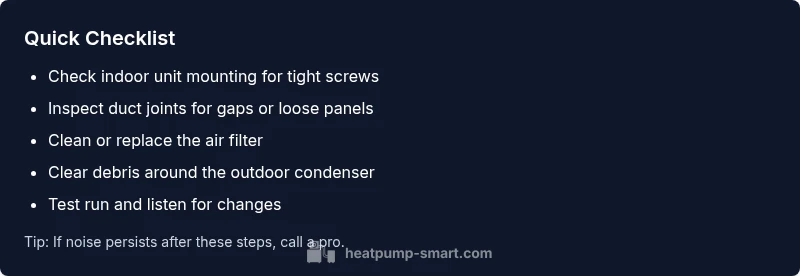
Before you touch any electrical components, turn off power at the thermostat and the main breaker. Then inspect common indoor sources: check for loose panels or vents buzzing against a wall, and listen for changes when you gently press on the cabinet. Examine the air filter; a dirty filter reduces airflow and can create a whistling sound. Inspect visible ductwork for loose connections or gaps that could rattle with fan speed. Outside, clear debris from the condenser and ensure it sits level; uneven footing can amplify vibration. If you tighten a screw or reseat a panel, re-test by cycling the system and listening for reduced noise. If the noise persists after these quick checks, it's time to go deeper or contact a pro.
Diagnosing root causes with a systematic flow
A structured approach helps you map symptoms to likely causes and safe fixes. Start with the symptom: noise inside the house while the system runs. Possibilities include loose hardware or mounting (high likelihood), restricted airflow from a dirty filter or ductwork (high), damaged fan blades (medium), or a failing vibration isolator (low). For each, apply a fix and re-test. If tightening screws doesn’t reduce the noise, inspect the blower wheel for damage, replace the air filter, and seal duct joints. If the sound is still present after these steps, the issue may involve the compressor mount or the outdoor unit’s mounting base, and professional service is recommended. This flow helps you decide whether you can handle it safely or need expert help.
Prevention tips and ongoing maintenance to minimize noise
Preventing noise starts with a simple maintenance habit. Schedule seasonal inspections to check mounting hardware, vibration pads, and duct connections. Replace or clean filters every 1–3 months, depending on usage and allergen load. Keep the outdoor unit free of debris and ensure the condensing coil is clean. Check that the indoor air handler is on a solid, level surface and free from nearby obstructions. When you perform routine maintenance, document the fixes you did and the dates, so you can track what works best for your system. Regular maintenance reduces the likelihood of surprising indoor noise and extends equipment life.
Steps
Estimated time: 45-60 minutes
- 1
Power down and secure area
Turn off the thermostat and the main electrical breaker before touching any components. This prevents shock and accidental startup while you inspect. Ensure pets and children are away from the work area.
Tip: Always verify power is off with a non-contact tester before touching metal parts. - 2
Check the outdoor unit
Clear debris, ensure it is level, and verify there is adequate clearance around the unit. Vibrations from an unlevel pad or debris can transfer noise inside the house.
Tip: Remove leaves, sticks, and any grass cutting debris around the condenser. - 3
Inspect the indoor air handler mounting
Look for loose screws, bent panels, or loose vibration pads. Tighten any loose fasteners and reseat panels if needed to reduce cabinet resonance.
Tip: Use a low-torque screwdriver to avoid over-tightening and damaging components. - 4
Examine and replace the air filter
A clogged filter reduces airflow and can cause whistling or buzzing. Replace with the correct rating and reinstall securely.
Tip: Write the replacement date in a maintenance log. - 5
Inspect ducts and joints
Check for loose duct connections and gaps that can rattle at higher fan speeds. Seal with appropriate duct sealant or mastic.
Tip: Avoid duct tape for long-term reliability. - 6
Test run and evaluate
Restore power and run the system through a full cycle. Listen carefully for changes and note any remaining noises.
Tip: If noise remains, document the sounds and call a pro with your notes.
Diagnosis: Noise inside the house when the heat pump runs (rattle/bang/buzz)
Possible Causes
- highLoose mounting hardware or cabinet panels
- highRestricted airflow due to dirty filter or ductwork
- mediumDamaged or bent fan blades
- lowWorn compressor mount or vibration isolator
Fixes
- easyCheck and tighten mounting screws and cabinet panels on the indoor unit
- easyClean or replace the air filter and seal major duct joints
- mediumInspect the blower wheel for damage and replace if needed
- mediumInspect outdoor unit mounting and vibration isolators; call a pro if uncertainty remains
Your Questions Answered
Why is there noise inside the house when the heat pump runs?
Common causes include loose hardware, ductwork, or blocked filters. Use the diagnostic flow to identify the source and apply safe fixes. If unresolved, a professional inspection is advised.
Common causes are loose hardware, duct leaks, or blocked filters. Follow the steps to identify and fix the source, or call a pro if it persists.
Is it safe to operate a noisy heat pump?
If the noise worsens or you smell burning, shut the unit off and call a professional. Do not attempt DIY electrical work.
If you hear burning or see smoke, shut it off and call a pro.
Can a dirty air filter cause noise?
Yes. A clogged filter reduces airflow and can cause whistling or buzzing. Replace or clean the filter.
A dirty filter can cause noise from restricted airflow.
Should I lubricate blower bearings or other parts?
Most modern heat pumps are sealed and do not require lubrication. Do not apply oil to sealed components.
Lubrication is usually not needed for sealed bearings.
When should I consider unit replacement due to noise?
If noise persists after professional service and performance declines, replacement may be the best option.
If it keeps making noise after service, consider replacement.
What maintenance reduces heat pump noise?
Regular filter changes, duct sealing, and periodic tune-ups help prevent noisy operation.
Regular maintenance helps reduce noise over time.
Watch Video
Top Takeaways
- Identify whether noise origin is indoor or outdoor.
- Tighten loose hardware and replace dirty filters first.
- Use a structured diagnostic flow before random fixes.
- Call a pro when root causes involve the compressor or wiring.