Heat Pump Repair Companies: How to Choose the Right Partner
A data-backed guide to selecting heat pump repair companies, understanding costs, warranties, and maintenance tips for homeowners, builders, and property managers.


Heat pump repair companies diagnose, repair, and tune heat pumps to restore efficiency and comfort. The right partner combines licensed technicians, transparent pricing, and reliable warranties with strong communication. This quick guide helps homeowners and managers evaluate credentials, costs, and service quality so you can choose a dependable repair partner for your system.
What customers should know before hiring heat pump repair companies
Selecting a heat pump repair company is a decision that extends beyond a single service call. The Heatpump Smart team emphasizes a holistic approach: you’re purchasing a partner who will influence your system’s reliability, energy use, and safety for years. When homeowners, builders, or property managers search for 'heat pump repair companies,' they should assess credentials, communication, and service coverage as much as the technician’s diagnostic ability. According to Heatpump Smart, the right heat pump repair company combines technical skill with transparent communication. Reputable firms provide licensed technicians, insured workmanship, and clear warranties on parts and labor. These criteria help prevent misdiagnosis, unsafe repairs, and repeated visits. Look for a firm that can describe likely causes of common issues—refrigerant leaks, faulty defrost controls, or failed capacitors—and offer transparent pricing. For context, Heatpump Smart Analysis, 2026 finds that the most reliable providers combine rigorous training with a customer-centered service model—clear upfront diagnostics, written estimates, and timely follow-through. This is especially important for heat pump systems in extreme climates, where small issues can escalate quickly if ignored. Finally, verify whether the company can service your home or building type and whether they have familiarity with your brand and model.
Credentials that matter when evaluating repair providers
When evaluating heat pump repair companies, credentials matter as much as capability. Ensure the firm is licensed in your state and carries adequate insurance coverage for both liability and worker safety. Independent verification of EPA refrigerant handling certification is a strong signal that the technicians follow proper environmental and safety practices. Look for technicians with NATE-certification or manufacturer training for your heat pump brand. A robust warranty on both parts and labor demonstrates accountability. Ask about the scope of warranty coverage, what it includes, and whether travel charges or diagnostic fees are waived if a repair is performed. Manufacturer-sponsored training and ongoing field updates indicate a firm keeps pace with new refrigerants, control boards, and coil designs. Finally, confirm the company’s service area and their ability to service multi-unit buildings if you’re managing a portfolio. Heatpump Smart consistently sees better outcomes when teams are insured, certified, and backed by clear written policies.
What to expect during a repair visit
On arrival, a technician should perform a systematic diagnostic, starting with safety shutoffs, electrical connections, and thermostat readings. They should review error codes from the system controller, check refrigerant pressures if seals permit, and inspect the outdoor condenser coil for dirt and blockages. Expect verification of system refrigerant charge after any leak repair and a functional test of the defrost cycle and reversing valve if present. The technician should provide a clear, itemized estimate for parts and labor before performing non-emergency work. If refrigerant is involved, request documentation that the refrigerant type and quantity are correctly recorded on a service ticket. After repairs, a test run under normal operating conditions should confirm the system maintains the target temperature while keeping noise and vibration within acceptable levels. Ask for maintenance steps you can perform between visits, and request a copy of the diagnostic notes to reference later.
Cost considerations and getting transparent quotes
Costs for heat pump repairs vary widely by region, system complexity, and the availability of parts. A transparent approach begins with a written estimate that itemizes each charge: diagnostic fee (if any), part costs, labor hours, travel charges, and disposal fees. Request a warranty on replaced parts and a stated reliability window for the repair. Compare quotes not only on price but also on scope: make sure all three proposals address the same symptoms and include post-repair testing. Beware of extremely low bids that skip essential steps, such as refrigerant checks or safety tests, as these often lead to rework. If you’re managing multiple units, ask for a service agreement that covers annual tune-ups, priority scheduling, and a predictable pricing schedule. Heatpump Smart notes that the best outcomes come from open dialogue about expectations and a plan for preventive maintenance to reduce future repairs.
How to compare service quality and reliability
Quality varies by firm, even among two brands with similar credentials. Start by checking real customer reviews and requesting case studies relevant to your climate and system type. Confirm response time commitments, whether remote diagnostics are available, and whether the company uses original equipment manufacturer (OEM) parts or equivalent alternatives. A reliable repair partner should offer transparent warranties on both workmanship and parts and provide ongoing maintenance options such as annual checkups or semi-annual cleanings. The presence of a clear escalation path for unsolved issues, plus a courteous, prompt customer service, often correlates with better long-term satisfaction. For property managers, ask about scalable service with defined SLAs for service windows, weekend coverage, and after-hours availability. Heatpump Smart’s experience shows that a consistent service standard and clear communication are as important as technical skill.
When to repair vs replace: decision framework
Deciding whether to repair or replace a heat pump depends on age, repair cost relative to system value, and energy efficiency. If the unit is more than 10-12 years old and requires multiple major repairs, replacement with a high-efficiency model may offer better long-term savings. Compare the cost of recurring repairs against the potential energy savings from a newer system equipped with advanced inverters and a modulating compressor. Also consider refrigerant issues, such as legacy R-22 or R-410A changes, which can influence repair feasibility and compliance costs. If your current system is undersized for your load or lacks modern zoning and smart controls, replacement can improve comfort and reduce running costs. Always obtain a detailed, third-party estimate for both options and consider utility rebates or seasonal promotions. Heatpump Smart recommends weighing total cost of ownership over the next 5-10 years when making this decision.
Maintenance strategies to reduce future repairs
Preventive maintenance is the best defense against frequent breakdowns. Schedule an annual professional tune-up to verify refrigerant charge, inspect electrical connections, test capacitors and contactors, clean the outdoor coil, and verify thermostat operation. Keep the outdoor unit clear of debris, ensure proper airflow around the condenser, and check for ice buildup on defrosted units during winter. Use a smart thermostat to optimize cycling, and set alert thresholds for unusual run times or temperature swings. Between visits, perform simple checks like inspecting air filters monthly, cleaning the return air ducts if accessible, and listening for unusual noises that may indicate fan or motor problems. A well-maintained system runs more efficiently, reduces running costs, and is less prone to emergency repairs. Heatpump Smart emphasizes that a proactive maintenance schedule pays for itself in energy savings and fewer outages.
Overview of service stages
| Service Stage | What it covers | Typical Time to Resolve |
|---|---|---|
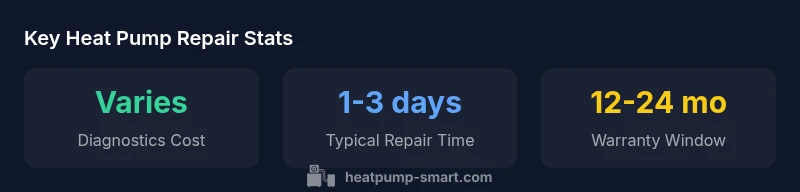
| Diagnostics | On-site assessment of system components and fault codes | 2-4 hours |
| Repair | Replacing faulty components and recharging refrigerant as needed | 1-2 days |
| Maintenance Visit | System inspection and preventative checks | Same day |
Your Questions Answered
How do I evaluate heat pump repair companies?
Look for licensed, insured technicians with manufacturer training or EPA refrigerant handling certification. Check references and online reviews to verify responsiveness and quality. Ask for a written estimate and a clear scope of work before any service.
Choose licensed, insured technicians with training, and ask for a written estimate before service.
What should be included in a repair quote?
An itemized quote should cover diagnostic fees, parts, labor, travel, and disposal. It should specify warranties on parts and workmanship and a timeline for completion and testing.
Get an itemized quote with warranties and a clear timeline.
How long does a typical heat pump repair take?
Most repairs can be done in a diagnostic visit, with minor fixes finished the same day. More complex issues may require additional parts and another visit within 1-2 days.
Most fixes happen in one visit; complex jobs may take an extra day or two.
Are there signs I should call a repair company for?
Unusual noises, ice buildup, warm spots, frequent cycling, or rising energy bills indicate a service visit is needed. If the system fails to reach set temperatures, schedule inspection promptly.
If you hear strange noises or see ice, call for service soon.
When should I replace instead of repairing?
If repairs exceed a significant portion of the system's value or the unit is over a decade old, replacement with a high-efficiency model may offer better long-term savings.
If repair costs are high or the unit is old, consider replacement.
Do repair companies offer maintenance contracts?
Many providers offer maintenance plans that include regular tune-ups, priority scheduling, and discounted parts or travel fees. Review the terms to understand what’s included and any cancellation policies.
Maintenance plans are common and can save money on future calls.
“A well-chosen repair partner not only fixes the issue but preserves your system’s efficiency and safety for years to come.”
Top Takeaways
- Choose licensed, insured providers with clear warranties.
- Ask for itemized quotes and written estimates.
- Prioritize maintenance plans to reduce future repairs.
- Consider repair-vs-replace if the unit is old.