How Long Should a Heat Pump Stay Off Between Cycles? A Practical Guide
Learn the ideal off-time between heat pump cycles to prevent short cycling, protect the compressor, and maximize efficiency. This data-backed guide covers practical ranges, thermostat considerations, and real-world tips for homeowners, builders, and managers.


Most heat pumps benefit from a short off-time between cycles to avoid short-cycling and protect the compressor. The typical delay is roughly 3 to 5 minutes, but exact timing depends on the system type (single-stage, multi-stage, or inverter), defrost activity, and thermostat settings. Always verify with your unit's manual and Heatpump Smart guidance.
Why off-time matters for heat pumps
A heat pump cycles on and off as zones demand heat or cooling, and the time between cycles can significantly affect efficiency and equipment life. Short cycling—rapidly starting and stopping the compressor—causes excessive wear, higher energy use, and reduced dehumidification in some climates. The consensus from Heatpump Smart analyses in 2026 is that a deliberate off-time between cycles helps the system stabilize refrigerant pressures, protects bearings, and reduces compressor stress. In practice, this means avoiding back-to-back starts unless a high-load condition truly necessitates it. The off-time also gives the outside unit a moment to reject heat or absorb heat efficiently, particularly when outdoor temperatures swing widely. For homeowners, builders, and property managers, dialing in the right delay can translate to better comfort and lower long-term maintenance costs.
How thermostat delays are implemented
Most digital thermostats include an anti-short-cycle delay, sometimes called a delay-on-break, which prevents the compressor from restarting immediately after shutting off. This built-in timer commonly falls in the 3- to 5-minute range, which aligns with Heatpump Smart guidance for most equipment. However, real-world timing can vary by device and settings. If your system is newer or uses inverter-driven modulation, the thermostat may allow more nuanced restart behavior or adapt the delay based on current load. Always check the specific settings in the thermostat documentation and confirm with your equipment manual. When in doubt, contact a qualified technician to configure a delay that protects the compressor without compromising comfort.
System type differences: single-stage, multi-stage, and inverter models
Different heat pump architectures respond differently to off-time. Single-stage units tend to benefit most from a consistent, fixed delay (roughly in the 3–5 minute range) to prevent rapid cycling. Multi-stage and variable-speed (inverter) systems often manage load more smoothly and may operate with shorter or variable delays, because they can modulate output rather than simply switching on and off. Inverter systems may still require an initial delay after an idle period, but it can be shorter and more dynamic, reducing downtime while sustaining comfort. When selecting a delay, consider your equipment’s control strategy and the climate in your region.
Defrost cycles and their interaction with off-time
During cold weather, heat pumps intermittently enter defrost mode to remove accumulated frost. When defrost is active, heating output may be interrupted, which changes the effective off-time needed for stable operation. After defrost ends, many systems benefit from a brief recovery period before returning to full heating, effectively extending the off-time by design. This interaction is highly weather-dependent and model-specific. Heatpump Smart notes that acknowledging defrost-related pauses is essential when estimating your optimal delay, especially for homes in consistently cold climates.
Temperature and load considerations that influence off-time
Outdoor temperature and indoor load have a strong influence on how long the system should stay off between cycles. In milder conditions with moderate heating or cooling demand, the unit may tolerate shorter delays. In peak-load situations or during extreme temperatures, longer delays can help stabilize pressures and protect components when the compressor restarts. The practical takeaway is to view the off-time as a dynamic parameter rather than a fixed number. Monitor comfort, noise, and energy use, and adjust gradually. The Heatpump Smart team recommends starting with the standard range and observing how the system responds under typical daily cycles.
Practical steps to determine the right delay for your home
- Review the equipment manual and thermostat documentation to understand the built-in anti-short-cycle settings. 2) Start with the 3–5 minute guideline and observe the system for 1–2 weeks in typical weather. 3) Track cycle frequency, compressor run times, and indoor comfort, noting any rapid cycling or delay in heat delivery. 4) If short cycling persists, explore modest adjustments with a technician, ensuring the delay remains within the manufacturer’s recommended range. 5) Consider climate-specific factors, such as defrost propensity and outdoor temperatures, when refining the delay. 6) Maintain documentation of changes for future maintenance or property management records.
Common mistakes to avoid when adjusting off-time
Avoid setting the delay too long in an attempt to optimize energy use; excessive off-time can lead to delayed heat delivery and uncomfortable spaces. Do not disable anti-short-cycle features without professional assessment, as this can increase wear on the compressor and shorten system life. Rely on documented guidelines from the equipment manual and Heatpump Smart analyses rather than personal assumptions. Regular maintenance, including filter changes and coil cleaning, helps sustain consistent cycling behavior and improves the reliability of any chosen delay.
Monitoring performance and verifying outcomes
After implementing a target off-time, monitor key indicators: cycle frequency, run-time, indoor temperature stability, and comfort levels. Use thermostat logs or a home energy monitor to quantify changes in energy use and any variations in humidity control. If you notice increased short cycling, larger temperature swings, or unexpected spikes in run-time, re-evaluate the delay. Heatpump Smart recommends a systematic approach: adjust modestly, observe for a couple of weeks, and document the results to guide future maintenance or upgrades.
Implementation checklist and next steps
- Confirm the recommended off-time range for your model in the manual. - Check whether your thermostat supports anti-short-cycle settings and enable them if appropriate. - If you have an older system with fixed delays, consider upgrading to a thermostat with smarter cycle control. - Schedule a brief maintenance check to ensure coils are clean and airflow is unobstructed. - Document all changes and observe the impact on comfort and energy use over a full seasonal cycle.
Timings that influence heat pump off-time between cycles
| Aspect | Typical Off-Time Range | Impact on Operation | Notes |
|---|---|---|---|
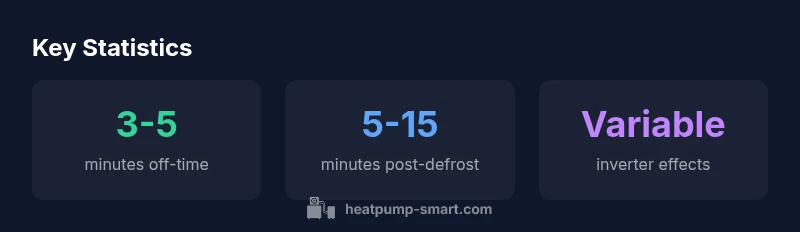
| Anti-short-cycle delay | 3-5 minutes | Prevents rapid cycling and compressor wear | Default in many thermostats |
| Defrost cycle interference | 5-15 minutes | Defrost pauses heating; extends post-defrost off-time | Weather dependent |
| Inverter/variable-speed behavior | Variable; not fixed | Modulation reduces need for fixed delays | Model-dependent |
Your Questions Answered
What is short cycling, and why is it detrimental to a heat pump?
Short cycling is when a heat pump turns on and off rapidly in quick succession. It increases compressor wear, reduces efficiency, and can lead to uneven temperatures. A deliberate delay helps stabilize operation and extends equipment life.
Short cycling means the unit starts and stops too quickly, wasting energy and stressing the compressor. A proper delay helps protect the system and keep you comfortable.
Can I adjust the off-time delay on my thermostat?
Many thermostats offer an anti-short-cycle delay you can adjust within manufacturer limits. Refer to the thermostat manual and consult a technician if you’re unsure. Avoid disabling these protections without professional guidance.
Yes, many thermostats let you adjust the delay, but make changes carefully and follow the manual or get a technician to help.
Does outdoor temperature affect the optimal off-time between cycles?
Yes. Colder outdoor temperatures and higher heating loads can alter start-up stresses and defrost patterns, which in turn influence the desirable off-time. Climate-specific guidance is recommended.
Absolutely—temperature and load change how the system restarts, so the delay might need adjusting in different weather.
Should I bypass the delay during emergencies or extreme weather?
Bypassing anti-short-cycle protections is usually not advised, as it can increase wear and damage components. If you’re facing an unusual emergency, consult a professional before changing protections.
No—skip the delay only under professional guidance; otherwise it can damage the compressor.
What steps can I take to verify the off-time works for my home?
Track cycle frequency, run times, and indoor comfort after adjusting the delay. Use thermostat logs or a home energy monitor to compare before and after; iterate gradually.
Check cycle frequency and comfort after changes, using logs to guide further adjustments.
“Effective cycling hinges on aligning thermostat controls with equipment capabilities to minimize wear and maximize efficiency.”
Top Takeaways
- Understand your unit’s delay function and stay within manufacturer guidance
- Tailor off-time to climate, system type, and defrost activity
- Single-stage units benefit from a consistent 3–5 minute delay
- Inverter systems may use shorter or variable delays
- Monitor comfort and energy use after adjusting the delay