How to Keep Heat Pumps from Freezing: A Homeowner's Guide
Learn proven steps to prevent your heat pump from freezing this winter with maintenance, airflow improvements, and thermostat strategies from Heatpump Smart.


How to keep heat pump from freezing: You’ll prevent frost by ensuring clear outdoor airflow, insulating refrigerant lines, and tuning operating settings for cold weather. The guide covers proactive maintenance, seasonal prep, and practical in-season tactics. The goal is to minimize frost buildup and keep your heat pump operating efficiently through winter. According to Heatpump Smart, a disciplined maintenance routine is key to frost-free performance.
Why frost matters and how it forms
To understand how to keep heat pump from freezing, you first need to know how frost forms on outdoor coils and why it matters. In cold, humid environments, moist air can condense and freeze on the outdoor coil, increasing resistance and reducing heat transfer. When this happens, the heat pump cycles more often, reduces efficiency, and may trigger the defrost function more frequently. Left unchecked, frost can turn to ice that blocks airflow and forces the system to work harder, raising energy costs and shortening component life.
According to Heatpump Smart, keeping frost at bay is not just about a single fix; it’s a system of prevention that combines airflow management, line insulation, and thoughtful operation. By addressing each link in the frost-chain, you reduce the chance of a decrease in performance and avoid more costly repairs later. The core idea for how to keep heat pump from freezing is to maintain steady airflow across the condenser, minimize cold-air intrusion into the indoor space, and ensure lines stay warm enough to prevent condensation from freezing on contact. In practical terms, this means planning for winter ahead and treating frost risk as a regular maintenance item rather than a one-off fix.
What causes a heat pump to freeze
Freezing typically starts with cold outdoor temperatures paired with high humidity and restricted airflow. Debris, snow, or tall landscaping can block the outdoor condenser, while dirty coils reduce heat transfer efficiency and promote icing. A malfunctioning defrost cycle can allow frost to accumulate faster than it can melt. Indoor airflow issues, such as blocked returns or closed vents, can also push moist air toward the outdoor coil, increasing frost risk. Regular checks help you catch these problems before they snowball into a bigger issue.
Understanding the frost-ice cycle helps homeowners focus on two key levers: keeping the outdoor unit clean and free of obstructions, and ensuring clear, consistent airflow throughout the system.
The defrost cycle: function and failure modes
Modern air-source heat pumps use a defrost cycle to melt frost on the outdoor coil. If this cycle fails or runs too infrequently, frost can build up, reducing efficiency and triggering longer runtimes. Common failure modes include sensor faults, control board glitches, and low refrigerant pressures that prevent proper heat transfer. Regular checks of the defrost timer, sensor accuracy, and service valves help keep this critical function reliable. If you notice ice buildup despite defrost activity, it’s time to check airflow, outdoor temperature, and humidity levels, then consult a professional if needed.
Regular maintenance to prevent freezing
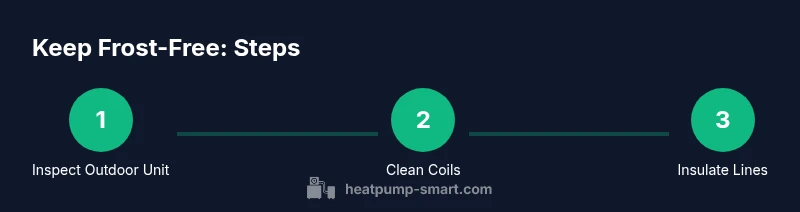
Maintenance is the most reliable defense against winter frost. Start with cleaning the outdoor unit: remove loose debris, trim vegetation, and rinse coils with a gentle spray. Check the cabinet seals and weather stripping around doors and ducts to minimize cold air intrusion. Inspect refrigerant lines for insulation wear and repair as needed. Clean or replace air filters in the indoor unit to maintain steady airflow. Schedule periodic inspections of electrical connections and temperature sensors, because loose or corroded components can impair defrost efficiency. Consistent, proactive maintenance reduces the probability of freeze events and extends equipment life.
Seasonal preparations for winter
Before the first hard frost, perform a thorough outdoor inspection. Ensure the outdoor unit has at least 12 inches of clearance in all directions, free from snow buildup and ice contact. Install or replace insulation on exposed refrigerant lines to prevent condensation from forming frost. Check the thermostat's cold-weather schedules and confirm that the system uses energy-saving modes during milder days to avoid unnecessary cycling. Keep an emergency plan for freezing conditions, including backup heat sources if your heat pump experiences a major frost event.
Enhancing airflow and insulation
Airflow is the backbone of frost prevention. Ensure the indoor evaporator is not blocked by furniture or dust buildup, and that return air paths are open. Improve insulation around ducts that pass through unheated spaces to prevent temperature drops that could cause condensation and icing near the refrigerant lines. For outdoor lines, install foam insulation sleeves or wrap sections exposed to cold drafts. Sealing leaks in the refrigerant line insulation helps reduce frost risk and improves overall efficiency. Heat pump systems benefit from well-insulated ducts, clean filters, and kept-clear outdoor units.
Operating tactics during freezing conditions
In very cold weather, rely on the heat pump's auxiliary or emergency heat setting when outdoor temperatures plummet. However, use this as a temporary measure, since auxiliary heat can increase operating costs. Set/adjust the thermostat to avoid rapid cycling and overly long runs, which can promote frost buildup by creating disproportionate moisture. If a frost event starts, don’t rely on turning the system off; instead, allow the defrost cycle to operate and verify outdoor unit airflow after the cycle completes. Consider scheduling a pre-winter check with a contractor to adjust settings for your climate.
Troubleshooting common frost signs at home
If you notice frost before the defrost cycle kicks in, inspect the outdoor unit for debris and obstructions, check coil cleanliness, and ensure adequate clearance around the unit. Look for uneven frost on only a portion of the coil, which may indicate airflow or sensor issues. If frost persists after the defrost cycle completes, it could signal a refrigerant or electrical problem requiring a professional assessment. In all cases, prioritize safety—disconnect power before inspecting the outdoor unit and avoid working on energized components.
When to upgrade or call a pro (heat-pump frost prevention plan)
Many frost-related issues are solvable through cleaning, insulation, and correct defrost settings. If frost recurs despite diligent maintenance, or if you notice refrigerant smells, unusual noises, or frequent cycling, contact a licensed technician. Persistent icing can indicate refrigerant leaks, sensor faults, or capacitor problems that require specialized tools. The Heatpump Smart team recommends a structured maintenance plan that combines seasonal checks with a clear response protocol for frost events.
Tools & Materials
- User manual(Always refer to manufacturer guidelines for your model.)
- Soft brush or coil-cleaning brush(Use gentle strokes to avoid damaging fins.)
- Vacuum with narrow nozzle(Remove debris from the outdoor unit without bending fins.)
- Garden hose with spray nozzle(Rinse coils from the outside; avoid high pressure near electrical components.)
- IR or digital thermometer(Helpful for checking surface temperatures near freezing.)
- Insulation materials (foam sleeves, weatherstripping, foam board)(Use to seal exposed refrigerant lines and ducts that pass through unheated spaces.)
- Thermostat with scheduling capabilities(Enables smarter cold-weather operation and reduced cycling.)
- Heat pump service manual or model PDF(Model-specific defrost and maintenance guidance.)
Steps
Estimated time: 60-90 minutes
- 1
Power down the outdoor unit and prepare
Before touching the unit, turn off power at the breaker and lockout the switch if possible. This reduces risk when inspecting for frost buildup or debris. Confirm the unit remains still and safe to approach before proceeding.
Tip: Always start with safety—do not work on energized components. - 2
Clear debris and obstructive growth
Remove leaves, snow, and branches from around the outdoor unit to restore airflow. Ensure a clear radius of at least 12 inches on all sides. Debris can insulate the coil and worsen frost formation.
Tip: Use a soft brush to avoid bending coil fins. - 3
Clean and inspect the condenser coils
Gently brush the coils, then rinse with a low-pressure spray from the outside toward the middle. Look for bent fins and straighten them carefully with a fin comb if needed. A clean condenser improves heat transfer and reduces frost risk.
Tip: Never use high-pressure water directly on electrical components. - 4
Check refrigerant line insulation
Inspect exposed refrigerant lines and replace any damaged insulation. Proper insulation minimizes condensation that can freeze on contact and cut heat transfer efficiency.
Tip: Keep insulation tight against the pipe, with no gaps. - 5
Verify defrost cycle operation
Test the defrost function by observing whether frost melts within the normal cycle duration. If frost persists, schedule professional diagnostics for sensors or control circuitry.
Tip: If the cycle seems erratic, document timing and frost patterns for the tech. - 6
Assess indoor airflow and filters
Replace or clean air filters; ensure returns are not blocked and air is circulating freely. Poor indoor airflow can push moist air toward the outdoor coil, increasing frost risk.
Tip: Replace filters every 1-3 months during winter depending on usage. - 7
Adjust thermostat scheduling for cold days
Set a winter schedule that avoids rapid cycling and unnecessary heat swings. Balanced operation reduces moisture buildup and frost formation on the outdoor unit.
Tip: Use a setback strategy that preserves dew-point balance for your climate. - 8
Schedule a professional check when in doubt
If you notice repeated frost despite maintenance, contact a licensed technician to check refrigerant levels, electrical connections, and sensor health. A pro can identify issues not visible to the homeowner.
Tip: Keep a record of frost incidents and maintenance performed for the tech.
Your Questions Answered
What are common signs that my heat pump is freezing?
Look for visible frost on the outdoor coil, reduced heating efficiency, longer defrost cycles, and unusual noises. Early signs often involve a chilly indoor space despite a configured thermostat. If you see these signs, check airflow, debris, and insulation around the outdoor unit.
Common signs include frost on the outdoor coil, reduced heating performance, and longer defrost cycles.
Should I turn off the heat pump if it frosts?
No. Do not abruptly turn off the system during a frost event. Let the defrost cycle run and address airflow and insulation. If frost recurs, contact a technician.
Don’t switch it off right away; let the defrost cycle work and assess the cause.
How often should I schedule professional maintenance to prevent freezing?
Aim for an annual professional check, with a pre-winter inspection to optimize the defrost cycle, refrigerant status, and electrical connections.
Have a professional check at least once a year, especially before winter.
Can a defective defrost cycle cause ice buildup?
Yes. If the defrost cycle fails or is mis-timed, frost can accumulate faster than it melts, leading to efficiency losses.
A faulty defrost cycle can let frost build up quickly.
Is wind around the outdoor unit a problem?
Strong wind or drifting snow can redirect cold air toward the coil and worsen icing. Ensure unobstructed airflow and proper orientation.
Wind and debris can worsen icing; keep clear around the unit.
Can I use an outdoor heat pump cover?
Generally not recommended. Covers can trap moisture and debris, potentially promoting rust or mold. If you use one, ensure it allows airflow and is removed during operation.
Usually don’t cover the outdoor unit; if you do, make sure it breathes.
Watch Video
Top Takeaways
- Keep frost at bay with regular maintenance.
- Clear airflow and insulated lines are foundational.
- Use proper thermostat settings to minimize frost risk.
- If frost persists, call a pro rather than DIY beyond basic checks.
- A proactive plan reduces winter energy costs and protects your equipment.