What to Do If Your Heat Pump Is Covered in Ice
Urgent guide to thawing and diagnosing ice on your heat pump. Learn safe steps, common causes, and prevention tips from Heatpump Smart.


Ice buildup on a heat pump is usually caused by restricted airflow, high humidity, or a failing defrost cycle. Start by turning off the outdoor unit and switching to defrost mode if safe. Gently thaw visible ice, ensure clear space around the unit, and monitor for recurrence. If icing repeats, contact a professional.
Why ice forms on heat pumps in cold weather
Heat pumps extract heat from the outdoors, which can lead to frost when humidity is high and temperatures hover around freezing. Frost can accumulate on the outdoor coil when airflow is restricted, the condenser coils are dirty, or the defrost cycle isn’t operating correctly. According to Heatpump Smart analysis, icing issues are more common in damp, cold climates and when units are surrounded by snow, tall vegetation, or debris. While a one-off ice layer can thaw with a defrost cycle, repeated icing often signals an underlying problem like an airflow blockage, dirty coils, or a malfunctioning defrost timer. Understanding these factors helps homeowners act quickly to protect efficiency and avoid damage.
Immediate safety steps you should take
Safety comes first. If ice is present, shut off power to the outdoor unit at the disconnect switch or breaker before touching the unit. Do not strike ice with metal tools or hot water; this can damage coils or wiring. If you can safely access the ice, allow it to melt naturally rather than chipping aggressively. Keep children and pets away from the unit, and ensure the outdoor area remains clear of snow and debris. After thawing any visible ice, set the system to defrost or heat mode (if your controller supports it) and observe for several cycles to verify the ice does not return immediately.
- Ensure at least 12–24 inches of clearance around the outdoor unit on all sides.
- Do not attempt refrigerant or electrical work unless you are a trained technician.
Common causes of icing and how to check them
Common causes include restricted airflow, dirty condenser coils, improper thermostat settings, and defrost cycle problems. Check these areas:
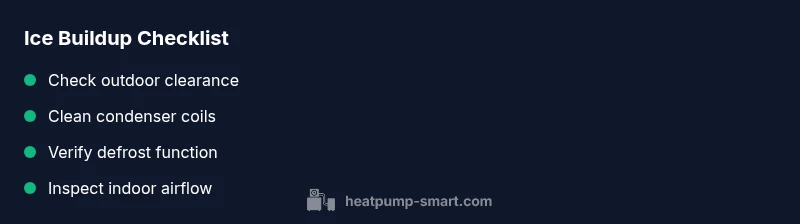
- Airflow: Clear leaves, snow, and ice from around the outdoor coil and verify nearby obstructions aren’t blocking the grille.
- Coils: If coils look dirty, power down the unit and gently rinse with a low-pressure hose. Avoid high pressure that can bend fins.
- Thermostat and defrost: Confirm the thermostat is in heating mode and that the defrost cycle is enabled and functioning. Some settings can delay defrost or keep the unit in cooling mode accidentally.
- Indoor factors: A very dirty or blocked indoor filter or restricted internal ductwork can reflect icing conditions back to the outdoor unit. Check and replace filters as needed.
Diagnostic flow: symptom-to-diagnosis mapping
- Symptom: visible ice on outdoor coil. 2) Check clearance: is there adequate space around the unit? 3) Look for debris: is the grille blocked? 4) Inspect coils: are they visibly dirty? 5) Verify thermostat settings: is defrost enabled and functioning? 6) Listen for defrost sounds: if you don’t hear the defrost cycle, it may be faulty. 7) If icing recurs after thawing, call a professional.
Step-by-step fix for the most common cause
- Power off the unit at the disconnect and unplug if accessible. 2. Gently remove loose ice with gloves and allow remaining ice to melt; never chip rapidly. 3. Clear a full 12–24 inch radius around the outdoor unit. 4. Inspect indoor air pathways and replace a dirty filter to restore airflow. 5. Check the defrost function by cycling the system to defrost and back to heat. 6. Restore power and monitor for the next few cycles to ensure ice does not reform. 7. If the issue persists, contact a qualified HVAC technician.
Prevention tips to avoid future icing
- Schedule annual professional maintenance, especially before winter.
- Maintain outdoor clearance and remove snow promptly from around the unit.
- Clean condenser coils regularly and monitor airflow through return vents inside the home.
- Verify thermostat settings are appropriate for heating and that the defrost cycle is enabled. Consider a winterization plan for humid climates.
Safety notes and common mistakes
- Never use sharp tools to scrape ice from refrigerant lines; you can damage coils and wiring.
- Avoid using boiling water or other heat sources to thaw ice; uneven heating can harm components.
- Do not bypass defrost; a nonfunctional defrost cycle can lead to compressor damage.
When to call a professional
If ice recurs after a safe thaw attempt or you notice unusual noises, refrigerant hissing, oil leaks, or a persistent malfunction, schedule professional service promptly. A licensed technician can inspect refrigerant charge, electrical connections, and the defrost timer to prevent compressor damage.
Steps
Estimated time: 45-60 minutes
- 1
Power down safely
Shut off the outdoor unit at the disconnect and, if possible, switch off power at the main breaker. This prevents shocks and protects wiring while you inspect the ice. Wait for any moving parts to stop before touching the unit.
Tip: Verify power is off with a non-contact tester before touching components. - 2
Assess and thaw ice safely
If you can access the ice safely, allow it to melt naturally rather than striking it with tools. Do not use hot water or metal implements. Keep kids and pets away from the area while thawing occurs.
Tip: Allow ice to melt gradually to avoid stressing the coil. - 3
Check outdoor clearance and debris
Remove snow, leaves, and other debris from around the condenser grille. Ensure there is a clear 12–24 inch buffer in every direction to restore proper airflow.
Tip: Trim vegetation that could recur and obstruct airflow. - 4
Inspect indoor pathways and filters
Check indoor air filters for dirt and replace if needed. Poor indoor airflow can reflect as icing outdoors, so ensure ducts are clear and seals are intact.
Tip: A clean filter can improve overall system performance in winter. - 5
Test defrost function and thermostat
Cycle the system into defrost (or heat mode if defrost isn’t clearly labeled). Confirm the defrost cycle engages and ends and that the outdoor coil loses ice after defrost.
Tip: If you hear unusual buzzing or the defrost doesn’t activate, stop and call a pro. - 6
Restart and monitor
Restore power and run the system for a few cycles, watching for new ice. If ice forms again, do not continue to operate; schedule professional service promptly.
Tip: Document any odd noises or messages from the controller for the technician.
Diagnosis: Ice buildup on outdoor heat pump coil.
Possible Causes
- highRestricted airflow due to debris or obstruction around the unit
- mediumDirty condenser coils reducing heat transfer
- lowDefrost cycle failure or improper thermostat settings
Fixes
- easyClear obstructions and ensure at least 12 inches of clearance around the outdoor unit
- easyGently clean condenser coils with a low-pressure hose after power off
- easyVerify thermostat settings and ensure defrost mode operates correctly; test cycles
- mediumIf ice persists after basic thaw steps, schedule a professional inspection
Your Questions Answered
What causes ice to form on a heat pump outdoor coil?
Ice forms when humidity condenses on a cold coil, often due to restricted airflow, dirty coils, or a faulty defrost cycle. Each factor can contribute independently or together.
Ice on the outdoor coil is usually caused by airflow issues, dirty coils, or a defective defrost cycle.
Should I keep my heat pump running if ice forms?
No. Turn off the unit to thaw, then evaluate. Running with ice can stress compressors and cause damage.
Don't run the unit when ice is forming; switch off and thaw safely.
When should I call a professional for ice on heat pump?
If icing recurs after basic thaw steps or you hear unusual noises, smell refrigerant, or notice leaks, schedule professional service promptly.
Call a professional if icing returns or you notice odd noises or smells.
Can icing indicate a refrigerant leak?
Ice alone rarely indicates a leak, but persistent icing can accompany refrigerant issues. A licensed tech should inspect the system.
Persistent icing could point to a refrigerant issue; a pro should check.
How can I prevent ice buildup in winter?
Maintain clear airflow, clean coils, replace indoor filters, and ensure the defrost cycle functions properly. Regular maintenance reduces icing risk.
Keep airflow clear, clean coils, and maintain the defrost function to prevent icing.
Is it safe to chip ice off a heat pump?
No. Chipping can damage coil fins or refrigerant lines. If ice persists, allow defrost or call a pro.
Avoid chipping ice; call a pro if ice remains.
Watch Video
Top Takeaways
- Identify airflow or coil problems early to prevent damage.
- Maintain clear space around the outdoor unit at all times.
- Don’t bypass the defrost cycle; call a professional if icing repeats.
- Regular maintenance reduces winter icing risk.