Heat Pump Is Frozen: Urgent Troubleshooting Guide
Diagnose and fix a heat pump is frozen with clear, safe steps. This expert guide from Heatpump Smart covers common causes, quick fixes, prevention, and when to call a professional.


When the heat pump is frozen, start with safety shutoff, then check airflow and defrost controls. Power off at the breaker, inspect for blocked outdoor airflow, and ensure the defrost cycle can run. If the ice persists, follow the detailed steps in this guide from Heatpump Smart for a safe, effective fix.
Immediate causes and symptoms of a heat pump that is frozen
Ice on the outdoor coil, frost on refrigerant lines, reduced heating capacity, and unusual cycling are common signs that the heat pump is frozen. Even if the indoor thermostat seems fine, the exterior unit dictates heat transfer. According to Heatpump Smart, most freezes arise from simple, addressable issues like airflow restrictions, dirty filters, or overly cold outdoor conditions. This block helps you spot the symptoms quickly, so you can verify whether the problem is a temporary defrost hiccup or a recurring condition that deserves professional attention.
How frost forms and the role of defrost cycles
Frost forms when humid air meets a very cold outdoor coil, and moisture freezes on contact. If the defrost cycle fails or runs too infrequently, ice accumulates and the heat pump can stall. A properly functioning defrost cycle melts ice from the coil and restores heat transfer. In cold climates, small, repeated ice buildups are common, but persistent freezing signals a deeper issue with airflow, sensor timing, or refrigerant balance. Heatpump Smart notes that the pattern of ice growth and melt can reveal whether the problem is a control fault or a physical obstruction.
Check airflow and filtration first
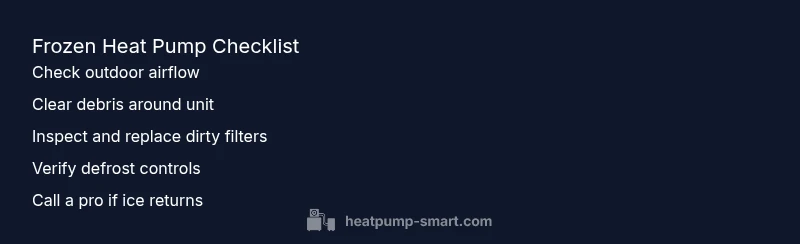
The simplest checks are airflow-related: look for a blocked outdoor grille, remove debris, and inspect indoor air filters for excessive dirt. A restricted return path reduces air flow across the evaporator, causing surface ice that stops heat flow. Clean or replace filters and ensure vents are open. If the heat pump is frozen, this is almost always the first fix you should attempt. A clear airflow path often resolves the problem without tools or specialized knowledge.
Inspect thermostat settings and defrost controls
Verify the thermostat is set to the heating mode and not to a cooling or emergency heat setting, which can confuse the sensor logic and lead to improper defrost cycles. Check that the defrost timer and ambient temperature sensors are functioning; some units rely on sensor data to trigger defrost, and a faulty sensor can keep ice in place. If you notice the defrost light or indicator behaving oddly, note it as a clue for the next steps. A correctly configured defrost cycle is essential to prevent the heat pump is frozen condition from becoming a daily nuisance.
Safe DIY fixes you can try (if you feel comfortable)
Safety first: power off the unit at the breaker before touching any components. If you can access the outdoor coil safely, remove loose snow or ice with a non-metallic tool and a soft brush. Do not chisel ice or use sharp objects that could puncture coils. Avoid pouring hot water on the coil, which can crack the metal or damage components. If you can see ice but cannot reach the affected area safely, wait for a natural defrost or contact a professional. After cleaning, reset the unit and monitor whether the defrost cycle runs normally.
When ice persists after initial checks: diagnosing refrigerant or component faults
If the issue remains after airflow and defrost checks, the problem may be deeper: refrigerant charge issues, leaks, sensor failures, or a defective contactor. These situations require professional service because handling refrigerants without proper training can be hazardous. Heatpump Smart recommends scheduling a diagnostic visit if ice returns after a full defrost cycle and the outdoor temperature remains low. Persisting ice is not just inefficient; it can damage compressors or lead to higher energy bills over time.
Preventive maintenance to avoid future freezes
Regular maintenance is your best defense against the heat pump is frozen scenario. Schedule seasonal inspections, replace filters every 1–3 months of heavy use, and clear outdoor around the unit to maintain airflow. Keep the outdoor unit free from leaves, snow buildup, and debris. A quick pre-winter check can prevent most freezes, especially in regions with rapid temperature drops. Hydration of the system through professional checks also ensures refrigerant levels and electrical components are within spec, helping your system run reliably through winter.
Climate considerations: cold climates and seasonal freezing patterns
Cold climates increase the risk of the heat pump is frozen condition because longer periods of low temperatures can overwhelm the defrost cycle. In these regions, choosing equipment rated for freezing conditions and designing a robust defrost strategy matters a lot. Heatpump Smart’s analysis suggests pairing units with efficient defrost control and proper installation to minimize recurring ice. If you notice recurring iced coils during winter, discuss climate-appropriate models and settings with your installer to reduce future freezing events.
Steps
Estimated time: 45-60 minutes
- 1
Power off and secure the unit
First, switch off power at the breaker to ensure safety. unplug any outdoor receptacles if applicable. This prevents any accidental startup while you inspect the system.
Tip: Always verify power with a non-contact tester before touching wiring. - 2
Clear the outdoor area
Remove snow, ice, and debris from the outdoor unit and ensure the surrounding space has at least 2 feet of clearance for airflow. A clean coil is essential for effective defrost and heat transfer.
Tip: Don’t use metal tools on the coil; soft brushes work best. - 3
Inspect indoor filters and vents
Check indoor air filters for dirt and clogged vents for restricted airflow. Replace filters if needed and ensure returns are open to maximize airflow across the evaporator.
Tip: A dirty filter can mimic outdoor ice buildup by reducing overall system airflow. - 4
Check thermostat and defrost settings
Confirm the thermostat is in heat mode and that defrost controls are enabled. If your unit has a digital timer, verify it’s set correctly for winter operation.
Tip: Consult the user manual for the defrost timer location and settings. - 5
Run a controlled defrost cycle
If your unit supports manual defrost, initiate a defrost cycle and observe whether ice melts from the outdoor coil. Resume normal operation after the cycle completes.
Tip: Do not force defrost if the ice is too thick or if you hear unusual noises. - 6
Assess ice return and call a pro if needed
If ice reforms after a defrost cycle or the unit never fully clears, the issue may be refrigerant, sensor, or compressor related. Schedule professional service promptly.
Tip: Mention any symptoms like ice reformation timing or odd noises when you call.
Diagnosis: Heat pump is frozen: outdoor unit iced or coil frost present
Possible Causes
- highLow outdoor temperatures causing ice build-up
- highRestricted airflow due to dirty filters or blocked outdoor unit
- mediumThermostat settings or defrost controls malfunction
- lowRefrigerant restriction or leak
Fixes
- easyCheck outdoor airflow path, clear debris, and replace dirty filters
- easyReset defrost cycle, verify thermostat settings, and ensure correct mode
- mediumIf ice persists, turn off unit and call a pro to inspect refrigerant and internal components
Your Questions Answered
Why is my heat pump is frozen, even if it’s not extremely cold outside?
Ice can form if airflow is blocked or defrost cycles fail, even at modest outdoor temperatures. Check filters, clear the outdoor area, and verify the defrost controls before calling a pro.
Ice can form from airflow issues or a failing defrost cycle, even when it’s not extremely cold. Start with airflow checks and defrost controls before pursuing professional help.
Can I thaw my unit myself safely?
Yes, you can perform safe, controlled steps like clearing debris and starting a defrost cycle if your unit supports it. Avoid pouring hot water or using sharp tools. If ice persists, contact a professional.
You can safely clear debris and trigger a defrost cycle if available. If it keeps freezing, call a pro.
What should I check first when ice appears on the outdoor coil?
First check airflow: outdoor grille, surrounding debris, and indoor filters. A blocked path is the most common cause of freezing. Then verify the defrost setting and thermostat mode.
Check airflow and defrost settings first; the most common cause is restricted airflow.
Is a frozen heat pump always a refrigerant leak?
Not always. Ice can form from airflow issues or cold ambient conditions. Refrigerant leaks are less common but serious; a pro should confirm refrigerant state if icing recurs after basic fixes.
Ice isn’t always a refrigerant leak; it’s often airflow or defrost-related, but leaks need a technician to verify.
How long should defrost take?
Defrost cycles typically melt ice in minutes to a short period, then normal operation resumes. If ice persists beyond one cycle, investigate airflow, sensor, or refrigerant issues.
Defrost usually takes a few minutes; if it doesn’t clear, there may be a bigger problem.
When should I call a professional?
If ice returns after a full defrost cycle, if you hear unusual noises, or if you suspect refrigerant issues or electrical faults, it’s time to schedule professional service.
Call a professional if ice keeps returning after defrost or you hear odd noises.
Watch Video
Top Takeaways
- Power off safely before inspecting.
- Prioritize airflow and filters first.
- Defrost controls must function for reliable operation.
- Refrigerant or sensor faults require a professional.
- Preventive maintenance reduces future freezes.