Why Did My Heat Pump Stop Blowing Cold Air? A Troubleshooting Guide
A practical, step-by-step guide to diagnose why your heat pump stopped blowing cold air, with safe quick checks, common causes, diagnostic flow, and when to call a pro.


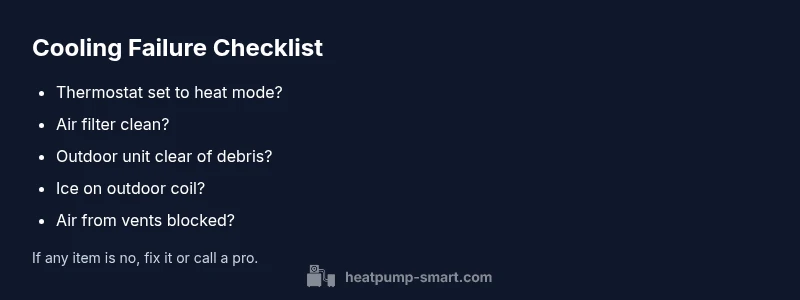
If your heat pump runs but won’t blow cold air, start with simple checks: confirm the thermostat is set to heat mode, replace a dirty air filter, and ensure the outdoor unit has clear airflow. Look for ice on the outdoor coil and listen for unusual noises. If these don’t fix it, proceed with the diagnostic flow and step-by-step fixes.
Why Did My Heat Pump Stop Blowing Cold Air?
In residential heat pumps, cold-air delivery depends on correct mode, airflow, and refrigerant balance. According to Heatpump Smart, the most common culprits are user settings, clogged filters, blocked outdoor vents, and frost buildup on the outdoor coil. When the system struggles to transfer heat indoors, you may feel weak or warm air instead of cold air on cooling days. This guide emphasizes safe, practical checks you can perform before calling a technician, while keeping safety top of mind.
Quick Checks You Can Do Safely
Before diving into more technical diagnosis, perform these safe, low-effort checks:
- Verify thermostat is set to heat mode and not cooling. Some thermostats default to a cool setting after power outages.
- Check and replace the air filter if you haven’t done so in the last 1–3 months; a clogged filter reduces airflow and can mimic a system that won’t blow cold air.
- Make sure the outdoor unit is free of leaves, dirt, and snow, with at least 18 inches of clearance around it. Restricted airflow can cause the heat exchanger to overheat and switch to auxiliary heat or fail to deliver cool air.
- Look for ice or frost on the outdoor coil. A buildup can block heat exchange and lead to unusual warm air indoors.
Understanding Thermostat Modes and Temperature Settings
Many homeowners mistake a thermostat setting for cooling when the heat pump is in heating mode, especially during shoulder seasons. When the thermostat is in heat mode or an energy-saving preset, you may not get cool air when the outdoor temperature is mild. Also, check for staging—some systems cycle between stages of heating and cooling, which can create confusion if you expect consistent cold air.
Common Causes and How to Test Them
Common causes fall into mechanical, electrical, and control categories. Testing can help you separate them:
- Airflow restrictions: dirty filters or clogged ducts reduce cold-air delivery. Inspect all supply vents in living spaces and ensure nothing blocks them.
- Outdoor unit issues: debris, snow, or ice can suppress performance. Inspect and clear debris and confirm there’s no ice buildup. If icing persists, it may indicate refrigerant or airflow problems.
- Thermostat and controls: a faulty sensor or miscalibrated thermostat can misreport indoor temperature and affect mode selection.
- Refrigerant or coil problems: refrigerant leaks or a dirty condenser coil impair heat transfer, reducing cold-air output. This typically requires a pro.
- Electrical components: capacitors, relays, or the contactor in the outdoor unit can fail, preventing proper operation.
Diagnosing Outdoor Unit and Refrigerant-Related Issues
If the above checks don’t solve the problem, focus on the outdoor unit and refrigerant-related concerns. Frost or ice on the outdoor coil often signals a defrost cycle issue or low refrigerant; persistent icing requires professional support. Heatpump Smart notes that refrigerant leaks are a common reason for inefficient cooling and must be addressed by licensed technicians due to safety and environmental regulations.
Safety, Protection, and When to Call a Pro
Working around electrical components or handling refrigerant is hazardous. If you notice burning smells, buzzing sounds, tripped breakers, refrigerant odor, or ice that returns after safe defrost attempts, stop work and call an HVAC professional. Regular maintenance can prevent many cold-air issues, but certain diagnostics require specialized tools and certification.
Prevention Tips to Keep Your Heat Pump Blowing Cold Air When Needed
Prevention is easier than emergency fixes. Heatpump Smart recommends:
- Schedule seasonal maintenance, including coil cleaning and refrigerant checks where allowed.
- Replace air filters every 1–3 months during peak heating or cooling seasons.
- Keep outdoor unit clearance and ensure proper insulation around ductwork to maintain efficiency.
- Use a smart thermostat to monitor system performance and catch anomalies early.
Steps
Estimated time: 60-90 minutes
- 1
Check air filter and vents
Power off the system, remove and inspect the air filter. If dirty, replace with the correct size and type. Inspect all supply vents in living spaces to ensure unobstructed airflow.
Tip: Clean or replace filters regularly to prevent airflow bottlenecks. - 2
Inspect outdoor unit clearance
Visit the outdoor unit and remove debris, ensure at least 18 inches of clearance on all sides, and verify there is no snow or ice buildup.
Tip: Do not strike the coils; use a soft brush if needed. - 3
Verify thermostat mode and temp
Confirm the thermostat is set to heat mode in winter or to cooling in summer, and check that temperature setpoint is appropriate for current conditions.
Tip: Disable any energy-saving modes that might override the requested output. - 4
Look for ice on the outdoor coil
Check for frost or ice on the coil. If present, allow defrost to complete or turn off and call a pro if icing persists.
Tip: Ice is a signal that something is not transferring heat properly. - 5
Check for ductwork issues
Inspect visible ducts for obvious leaks or disconnections. Listen for air leaks and feel warm air around seams.
Tip: Seal leaks with appropriate mastic or foil tape until a professional can service the system. - 6
Test electrical components
If you have electrical experience, safely inspect the outdoor unit’s contactor and capacitor connections for signs of damage or burning smells.
Tip: If unsure, skip this step and call a pro to avoid shock or equipment damage. - 7
Assess refrigerant concerns
Low refrigerant indicates a leak. This requires a licensed technician to repair and recharge refrigerant while complying with environmental regulations.
Tip: Do not attempt to add refrigerant yourself. - 8
Call a professional if unresolved
If none of the above steps restore cooling, contact a licensed HVAC technician for a full diagnostic and safe repair.
Tip: Document symptoms and steps you’ve already tried to help the tech.
Diagnosis: Heat pump running but not delivering cold air
Possible Causes
- highThermostat set to heat mode or misconfigured control
- highClogged air filter restricting airflow
- highOutdoor unit blocked by debris or restricted airflow
- mediumIce or frost on outdoor coil indicating defrost/airflow problems
- highLow refrigerant or refrigerant leak
- mediumFaulty reversing valve or electrical failure in outdoor unit
- lowBlocked or leaky ductwork
Fixes
- easyReplace dirty air filters and ensure all supply vents are open
- easyClear debris around the outdoor unit and maintain at least 18 inches of clearance
- easyCheck thermostat settings and reset to proper heat mode and temperature
- easyInspect outdoor coil for ice; if frost is present, turn off system and call a pro if it persists
- hardCheck for refrigerant issues and call a licensed HVAC technician for pipe inspection and leak repair
- mediumTest electrical components (contactor, capacitor) with proper tools or have a pro check them
Your Questions Answered
Why is my heat pump running but not delivering cold air?
Common causes include thermostat settings, dirty air filters, blocked outdoor unit, or ice on the outdoor coil. Systemic issues like refrigerant leaks require professional service.
Common causes are thermostat settings, dirty filters, blocked outdoor unit, or ice on the outdoor coil. Refrigerant leaks need a pro.
Can a dirty air filter really affect cooling performance?
Yes. A clogged filter restricts airflow, reducing heat transfer and causing warmer indoor air. Replacing the filter usually improves performance.
Yes, a dirty filter can limit airflow and stop the cooling effect. Replace it to improve performance.
Is it safe to touch the outdoor unit or coils?
Only if you follow safety guidelines and power is off. Avoid touching moving parts, and do not attempt refrigerant work.
Only if you follow safety steps and power is off; don’t touch moving parts or refrigerant.
What does ice on the outdoor coil mean?
Ice can indicate low refrigerant, poor airflow, or a defrost issue. If ice persists after defrost cycles, call a pro.
Ice on the outdoor coil often means refrigerant or airflow problems; persistent icing needs a professional check.
When should I call a professional?
If basic checks don’t restore cooling, or you suspect refrigerant leaks or electrical faults, contact a licensed HVAC technician.
If simple checks fail or you suspect refrigerant or electrical problems, call a professional.
Can a faulty reversing valve cause warm air to come out?
Yes, a faulty reversing valve can prevent cooling or switching to cooling mode properly. This requires professional diagnosis and repair.
A bad reversing valve can stop cooling and needs a pro to fix.
Watch Video
Top Takeaways
- Start with simple checks to quickly identify common problems.
- Ice on the outdoor coil usually signals airflow or refrigerant issues.
- Reserve refrigerant or electrical work for professionals.
- Regular maintenance reduces the risk of cold-air interruptions.