Why Does a Heat Pump Blow Cold Air? A Practical Troubleshooting Guide
Quickly diagnose and fix why your heat pump blows cold air with practical checks, safety tips, and step-by-step guidance for homeowners, builders, and property managers.


If your heat pump blows cold air, the most likely causes are thermostat settings showing cooling mode, restricted airflow, or an active defrost cycle. Check the thermostat, air filters, and outdoor unit first. If the issue persists, review sensor placement and ensure the system isn’t in emergency heat. Act quickly to restore warmth.
Common causes of cold air from a heat pump
If you're wondering why does heat pump blow cold air, it's often due to simple, fixable issues alongside more complex system problems. The most common culprits are thermostat settings, airflow restrictions, or a defrost cycle in progress. Understanding the sequence of events helps homeowners and professionals diagnose quickly and avoid unnecessary repairs. By testing hypotheses in a structured way and recording what you observe, you guide any future service visits. Heat pumps are designed to extract heat from outside air and deliver warmth indoors, but when conditions change or a component misreads, cold air can slip into the system. The key is to test fixes in order, starting with the easiest, and to document observations to help a technician if you need one. At Heatpump Smart, we regularly see calls that begin with a simple thermostat mix-up or a clogged air filter—easy fixes with big impact.
Thermostat and sensor issues
Thermostat settings and sensor readings strongly influence heat pump output. If the thermostat is set to cool, or if the indoor sensor is located near a heat source or draft, you can get misleading readings and cold-air delivery. Check that the mode is set to heat, with the fan in auto, and verify the desired temperature. If you’ve recently replaced the thermostat or moved sensors, double-check wiring and calibration. Small calibration errors can cause the system to under-heat or default to emergency heat. In some homes, a faulty sensor can lag behind actual room temperature, causing short cycling and inconsistent warmth. Keep a log of observed temperatures and comfort levels for reference when you consult a professional.
Air filter and airflow checks
A clogged air filter or blocked return/ supply ducts can chock airflow and cause the system to struggle to pull heat from the outside air. Start with the obvious: inspect and replace dirty filters. Then, check that all supply vents are open and unobstructed, and inspect ductwork for leaks or kinks. Poor airflow not only reduces perceived warmth but can trigger the system to rely on auxiliary heat or misinterpret temperature, resulting in cold air at the registers. Regular filter changes are a simple, effective defense against this problem.
Defrost cycles and outdoor conditions
In cool or humid weather, a heat pump may enter a defrost cycle to remove frost from the outdoor coil. During defrost, you may briefly feel cool or cold air as the outdoor unit reverses to melt ice. This is normal and temporary. If the defrost cycle runs longer than usual, or if you notice ice build-up on the outdoor coil, it could indicate airflow issues, low refrigerant, or a malfunctioning controller. Monitor the cycle and give it time to complete before deciding it’s a fault. Regular maintenance helps minimize unnecessary defrost duration.
Refrigerant and system health
Low refrigerant or leaks can cause reduced heating performance and cold air at the ducts. This is a more serious issue that requires professional service. Signs include hissing sounds, oily residue around service ports, or unusual frost on the outdoor coil. If you suspect refrigerant problems, avoid DIY attempts to seal leaks or add refrigerant. Only a licensed technician with proper equipment can safely diagnose and restore proper refrigerant levels. Regular system checks help prevent refrigerant-related cold air problems.
Sizing, ductwork, and installation considerations
Improperly sized systems or poorly designed ductwork can produce cold air delivery in certain zones of the home. If the unit is too small for the space, it may run longer and struggle to reach set temperatures, leading to perceived cold air. Conversely, oversized units can short-cycle, producing insufficient dehumidification and uneven temperatures. Ductwork leaks or restricted runs also hamper heat delivery. A professional assessment can confirm proper sizing, duct integrity, and installation quality, ensuring your heat pump operates as intended.
Quick fixes you can try safely
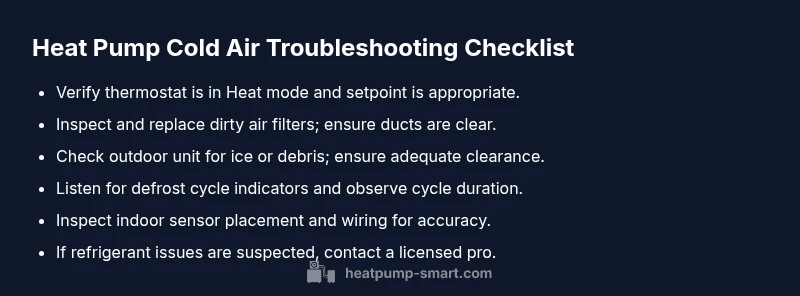
Before contacting a technician, try these safe checks: verify thermostat mode and setpoint, replace or clean the air filter, ensure all vents are open and unobstructed, inspect the outdoor unit for snow, debris, or ice, and listen for defrost cycle indicators. If you’re comfortable, gently remove debris from the outdoor coil and clear nearby obstructions to improve airflow. Remember: turn off power before inspecting electrical components or touching any wiring.
When to call a professional
If basic checks don’t restore warmth, it’s time to call a professional. Persistent cold air can signal a refrigerant issue, compressor problem, sensor miscalibration, or control board fault, all of which require licensed technicians. Timely service helps protect efficiency and prevent further damage. When you call, share observations from your diagnostic log, including thermostat settings, observed cycles, and any noises or frost you noticed.
Steps
Estimated time: 60-90 minutes
- 1
Check thermostat settings
Start by confirming the thermostat is set to Heat, not Cool. Set a comfortable target temperature and ensure the fan is on Auto. If the thermostat has a separate emergency heat mode, disable it unless needed for backup warmth.
Tip: A quick screenshot of settings helps comparative checks later. - 2
Inspect air filter and air intake
Remove and inspect the air filter. If it looks dirty or clogged, replace it with a properly rated filter. Then, scan indoor vents to ensure they’re open and not blocked by furniture or drapes.
Tip: Filters should be replaced every 1-3 months during peak heating season. - 3
Evaluate outdoor unit and defrost cycle
Visit the outdoor unit; remove snow or debris and check for ice buildup. If you see ice, allow the defrost cycle to complete. If ice persists, stop and proceed to professional help rather than forcing operation.
Tip: Never poke or chisel ice from coils; this can damage components. - 4
Check indoor sensor placement
Locate the indoor sensor and ensure it isn’t tucked behind furniture or near a heat source like a lamp or heater. A misread temperature can cause improper heating cycles.
Tip: If you moved the sensor recently, give the system time to re-stabilize. - 5
Assess refrigerant status (call if suspected)
Look for signs of refrigerant trouble—hissing sounds, frost on the outdoor coil, or oily residues. Do not attempt to recharge refrigerant yourself; this requires a licensed technician.
Tip: Document any unusual sounds or frost patterns to share with the tech. - 6
Evaluate airflow and ducting
Inspect for obvious duct leaks, holes, or disconnected sections in accessible areas. Seal small leaks with appropriate sealant and note if rooms are consistently cooler than others.
Tip: Sealing duct leaks can yield noticeable comfort improvements.
Diagnosis: Heat pump blows cold air
Possible Causes
- highThermostat set to cooling mode or incorrect temperature
- highDirty air filter or restricted airflow
- mediumOutdoor defrost cycle or ice on the outdoor coil
- highIndoor temperature sensor misreading or improper placement
- lowLow refrigerant or refrigerant leak
- mediumImproper system sizing or ductwork issues
Fixes
- easyVerify thermostat is in Heat mode and set to an appropriate temperature; adjust fan setting to Auto
- easyInspect and replace dirty air filter; clear any obvious blockages in ducts near vents
- easyCheck outdoor unit for ice or heavy snow; allow defrost cycle to complete; clear debris from around the unit
- easyMove or recalibrate indoor sensors away from heat sources or drafts; confirm wiring matches the control board
- hardIf refrigerant symptoms are suspected (hissing, frost growth, or oil residues), call a licensed HVAC technician for leak check and recharge
- mediumConsult a professional to assess system sizing and duct integrity; consider a sizing/ductwork upgrade if mismatches are found
Your Questions Answered
Why is my heat pump blowing cold air even though the thermostat is set to heat?
Thermostat settings are the first place to check. Ensure the unit is in heat mode, the temperature is appropriate, and the fan is on Auto. Misconfiguration or recent changes can cause cold air delivery even when warmth is desired.
Check that your thermostat is in heat mode and the fan is set to Auto. A misconfigured thermostat is a common cause of cold air.
Can a dirty filter cause cold air from a heat pump?
Yes. A blocked air filter reduces airflow, causing the system to struggle and sometimes deliver cooler air at the vents. Replace or clean filters regularly to maintain proper heating performance.
A dirty filter reduces airflow and can make warm air harder to push through the system.
When should I call a professional for heat pump cold air?
If basic checks don’t restore warmth, or you hear unusual noises or see frost without defrost cycling, contact a licensed HVAC technician. Issues like refrigerant leaks or faulty sensors require professional service.
If warmth doesn’t return after simple checks, call a licensed HVAC tech.
Can defrost cycles make the air feel cold?
During defrost, the outdoor unit reverses briefly and you may feel cooler air inside. This is normal. If defrost lasts unusually long, consider professional inspection.
Defrost cycles can briefly blow cooler air; it’s usually normal but monitor if it’s extended.
Is improper ductwork a common cause of cold air?
Yes, leaks or blockages in ducts can cause uneven heating and cold spots. A professional assessment can identify leaks and suggest sealing or ductwork improvements.
Duct leaks or blockages can create cold spots; a pro can fix that.
What’s the difference between heat mode and emergency heat?
Emergency heat runs backup resistance heat and can feel less efficient. Ensure the system isn’t in emergency heat unless outdoor temps genuinely require it.
Emergency heat uses backup heaters—use it only when necessary.
Top Takeaways
- Check thermostat and mode first
- Ensure clean, open airflow paths
- Watch defrost and outdoor conditions
- Identify any refrigerant signs and consult a pro
- Confirm proper sizing and duct integrity