Why doesn t my heat pump blow warm air? A Step-by-Step Troubleshooting Guide
Urgent troubleshooting guide to diagnose and fix a heat pump not blowing warm air. Learn quick checks, step-by-step fixes, and safety tips to restore comfort and efficiency.


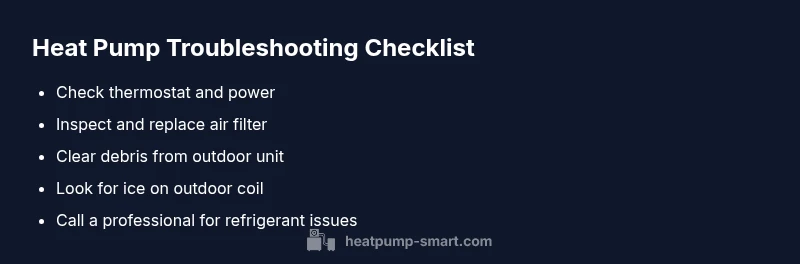
Start with the basics: ensure the thermostat is set to Heat with the fan on Auto, and confirm the unit is powered. Check for airflow issues (dirty filter, closed vents) and make sure the outdoor condenser isn t blocked. If these basics don t resolve it, a service call is usually warranted.
Why doesn t my heat pump blow warm air
According to Heatpump Smart, when a heat pump fails to deliver warm air, the issue is rarely mysterious. Most often the culprit is either a simple setting, a clogged filter, or airflow obstruction. Understanding how your system should behave—the distinction between Heat mode, Auto, and Emergency Heat—helps you diagnose quickly. In this guide, we’ll walk through the most common causes, safe checks you can perform yourself, and when to call a professional. For homeowners, builders, and property managers, a disciplined approach saves time and reduces energy waste. By addressing these issues early, you maintain comfort and keep operating costs in check.
Heat pumps are designed to pull warmth from outside air even when it’s cold, but efficiency depends on proper airflow, correct refrigerant balance, and a healthy outdoor condenser. A misconfigured thermostat or a dirty filter can masquerade as a refrigerant problem, leading you down the wrong path. Heatpump Smart’s team emphasizes starting with the basics and verifying that each subsystem is behaving as designed.
Common causes at a glance
There are several frequent culprits when a heat pump stops delivering warm air. Start by ruling out the easiest explanations before diving deeper:
- Thermostat settings or mode errors (Heat vs Cool, Auto vs On)
- Airflow restrictions from a dirty filter or blocked supply vents
- Outdoor condenser blocked by debris, snow, or ice
- Refrigerant issues such as a leak or low charge
- Defrost cycle problems or short cycling
Each of these issues can mimic more serious failures, so a systematic check is essential. Heatpump Smart analysis shows that addressing the most common items first often resolves the problem without a service call. If the system attempts to heat but the air remains cold, check for frost on the outdoor coil and verify that the system has power.
Check thermostat settings and power
Start here because it’s the fastest fix. Verify the thermostat is set to Heat, the fan is set to Auto, and the temperature is above the current room temp. If the thermostat is in Emergency Heat or Auxiliary mode, the heat output may be limited. Check that the thermostat is receiving a signal from the main control board (look for a blank display or error code). After you confirm the settings, reset the thermostat if you’ve recently updated firmware. If you’re using a smart thermostat, ensure it hasn’t overridden the schedule. Power supply should be checked at the breaker; a tripped breaker will prevent the system from operating normally. If you restore power and settings but the issue remains, proceed to the next checks.
Inspect air filter and indoor blower
Airflow is critical for heat pump performance. A dirty filter or clogged return vents reduces airflow, causing the evaporator coil to ice up and the system to reduce heating output. Inspect and replace the air filter according to the manufacturer’s recommendations, and ensure all supply and return registers are open and unobstructed. Clean the blower compartment if you notice dust buildup, and confirm the blower motor is running when the system calls for heat. If the indoor coil feels unusually cold to the touch, or if you hear unusual noises, there may be an airflow problem requiring further steps.
Inspect outdoor unit and refrigerant lines
Outdoor unit must have clear space for airflow. Remove leaves, snow, or debris from the condenser and check that the fins are not bent. If the outdoor unit blows hot air at first but quickly cools, the system may be in a defrost cycle or experiencing refrigerant issues. Do not attempt to recharge refrigerant yourself; refrigerant handling must be performed by a licensed technician. If the outdoor coil is iced over, turn off the unit and allow it to thaw, but do not poke ice or use hot tools. Low airflow from blocked return or a dirty filter can contribute to freezing as well.
Frost, ice, and airflow problems
Frost and ice on the outdoor coil is a common sign of airflow problems or refrigerant issues. When the coil freezes, the heat pump cannot extract ambient heat effectively, resulting in cold air. Your steps: check for obvious frost and switch to emergency heat if needed (this preserves warmth but reduces efficiency). If ice persists, call a pro; do not attempt to thaw with sharp objects. Ensure the defrost control is functioning; sometimes the defrost cycle fails due to thermostat issues. If you detect ice in multiple cycles, refrigerant diagnosis may be necessary.
When to call a professional and safety notes
Many heat pump failures involve refrigerant or electrical components that require licensed technicians. If you smell refrigerant, hear buzzing, see exposed wiring, or the system won’t start after basic checks, shut off power at the breaker and contact a pro immediately. Do not attempt DIY refrigerant repairs; high pressure refrigerant can cause injuries. Schedule a professional inspection promptly to prevent compressor damage and energy waste.
Preventive maintenance to avoid future issues
Schedule seasonal maintenance, replace air filters on a regular basis, keep outdoor space clean, and inspect ducts for leaks. Regular maintenance improves efficiency and reduces the likelihood of future heating issues. Consider upgrading to a smart thermostat with energy-saving features to optimize performance and catch issues early.
Steps
Estimated time: 60-90 minutes
- 1
Verify basic thermostat and power settings
Begin by ensuring the thermostat is set to Heat and that the fan is on Auto. Check the display for error codes and confirm the unit has power at the breaker. If you recently updated firmware on a smart thermostat, recheck the programmed schedule.
Tip: If you’re unsure about a thermostat setting, use the manual or manufacturer app to verify modes. - 2
Check and replace air filter
Turn off the system before touching the blower compartment. Remove and replace the air filter if dirty. Confirm all return vents are open and unobstructed to restore proper airflow.
Tip: Keep a routine to replace or clean filters every 1–3 months, depending on usage. - 3
Inspect indoor blower and registers
Listen for the blower operation when the system calls for heat. Check that the blower is circulating air through the ductwork and that registers aren’t blocked by furniture or debris.
Tip: A weak or absent blower indicates a motor or control issue best handled by a pro. - 4
Inspect outdoor unit and clear debris
Clear leaves, snow, and dirt from the condenser. Check fins for damage and ensure the unit has at least 24 inches of clearance on all sides for airflow.
Tip: Never poke at the fins; use a soft brush or low-pressure air to clean. - 5
Check for ice on the outdoor coil
Look for frost on the coil; if present, switch to emergency heat if advised by the manual. Do not attempt to thaw with hot tools—let it thaw naturally and monitor.
Tip: Persistent icing warrants professional refrigerant and airflow assessment. - 6
Call a professional for refrigerant and electrical diagnostics
If basic checks fail to restore warm air, refrigerant issues or electrical faults may be present. A licensed technician should test pressures, seal leaks, and recharge as necessary.
Tip: Have model/serial numbers ready to speed up the service call.
Diagnosis: Heat pump blows cool air or fails to heat
Possible Causes
- highThermostat misconfiguration or mode (e.g., Emergency Heat)
- highAirflow restriction due to dirty filter or blocked vents
- highOutdoor condenser obstruction or debris
- mediumIce/frost forming on outdoor coil due to low airflow
- lowRefrigerant leak or low charge
Fixes
- easyVerify thermostat settings and power; reset if needed
- easyReplace or clean the air filter; clear obstructions in supply/return
- easyClear debris from outdoor unit and ensure unobstructed airflow
- mediumIf ice is present, turn off system and allow thaw; call pro if persists
- mediumIf refrigerant issues suspected, contact a licensed technician for leak test and recharge
Your Questions Answered
What is the first thing I should check if my heat pump isn t heating?
Start with the thermostat settings, power supply, and airflow. Make sure the unit isn t in Emergency Heat and that the outdoor unit isn t blocked. If the issue persists, proceed to the next checks.
Check the thermostat, power, and airflow first, then move on to outdoor unit checks if needed.
Can a dirty air filter stop a heat pump from heating?
Yes. A clogged filter restricts airflow, which can cause the evaporator coil to ice up and reduce heat output. Replace the filter and re-check the system.
Absolutely—a dirty filter can block airflow and prevent proper heating.
Should I use Emergency Heat if the house is cold?
Emergency heat can be less efficient and provide reduced heat output. Use it briefly while you identify and fix the root cause.
Emergency heat is for temporary use while you fix the issue.
When should I call a professional?
If basic checks don t solve the problem, or you notice refrigerant smells, ice persists, or electrical issues appear, contact a licensed technician.
Call a pro if you suspect refrigerant or electrical problems.
Can a defrost cycle cause temporary cold air?
Defrost cycles can temporarily reduce heating output. If cold air persists beyond the cycle, there may be a fault requiring inspection.
Defrost cycles are normal briefly; prolonged cold indicates a problem.
Watch Video
Top Takeaways
- Verify thermostat and power first.
- Ensure clean airflow by replacing filters.
- Keep outdoor unit clear of debris and ice.
- Call a pro for refrigerant or electrical problems.