Why Does My Heat Pump Have Ice on It
urgent, step-by-step guide to diagnose and fix ice buildup on heat pumps, with safety tips and prevention strategies for homeowners and professionals.


Ice buildup on a heat pump is typically caused by restricted airflow, a faulty defrost cycle, or refrigerant problems. Quick fixes you can try safely include clearing debris from the outdoor unit, replacing a dirty air filter, and ensuring the thermostat is calling for heat. If icing persists, contact a licensed technician immediately, per Heatpump Smart.
Why ice forms on a heat pump and when to worry
Ice forming on the outdoor coil is not rare in winter, but understanding the underlying causes helps you respond quickly and safely. Icing typically results from restricted airflow, a malfunctioning defrost cycle, or refrigerant-related issues that prevent proper heat transfer. If the outdoor coil is clogged with snow or debris, heat exchange suffers and frost accumulates faster. In some cases, a faulty defrost timer or a stuck reversing valve can contribute, though these are less common. When ice covers the coil, efficiency drops, run times lengthen, and energy bills rise. Most icing episodes resolve with simple actions like cleaning debris, replacing filters, and ensuring the defrost cycle runs as designed. If icing recurs or ice appears on the indoor coil, that often signals a more serious problem that warrants a professional assessment. The Heatpump Smart team emphasizes starting with the basics and monitoring performance over a day or two to determine if icing is a temporary blip or a persistent issue.
Quick checks you can safely perform before calling a pro
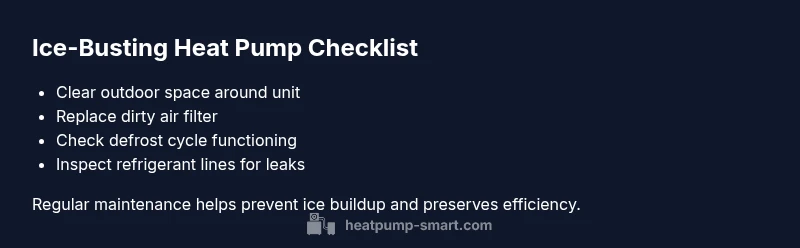
Before dialing a service technician, run through these noninvasive checks. Make sure the outdoor unit has at least 12 inches of clearance on all sides and is free of leaves, snow, or ice buildup. Check the indoor air filter and replace if dirty. Confirm the thermostat is calling for heating appropriately and that the indoor blower is operating. Inspect the condensate drain line for blockages and ensure the reversing valve (if present) is in the correct position. If you notice frost on refrigerant lines or persistent ice, turn off the system and wait for it to thaw before attempting any further investigation. These steps reduce the risk of damaging electrical components and help you gather the right information for a technician.
Diagnosing the ice: common causes and how to test
Diagnosing an iced heat pump hinges on testing for airflow, defrost performance, and refrigerant status without disassembly beyond safe checks. Common culprits include restricted airflow (blocked filters, dirty coils, or clogged outdoor vents), a defrost controller or timer that isn’t cycling properly, and refrigerant issues that prevent adequate heat absorption. Low outdoor temperatures can also stabilize ice formation, especially if the system is undersized for the home load. To test, observe whether the outdoor fan runs smoothly, listen for automatic defrost cycles, and check whether ice reduces after a forced defrost (only if you know how to safely initiate this procedure or with a technician present). Record the time ice first appears and any changes after reset. Remember, never poke at ice with metal tools or expose wiring—safety first.
Step-by-step: fix for a typical iced-coil scenario
- Power down safely: Turn off the heat pump at the breaker and lockout the switch to prevent accidental restart. 2. Thaw the ice: Allow the ice to melt naturally; do not use direct heat sources on the coil. 3. Inspect filters and coils: Once thawed, replace or clean the air filter and check for debris on the outdoor coil. 4. Test airflow: Reconnect power and verify the outdoor fan operates and there is good airflow through the register. 5. Check defrost controls: If the defrost timer or control is accessible, confirm it cycles normally during colder hours. 6. Monitor performance: After restart, monitor run times and indoor temperatures for 24–48 hours. If icing returns, escalate to professional service.
Safety considerations and when to involve a licensed technician
Irradiant safety and refrigerant handling guidelines require caution. Working on a heat pump involves electrical connections and refrigerant circuits; improper handling can cause injury or leaks. If you notice oily residue on lines, hissing sounds, or the ice keeps reforming after thaw, contact a licensed HVAC professional. Do not bypass safety shutoffs or attempt to repair refrigerant components yourself. When in doubt, err on the side of professional assessment to prevent costly damage or dangerous leaks.
Preventive maintenance to minimize future icing
To reduce the odds of future icing, implement a simple maintenance routine. Schedule annual inspections, replace air filters every 1–3 months depending on usage, and clean the outdoor coil each season. Ensure sufficient clearance around the unit, insulate exposed refrigerant lines, and set thermostat controls to operate within the heat pump’s designed range. A proactive approach saves energy, extends equipment life, and keeps your home comfortable even in cold snaps.
Steps
Estimated time: 20-40 minutes
- 1
Power down and secure
Turn off the heat pump at the breaker. Use the disconnect switch if available and ensure no one can restart the unit during inspection.
Tip: Lockout devices add an extra layer of safety. - 2
Thaw safely
Let ice melt naturally and avoid direct heat sources like torches or boiling water on the coil.
Tip: Direct heat can warp fins or damage electrical components. - 3
Inspect air filter and coils
Once thawed, replace dirty air filters and check the outdoor coil for obstructions or debris.
Tip: A clean coil improves heat transfer and performance. - 4
Test airflow and fan operation
Restore power and confirm the outdoor fan operates smoothly; verify there’s clear airflow through the indoor grille.
Tip: Poor fan operation suggests motor or control problems. - 5
Check defrost controls
If accessible, confirm the defrost timer cycles and that the system exits defrost normally.
Tip: A stuck defrost cycle can cause repeated icing. - 6
Monitor after restart
Observe performance for 24–48 hours; monitor run times, temperatures, and any return of ice.
Tip: If icing returns, document conditions to share with a technician.
Diagnosis: Ice on heat pump (outdoor unit) during cold weather
Possible Causes
- highRestricted airflow (blocked filters, dirty coils, poor clearance)
- mediumMalfunctioning defrost cycle or defrost timer
- lowLow refrigerant or refrigerant leak
- mediumExtreme outdoor temperatures or undersized equipment
Fixes
- easyClear debris around outdoor unit, replace filters, and ensure airflow paths are open
- easyVerify and reset defrost cycle/timer; ensure thermostat commands heat properly
- hardIf refrigerant issues are suspected, do not attempt DIY repairs; call a licensed tech
Your Questions Answered
Why does my heat pump ice up in winter?
Ice forms when airflow is restricted, the defrost cycle fails, or refrigerant problems occur. Check filters, coils, and airflow before escalating.
Ice build-up happens mainly from blocked airflow or a faulty defrost cycle. Start with filters and airflow checks, then call a pro if it continues.
Can I thaw ice manually?
Natural thaw is safest. Avoid using heat guns, torches, or hot water on the coil to prevent damage and leaks.
Let it thaw on its own and avoid direct heat on the coil. If uncertain, call a pro.
Is a refrigerant leak the cause of icing?
Refrigerant leaks can lead to icing and poor performance. Leaks require a licensed technician to diagnose and repair safely.
A leak can cause icing. Only a qualified technician should handle refrigerant repairs.
Should I turn the system off during a freeze?
If icing is heavy, turning off the unit can help thaw, but ensure it is safe and, if possible, monitored. Do not operate damaged equipment.
If there’s heavy ice, power down safely and let it thaw. If unsure, seek professional help.
How long does a defrost cycle take?
Defrost cycles vary by model and conditions, typically lasting a few minutes. Frequent icing after defrost suggests a control or sensor issue.
Defrost cycles are usually short, but repeated icing means service is needed.
What maintenance helps prevent icing?
Regularly clean filters and coils, clear space around the outdoor unit, and schedule annual service to keep defrost efficiency high.
Keep filters clean and have yearly service to reduce icing risks.
Watch Video
Top Takeaways
- Clear outdoor space and clean filters to restore airflow.
- Defrost cycle problems are common icing culprits.
- Persistent icing requires a licensed technician.
- Preventive maintenance lowers future icing risk.