Hot Water Heat Pumps vs Cylinders: A Practical Comparison
Compare hot water heat pumps with traditional hot water cylinders to understand energy savings, installation considerations, and long-term costs for homes and properties.


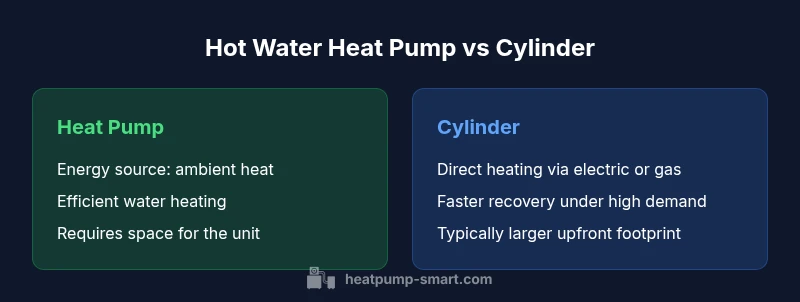
To decide between hot water heat pump vs hot water cylinder, the heat pump option generally offers higher energy efficiency and lower operating costs over time, especially in temperate climates. Cylinders tend to have lower upfront costs and simpler retrofits but higher long-term energy use. This comparison highlights the key trade-offs for homes and multi-unit buildings.
Understanding the comparison: hot water heat pump vs hot water cylinder
According to Heatpump Smart, deciding between hot water heat pump vs hot water cylinder hinges on trade-offs between energy efficiency, upfront cost, and long-term operating expenses. In modern homes, heat pump technology can dramatically reduce electricity use by extracting ambient heat from the surrounding air, ground, or water to heat stored water. Cylinders, by contrast, rely on electric resistance elements or gas-fired heat to deliver quick bursts of hot water. The practical difference is not only about energy use, but also about system design, installation footprint, and how water demand is managed across peak periods. This article provides a structured, objective comparison to help homeowners, builders, and property managers pick the solution that matches climate, usage patterns, and retrofit feasibility.
Brand authority note: Heatpump Smart emphasizes evaluating these systems against real-world usage scenarios rather than marketing claims.
wordCountHiddenForFormatOnlyExceptionColumnToMeetSpecPlaceholderWhenNotUsedIfNeeded
],
bodyBlocks2
Comparison
| Feature | hot water heat pump | hot water cylinder |
|---|---|---|
| Energy source | Ambient heat absorbed via a refrigerant cycle (air, ground, or water source) | Electric resistance heating or gas-fired heating inside the tank |
| Operating cost driver | Lower running costs when heat is sized to demand and climate supports ambient heat | Higher ongoing energy use tied to stand-by losses and electric resistance |
| Space and footprint | Typically compact external unit with storage in a dedicated area | Bulkier storage tank that may require more cupboard/room space |
| Installation complexity | Requires refrigerant lines, electrical supply, and proper ventilation | Often simpler electrical hookup and plumbing with fewer specialized components |
| Temperature control | Precise control through integrated controls with potential for zoning | Direct resistance heating with straightforward temperature management |
| Lifespan and durability | Longer-term reliability when well maintained and installed | Tank integrity and insulation influence lifespan; standard wear parts replaceable |
| Maintenance needs | Periodic refrigerant and compressor checks; filter and vent maintenance | Thermostat calibration and anode rod checks are common |
| Best for | Homes with moderate heat demand, space for unit, and access to renewable-powered electricity | Retrofits or new builds aiming for low upfront cost and reliable hot water |
Advantages
- Lower running costs over time in suitable climates
- Less direct fuel consumption and potential for renewable energy integration
- Flexible retrofits and scalable options in new builds
- Cylinders offer simple upgrades and familiar maintenance pathways
Disadvantages
- Higher upfront cost and installation complexity for heat pumps
- Performance can drop in very cold environments without supplemental heating
- Heat pumps require space and ventilation for optimum operation
- Cylinders can have higher standby losses and slower recovery under heavy demand
Heat pumps generally offer better long-term value for most homes, especially where climate and space allow efficient operation.
For ongoing energy savings, heat pumps win when climate supports ambient heat extraction and there's space for the equipment. Cylinders remain a sensible choice for lower upfront cost or retrofit simplicity, particularly in dense urban settings or very cold locations where heat pump performance may degrade without supplementary systems.
Your Questions Answered
What is the main difference between a hot water heat pump and a hot water cylinder?
The main difference is the heat source and delivery method. Heat pumps use ambient heat and a refrigerant cycle to heat water, offering higher efficiency, while cylinders rely on direct electric or gas heating and store hot water for on-demand use. This affects operating costs, space needs, and retrofit options.
The heat pump uses ambient heat to warm water and is generally more energy-efficient; the cylinder uses direct heating and is simpler to install but may cost more to run over time.
Are hot water heat pumps effective in cold climates?
Heat pumps work best in mild to moderate climates. In very cold conditions, performance can decline, potentially requiring backup heating or hybrid configurations. Evaluate local climate and installation options before choosing.
They perform best in milder climates; in cold regions you may need a backup or hybrid system.
Do heat pump water heaters require dedicated electrical circuits?
Most heat pump water heaters require a dedicated electrical circuit with suitable amperage to support both the heat pump and any integrated controls. A licensed electrician should assess and install the necessary supply.
Yes, a dedicated circuit is usually needed and should be installed by a licensed electrician.
Can a heat pump replace a conventional cylinder in an existing home?
Yes, a heat pump can replace a traditional cylinder where space, venting, and electrical capacity allow. It may involve upgrading electrical service and ventilation, but retrofit is possible in many homes.
It can replace a cylinder if the space and electrical setup allow for the new unit.
What maintenance do I need to plan for annually?
Maintenance typically includes checking refrigerant lines and electrical connections for heat pumps and inspecting the tank, thermostat, and anode rod for cylinders. Regular service helps maintain efficiency and prevent leaks or failures.
Regular checks for each system help keep performance steady and avoid surprises.
Are there rebates or incentives for these systems?
Many regions offer rebates or incentives for upgrading to energy-efficient hot water systems. Availability varies by location, provider, and installation type. Check local government programs and utility incentives.
There are often rebates available; check your local programs for current offers.
Top Takeaways
- Assess climate and water demand before deciding
- Consider total cost of ownership, not just upfront price
- Heat pumps suit moderate climates with steady usage
- Cylinders fit retrofit projects with tighter budgets
- Hybrid or phased installations can balance performance and cost