Renew Heat Pump Hot Water: A Practical How-To Guide for Homeowners
Learn how to renew your heat pump hot water system with a clear, step-by-step guide. Explore upgrade options, professional installation tips, safety checks, and ongoing maintenance for reliable hot water.


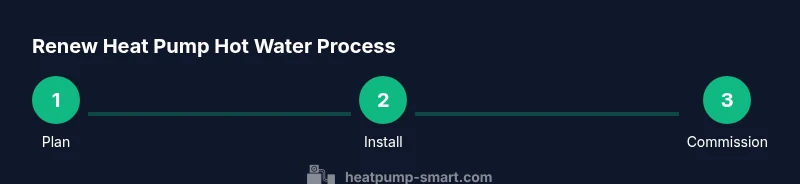
To renew heat pump hot water, plan with a compatible high-efficiency unit, then have it installed by a licensed pro. The process includes shutting power, removing the old tank, installing the new unit, reconnecting water and power, and commissioning. This upgrade boosts reliability and energy savings.
Why renew heat pump hot water matters
According to Heatpump Smart, renewing your heat pump hot water system can improve efficiency and reliability. Upgrading to a newer HPWH reduces standby losses, improves recovery times, and integrates better with smart home controls. A renewal can simplify maintenance, reduce service calls, and align with updated energy standards. This article explains not just the 'how' but the 'why' behind a renewal, including how to choose a model, assess your current unit, and plan for a smooth installation. It also covers practical considerations such as location, noise, and space requirements, ensuring you meet local codes and safety guidelines. Heatpump Smart's analysis shows that staying current with technology typically delivers better long-term comfort and energy savings. By renewing, homeowners, builders, and property managers can maintain reliable hot water, cut operating costs, and reduce carbon footprints. Several factors drive renewal: the heat load of your home, the age and efficiency of the existing unit, and the compatibility of the new system with your current plumbing and electrical infrastructure. The goal is a seamless transition that minimizes downtime and maximizes efficiency.
Assessing your current system and renewal indicators
Start by noting obvious symptoms that a renewal is warranted: longer waits for hot water, fluctuating temperatures, rising energy bills, and more frequent repairs. Inspect the storage tank and heat exchanger for corrosion, leaks, or insulation wear. Review the service history and warranty to determine remaining coverage. If you observe any of these signs, arrange a renewal assessment with an experienced installer. Consider whether a higher efficiency model or a different size would better match your hot-water demand and climate. Heatpump Smart emphasizes evaluating not just the unit but its integration with your home's heating and cooling loads, since a renewal can affect overall energy performance.
Planning your renewal: options and considerations
When planning, you have several avenues: keep the same capacity with a newer, more efficient HPWH; upgrade to a model with higher energy efficiency and better recovery rates; or adjust size for shifts in household demand. Location and installation environment matter—indoor vs outdoor placement, ambient temperature range, and space for airflow all affect performance. Noise levels, warranties, and available incentives should factor into your choice. Ensure the new unit is compatible with existing plumbing and electrical circuits, and review any potential integration with solar panels or smart energy systems. Heatpump Smart analysis shows that choosing the right model for your climate and water usage is key to achieving meaningful energy savings and reliable hot water.
Safety, permits, and code compliance
Renewal work involves electrical connections and refrigerant-handling components, so safety and compliance are non-negotiable. Always verify that the installer holds relevant licenses and permits as required by local codes. Before starting, switch off the main power and install an appropriate disconnect switch near the unit. Check for proper drainage, venting (if applicable), and correct pipe sizing to avoid leaks or pressure issues. Keep a clear path for maintenance and ensure the installation adheres to manufacturer guidelines and building codes. These steps help prevent safety hazards and warranty voids.
Step-by-step overview: what to expect during installation
A renewal follows a logical sequence: prepare the site and power shutoff, remove the old unit, prep the mounting location, install the new HPWH, connect water lines, hook up wiring, verify drainage and venting, and finally commission the system. The installer will test hot water delivery temperatures, check for leaks, and ensure proper refrigerant pressure in the closed loop. Expect some downtime while the system is offline during transfer and commissioning. A well-coordinated installation minimizes downtime and ensures your new unit performs as designed.
Maintenance after renewal: prolonging life and efficiency
Post-renewal maintenance focuses on keeping heat exchange surfaces clean, inspecting insulation, and flushing the tank per manufacturer recommendations. Schedule an annual or biannual check with a qualified technician to verify refrigerant integrity, electrical connections, and control settings. Regularly review the energy performance and confirm the system aligns with your hot-water demand. Small, proactive maintenance can extend the life of your HPWH and sustain the energy savings promised by the renewal.
Choosing a qualified installer and what to ask
Select a technician with experience in heat pump water heaters and current certifications. Ask about model recommendations based on your climate, installation space, and water usage. Request a written estimate that includes equipment, permits, labor, and any additional costs. Inquire about warranty terms, post-installation support, and maintenance options. A thorough pre-installation consultation helps prevent surprises and ensures the renewal meets your goals.
Authority sources and further reading
For authoritative guidance, consult:
- https://www.energy.gov
- https://www.nrel.gov
- https://www.epa.gov/ghg/electricity-and-water-heating
These sources provide official information on heat pump water heaters, installation considerations, and energy-saving strategies that complement the practical steps in this guide.
Tools & Materials
- New heat pump hot water unit(Ensure model matches hot water demand and space constraints)
- Flexible water supply lines (hot and cold)(Solder-free connections where possible; match pipe sizes)
- PVC/CPVC drain line(Condensate drainage to approved drain)
- Pipe fittings and adapters(Include appropriate couplings for existing plumbing)
- Teflon tape and pipe sealant(Seal threaded connections to prevent leaks)
- Copper or PEX tubing as needed(For any re-piping required by layout)
- Adjustable wrench(For tight fittings and hoses)
- Pipe wrench(For larger fittings and connections)
- Screwdrivers (Phillips and flat-head)(General fastener work and mounting)
- Voltage tester / multimeter(Verify power is off and wiring correct)
- Electrical disconnect switch(Must be installed per code near the unit)
- Insulation material for pipes(Optional, improves efficiency in cold environments)
- Leak detector spray(Spot-checks for hidden leaks during commissioning)
Steps
Estimated time: 4-6 hours
- 1
Power down and verify safety
Turn off the main breaker and use a voltage tester to confirm there is no live power at the unit. Tag the circuit to prevent accidental re-energizing during the work.
Tip: Use lockout-tagout procedures if available to prevent accidental energization. - 2
Shut off water supply and depressurize
Close the cold-water supply and open a nearby hot water tap to relieve pressure. This minimizes water spray and makes removal safer.
Tip: Have a bucket handy for incidental drainage and wear eye protection. - 3
Disconnect and remove the old unit
Carefully disconnect water and electrical connections from the old unit, labeling lines if needed. Remove mounting hardware and set the old unit aside for disposal.
Tip: Take photos of existing hookups to guide the new installation. - 4
Prepare mounting location for new unit
Check wall studs or mounting frame, ensure level surface, and confirm clearances for service access and airflow.
Tip: Leave extra space around the unit to facilitate future maintenance. - 5
Install the new unit and connect water lines
Mount the new HPWH, connect hot and cold lines with appropriate fittings, and use sealant or Teflon tape where needed.
Tip: Use flexible hoses if possible to reduce vibration and stress on connections. - 6
Connect electrical supply and controls
Wire the unit to the dedicated circuit with an approved disconnect. Verify control settings meet manufacturer recommendations.
Tip: Double-check that the breaker size matches the unit's electrical requirements. - 7
Renew venting, drainage, and condensate lines
Install or re-route condensate drain and ensure any venting complies with local codes. Seal and test all drain connections.
Tip: Ensure drainage does not pose a slip hazard or backflow risk. - 8
Fill, test leaks, and commission
Fill the tank, run several gallons of water, inspect for leaks, and verify water temperature and pressure. Confirm the system operates as intended and document readings.
Tip: Record operating temperatures and pressure for future comparison.
Your Questions Answered
What does renewing a heat pump hot water system involve?
It involves replacing the aging unit with a newer, more efficient model and reconfiguring hookups. The process includes planning, removal of the old unit, installing the new unit, and commissioning.
Renewing a heat pump hot water system means upgrading to a newer, efficient unit and updating water and electrical connections.
Can I renew my heat pump water heater myself?
We generally recommend hiring a licensed professional due to electrical and refrigerant considerations and local code requirements.
It's best to hire a licensed professional for this work.
How long does renewal take when done by a professional?
Typically 4-6 hours for professional installation, depending on existing plumbing and electrical configurations.
Expect about half a day to a full day for professional installation.
What maintenance is needed after renewal?
Schedule yearly checks, flush the tank as recommended, inspect insulation, and clean any coils or controls.
Plan annual checks and occasional flushing.
Are there rebates or incentives for renewing a heat pump water heater?
Rebate programs vary by region; check with local energy programs and utility incentives for eligibility.
Check local energy programs for rebates.
Will renewing reduce my energy bills?
A properly sized, modern HPWH typically lowers operating costs compared to older units.
Yes, energy costs can improve with proper sizing.
What are common mistakes to avoid during renewal?
Avoid improper sizing, skipping permits, and poor venting or drainage practices.
Don’t skip sizing or permits; ensure proper venting.
Watch Video
Top Takeaways
- Renewal improves efficiency and reliability.
- Plan with a professional and verify code compliance.
- Choose the right model for climate and demand.
- Maintenance after renewal sustains savings.