Carrier Air Conditioner vs Heat Pump: A Practical Comparison
A comprehensive, unbiased comparison of Carrier air conditioners and heat pumps, covering efficiency, climate fit, installation, and total cost of ownership for homeowners and professionals.


When choosing between Carrier air conditioner and heat pump systems, consider climate, efficiency, and installation costs. According to Heatpump Smart, Carrier options can deliver reliable cooling and heating, but performance hinges on configuration and usage. This comparison helps homeowners choose the right setup.
Overview of the Carrier air conditioner and heat pump landscape
The phrase carrier air conditioner and heat pump encompasses Carrier-brand cooling and heating solutions that many homeowners consider for year-round comfort. This landscape includes conventional air conditioners that excel in cooling performance and heat pumps that provide both heating and cooling, often with supplemental electric resistance or gas backup in colder weather. For homeowners, installers, and property managers, understanding how these systems differ in function, efficiency, and climate suitability helps prevent overpaying or under-sizing. Heatpump Smart’s neutral analysis emphasizes that the right choice depends on climate, home insulation, and usage patterns rather than brand loyalty alone. In this guide, we’ll compare the two classes side by side, highlight practical installation considerations, and offer decision criteria grounded in real-world scenarios. The goal is to help you optimize comfort while controlling energy costs, regardless of whether you pick a Carrier air conditioner or a Carrier heat pump.
How Carrier air conditioners and heat pumps work
Carrier air conditioners rely on a refrigerant cycle to transfer heat from indoors to outdoors, delivering focused cooling. A Carrier heat pump uses the same basic refrigerant cycle but can reverse it, absorbing heat from outdoors to warm the interior during milder winters. In practice, many homes use heat pumps with auxiliary heating elements for cold snaps. The key distinction is heating capability: air conditioners cool, while heat pumps cool and heat. Understanding this difference helps when designing a year-round climate control strategy, including how a compatible thermostat and zoning system can maximize efficiency. For homeowners evaluating options, this section clarifies why the heating function matters in addition to cooling performance.
Energy efficiency metrics you should care about for Carrier systems
Efficiency is not a single number; Carrier models span a range of efficiency ratings, and the right metric depends on whether you’re evaluating cooling-only performance or year-round operation. SEER (Seasonal Energy Efficiency Ratio) measures cooling efficiency, while HSPF (Heating Seasonal Performance Factor) applies to heating performance in heat pumps. In practice, a Carrier heat pump can offer both high SEER and a meaningful HSPF if paired with a variable-speed compressor and modern refrigerant circuits. Heatpump Smart analysis shows that real-world efficiency is strongly influenced by climate, insulation, duct leakage, and proper installation. So, when you compare Carrier air conditioners to Carrier heat pumps, look for models with high SEER and, for heat pumps, solid HSPF ratings combined with quality auxiliary heating strategies. Pair these with a high-efficiency fan motor to minimize runtime costs.
Climate suitability: where a heat pump shines and where a traditional AC wins
Heat pumps are particularly advantageous in moderate climates with seasonal heating needs, offering heating during cooler months without a second heating system. In hot summers, a Carrier heat pump can be very efficient, but in extreme winter regions, many households rely on a supplemental heat source. Traditional air conditioners excel in hot climates with little heating demand, often delivering lower upfront costs and simpler service plans. A critical factor is whether your home experiences cold snaps that stress the system; in such cases, you’ll want to plan for backup heat or a dual-fuel setup. The Heatpump Smart approach emphasizes evaluating long-term energy costs alongside upfront price when weighing these climate-driven trade-offs.
Installation and space considerations for Carrier systems
Installation quality matters as much as the equipment itself. Carrier air conditioners typically require correctly sized ductwork and a properly sloped outdoor unit pad to minimize vibration and noise. Heat pumps, especially variable-speed models, benefit from controlled duct layouts and sometimes larger electrical capacity. Space constraints, such as outdoor clearance and airflow around the condenser or outdoor unit, influence performance and warranty terms. A reputable installer will conduct a manual J load calculation, assess duct leakage, and confirm refrigerant line length and insulation. Investing in correct installation reduces the risk of short cycling, wear, and energy waste over the system’s life.
Sizing, configuration, and control options for Carrier systems
Size matters: an oversized or undersized unit fails to dehumidify effectively and wastes energy. Carrier offers a range of configurations, including single-stage, two-stage, and variable-speed compressors, as well as smart thermostats and zoning capabilities. For heat pumps, the presence of backup heat and the efficiency of the outdoor unit in cold weather are critical. Controls such as variable-speed blower motors, two-stage compressors, and modern reversing valves influence comfort and energy use. When evaluating Carrier air conditioner versus heat pump, consider not just the equipment but the control strategy that will run it—timely maintenance and programming can squeeze meaningful savings.
Maintenance and service considerations for Carrier systems
Regular maintenance helps sustain efficiency and extends hardware life. Air conditioners require coil cleaning, refrigerant checks, and filter changes. Heat pumps add periodic checks of reversing valves and auxiliary heat elements. Carrier systems often come with manufacturer warranties that require annual professional inspections; failing to follow maintenance terms can void coverage. Addressing duct leakage and ensuring correct refrigerant charge are crucial for maintaining performance. A proactive service plan reduces the risk of unexpected breakdowns and ensures that both cooling and heating capabilities perform as designed.
Reliability, warranties, and service networks for Carrier
Carrier is a well-known brand with an extensive installation and service network. Reliability depends on model selection, installation quality, routine maintenance, and climate exposure. Warranties typically vary by model and region, with longer coverage offered on premium lines and certain parts such as compressors. When evaluating Carrier air conditioner versus heat pump, check the warranty terms for both compressor and parts, and confirm what the service network can deliver in your area. A robust service ecosystem can translate into lower downtime and faster repairs when problems arise.
Cost considerations and total cost of ownership (TCO)
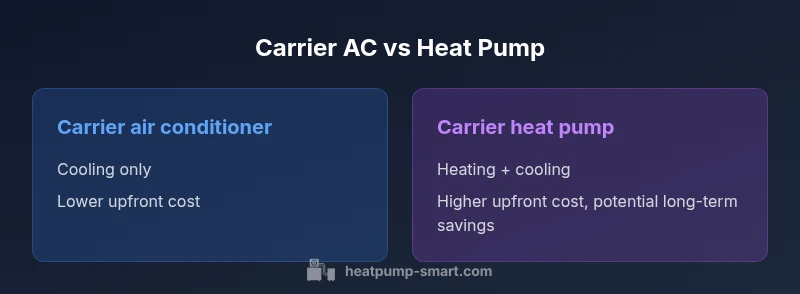
Upfront cost for Carrier air conditioners is generally lower than for heat pumps due to simpler technology and fewer heating components. Heat pumps may involve higher initial investment, particularly for high-efficiency, variable-speed models, but they can offer significant energy savings over time in the right climate. TCO also includes maintenance, service costs, and potential backup heat requirements. In many markets, energy prices and incentive programs influence the break-even point. Homeowners should weigh the long-term savings against upfront costs and the expected durability of their chosen configuration.
Maintenance tips and practical recommendations for homeowners
To maximize performance, perform simple tasks like changing filters regularly, cleaning outdoor coils if accessible, and scheduling annual professional inspections. Ensure that your ducts are sealed (or consider duct testing) to reduce losses. If your home has substantial insulation gaps, address those to improve efficiency regardless of a Carrier air conditioner or heat pump. For new installations, obtain multiple bids that include a load calculation, ductwork evaluation, and a clear description of the proposed equipment, controls, and warranties. Finally, take advantage of available rebates or incentives to improve the economic case for your system.
Debunking myths: common misconceptions about Carrier air conditioners and heat pumps
A frequent myth is that heat pumps can’t heat in very cold weather. Modern heat pumps with auxiliary heat or dual-fuel configurations can maintain comfortable indoor temperatures in many cold climates, but performance depends on outdoor temperatures and system design. Another misconception is that all heat pumps operate loudly. With variable-speed compressors and properly sized outdoor units, Carrier models can be quiet and unobtrusive. Understanding the actual capabilities requires looking at model-specific data and real-world performance rather than broad generalizations.
Comparison
| Feature | Carrier air conditioner | Carrier heat pump |
|---|---|---|
| Heating capability | Cooling only | Heating + cooling (with auxiliary heat) |
| Efficiency metrics | SEER-based cooling efficiency | SEER + HSPF for heating |
| Climate suitability | Hot climates; minimal heating demand | Moderate to cold climates with heating needs |
| Noise potential | Model-dependent, typically comparable | Model-dependent, with high-efficiency units designed for low noise |
| Upfront cost and installation | Lower upfront cost; simpler install | Higher upfront cost; more complex install |
| Maintenance | Standard coil and filter maintenance | Similar maintenance with additional heat components checks |
| Best for | Cooling-focused homes | Year-round comfort in mixed climates |
Advantages
- Clear, side-by-side comparison to aid decisions
- Highlights climate-appropriate choices for long-term savings
- Encourages professional sizing and installation for optimal results
- Supports energy-efficiency planning with model options
Disadvantages
- Brand-specific terminology may confuse non-tech buyers
- Heat pumps require backup heat in very cold climates
- Upfront costs can be higher for high-efficiency heat pumps
Heat pump typically offers better all-season value in moderate climates; air conditioners excel in hot climates with minimal heating.
Choose a heat pump for year-round comfort in areas with mild winters. Opt for a traditional air conditioner in very hot regions with little heating demand, while considering backup or dual-fuel options for colder periods.
Your Questions Answered
What is the difference between a Carrier air conditioner and a Carrier heat pump?
An air conditioner provides cooling only, while a heat pump can cool and heat. Heat pumps rely on reversing the refrigerant cycle and may use auxiliary heat in cold weather. The choice depends on climate, heating needs, and energy goals.
Air conditioners cool only; heat pumps both cool and heat, with optional backup heat for very cold days.
In which climate should I choose a heat pump over a traditional AC?
Heat pumps are most advantageous in moderate climates with seasonal heating needs. In very hot and dry regions, an AC with an auxiliary heater might be more economical upfront, while in milder areas a heat pump can deliver year-round savings.
Heat pumps shine in climates with heating needs; for extreme heat only, consider an AC plus backup heat if needed.
Is a Carrier heat pump more expensive to install than an AC?
Generally, heat pumps cost more upfront due to heating components and advanced controls. Long-term energy savings, climate, and incentives can offset the higher initial investment.
Heat pumps usually cost more upfront, but can save more over time depending on your climate and incentives.
What maintenance does a Carrier system require?
Regular filter changes, coil cleaning, and annual professional inspections are recommended for both systems. Heat pumps may require occasional checks of the reversing valve and auxiliary heat.
Keep filters clean, have yearly inspections, and watch the heat components in heat pumps.
Do heat pumps require backup heating?
Many heat pumps rely on backup heat sources in very cold weather. The need and type of backup depend on climate and system configuration.
In cold climates, backup heat is common for heat pumps to maintain comfort.
How long do Carrier units typically last?
With proper installation and maintenance, Carrier air conditioners and heat pumps can provide 10–15+ years of service depending on usage and environment.
With good care, you can expect roughly a decade or more of life from these systems.
Top Takeaways
- Assess climate to determine heating needs
- Compare SEER for cooling and HSPF for heating when evaluating heat pumps
- Prioritize proper sizing and professional installation
- Consider total cost of ownership, including maintenance
- Factor in warranties and service availability