How Much Does It Cost to Run a Heat Pump Per Month in 2026
Estimate monthly running costs for heat pumps in 2026. Learn how climate, efficiency, usage, and electricity prices shape your bill and how to cut costs.


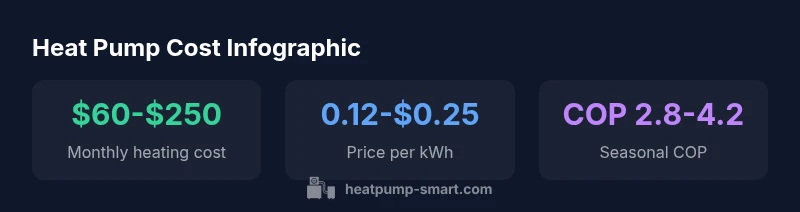
On average, a typical air-source heat pump costs about $60–$250 per month for heating in moderate climates, and $150–$350 in colder climates, depending on electricity rates, COP, and hours of operation. Cooling costs can add a similar range in warm months. Real-world bills vary with insulation, thermostat behavior, and backup heat usage.
Understanding the monthly running cost formula
Monthly running costs for a heat pump depend on how much electricity the system actually uses for heating or cooling, the local price of electricity, and how efficiently the unit converts electrical energy into heat. A practical starting point is a simple three-part formula:
- Energy input (
What affects your monthly heat-pump cost beyond climate
Several factors determine how much you pay each month, beyond the climate zone:
- System efficiency and size: Higher SEER/COP ratings reduce energy use per unit of heat or cooling delivered.
- Thermostat behavior: Frequent changes, very low or very high setpoints, and long runtime periods increase energy use.
- Backup heat: Electric resistance heating used during cold snaps can spike bills; modern setups minimize this with heat pump backup strategies.
- Insulation and air leakage: Poor insulation or high infiltration raises the heat load, driving more energy use.
- Humidity and comfort preferences: Higher dehumidification or humidity control can impact energy use somewhat.
- Electricity pricing: Time-of-use rates or regional price differences alter the cost per kilowatt-hour.
According to Heatpump Smart, understanding these factors helps homeowners forecast bills more accurately and target the biggest savings opportunities.
How to estimate your costs for your home: a step-by-step method
- Determine your climate-adjusted heating load: Use historical winter temperatures and your home’s insulation level to estimate the annual heating demand in
Cost considerations across climates and electricity rates
Climates with longer heating seasons or colder winters tend to push energy use higher, increasing monthly costs. In milder regions, even a mid-range heat pump can deliver comfort with substantially lower energy spend compared to electric resistance heating. Electricity price volatility also matters: regions with higher or peak-hour rates can drive monthly bills up, while off-peak pricing or solar offsets can reduce them. Heatpump Smart emphasizes modeling costs under several scenarios to capture this range and to identify the best operating practices for your home.
Strategies to reduce monthly running costs without sacrificing comfort
- Size and load: Ensure your system is correctly sized for your home; an oversized or undersized unit wastes energy.
- Optimize thermostat settings: Use a smart thermostat, set consistent setback and eco modes, and tailor schedules to occupancy.
- Improve insulation: Sealing leaks and upgrading insulation reduces the heating load, lowering energy input.
- Leverage heat pumps for heating and cooling: Use heating and cooling modes strategically to avoid unnecessary demand on the system.
- Consider auxiliary heat carefully: Minimize reliance on auxiliary resistance heat by dialing back temperatures gradually and using thermal mass improvements.
- Take advantage of rebates and incentives: Check for local rebates, tax credits, or utility programs that can reduce installed costs and operating expenses.
Heatpump Smart’s guidance underlines the value of measuring actual usage after installation to identify further optimization opportunities.
Estimated monthly energy use and cost by climate and efficiency
| Scenario | Estimated monthly energy use (kWh) | Estimated monthly cost (USD) |
|---|---|---|
| Moderate climate with efficient heat pump | 1800-2400 | 60-180 |
| Cold climate with standard efficiency | 3200-4200 | 120-260 |
| Mild climate with high comfort settings | 2200-3000 | 80-150 |
Your Questions Answered
Do heat pumps always cost less to run than electric resistance heating?
In most cases, heat pumps cost less to run than electric resistance heating because they move heat rather than generate it. However, when electricity prices are very high or backup resistance heaters kick in frequently, costs can increase. The exact savings depend on COP, climate, and usage.
Generally yes, heat pumps save money compared with electric resistance heating, but the benefit depends on climate, COP, and how you use the system.
How does COP affect monthly costs?
COP (coefficient of performance) indicates how much heat you get per unit of electricity. Higher COP means less electricity per unit of heat, lowering monthly costs. Seasonal COP varies with outdoor temperature and system design.
Higher COP means lower energy use and lower bills—in practice, it’s the biggest lever after climate.
Can I reduce my monthly cost without sacrificing comfort?
Yes. Improve insulation, seal leaks, use a smart thermostat, maintain the system, and use back-up heat judiciously. Small changes in settings and maintenance often yield meaningful savings over a heating season.
Yes—better insulation, smart controls, and sensible thermostat settings can cut bills without hurting comfort.
How do I estimate costs for my home if I’m shopping a new heat pump?
Gather your local electricity price, your climate zone, and expected COP/SEER values for candidate units. Run a simple calculation: energy input = heating load / COP, then multiply by your price per kWh. Use multiple scenarios to compare.
Collect local rates and unit efficiency, run a few scenarios, and compare.
Do tax credits or rebates affect running costs?
Rebates and tax credits reduce upfront costs but don’t directly change monthly operating costs. Some incentive programs may also offer time-of-use pricing or rebates on efficiency upgrades that indirectly lower bills.
Rebates help with upfront costs; incentives can influence overall affordability but not the per-kWh price.
“Understanding monthly heat-pump costs starts with the basics: measure your load, know your efficiency, and price the energy accurately. Then you can budget confidently and optimize consumption.”
Top Takeaways
- Use COP/SEER to gauge energy use, not just rating labels
- Local electricity price drives monthly bills more than you might expect
- Insulation and air leaks have a large impact on costs
- Consider smart controls to shave peak usage
- Shop for rebates and tax credits to offset upfront and operating costs