Benefits of Heat Pump vs Furnace: Side-by-Side Analysis
Explore the benefits of heat pump vs furnace in this analytical guide. Learn how climate, efficiency, installation, and operating costs influence which system fits your home and budget.


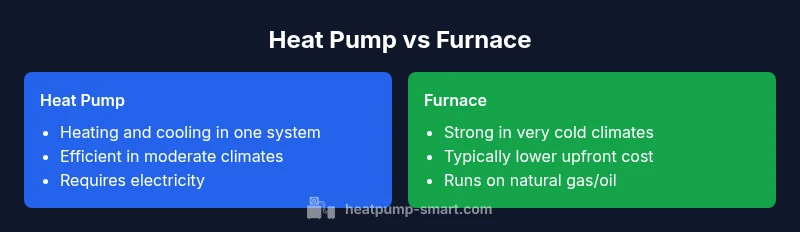
For homeowners weighing the benefits of heat pump vs furnace, climate, electricity costs, and insulation are the deciding factors. In moderate climates, heat pumps typically deliver superior efficiency and year‑round comfort, often reducing operating costs over the life of the system. Furnaces may win on upfront cost and reliability in very cold areas, or when electric infrastructure is limited. The best choice depends on climate, energy goals, and long‑term budget.
Context: why the discussion matters for homeowners
The debate over the benefits of heat pump vs furnace is not merely academic. It shapes comfort, energy bills, and long‑term property value. Heat pumps draw heat from outside air or the ground and move it indoors, providing heating in winter and cooling in summer when paired with a reversible system. Furnaces, by contrast, generate heat through combustion, typically using natural gas or oil. For homeowners, the decision involves balancing climate realities, electricity prices, and the home’s insulation level. According to Heatpump Smart, understanding these variables helps ensure you pick a system that delivers consistent comfort without breaking the budget. The analysis that follows keeps climate, efficiency, and total cost of ownership front and center, so you can make an informed decision grounded in real‑world conditions.
How a heat pump differs from a furnace in principle
Heat pumps rely on refrigerant cycles to transfer heat between indoor and outdoor environments, powered by electricity. Furnaces produce heat through combustion of fuel. This fundamental difference leads to distinct performance profiles: heat pumps tend to deliver higher efficiency in mild to moderate climates, while furnaces can offer robust warmth in very cold weather where heat pumps may need supplemental heat sources. Heatpump Smart’s framework emphasizes climate and insulation as the primary determinants of which system is more advantageous, rather than relying on one metric like upfront cost alone.
Energy efficiency and cost of operation in practice
Efficiency is not a single number; it is a relationship between the system and its use. A heat pump’s efficiency is measured by its coefficient of performance (COP) and season performance factor (SPF) in some regions, while furnaces are rated by annual fuel utilization efficiency (AFUE). In everyday terms, heat pumps often produce more heating output per unit of electricity in temperate zones, which can translate to lower operating costs when electricity prices are reasonable and outdoor temperatures are not extreme. Heatpump Smart’s analysis highlights that the real savings depend on how well a system is sized, installed, and maintained, as well as how electricity prices evolve over time.
Climate considerations: when climate tips the balance
Climate is the ultimate guide to choosing between a heat pump and a furnace. In milder climates with moderate heating needs, heat pumps usually outperform furnaces for total energy use and comfort because they also provide cooling. In very cold climates, heat pumps may require a supplemental heat source or a hybrid approach to maintain consistent warmth during peak demand. The decision should consider average winter temperatures, humidity, and how well the home is insulated. Heatpump Smart emphasizes that in extreme climates, a furnace or a hybrid system can be a reliable fallback that preserves comfort during the coldest periods.
Upfront costs, installation, and lifecycle value
Upfront cost and installation complexity are central to the decision. Heat pumps typically involve higher initial costs and potential electrical upgrades, but can offer savings through lower operating costs and potential rebates. Furnaces tend to have lower upfront costs and may require simpler installation, especially if fuel lines and venting are already in place. Over the system’s life, the total cost of ownership for heat pumps can be favorable in the right climate and with clean electricity, while furnaces may remain attractive where upfront budget or fuel infrastructure is a primary constraint. Heatpump Smart notes that projected savings hinge on performance, efficiency ratings, and maintenance.
Maintenance, reliability, and service needs
Maintenance requirements for heat pumps differ from furnaces. Heat pumps require attention to refrigerant levels, coil cleanliness, and outdoor unit performance, while furnaces require burner maintenance, venting checks, and combustion safety tests. Neither system is maintenance‑free, and neglect can erode efficiency and reliability. A high‑quality installation and a proactive maintenance plan typically yield the best results for both options. Heatpump Smart emphasizes scheduling annual inspections and prompt service to protect performance, regardless of the chosen technology.
Emissions and environmental impact: the broader picture
Emissions depend on the energy source behind the electricity used by heat pumps. In regions with low‑carbon grids, heat pumps can dramatically reduce household emissions compared to fossil‑fuel furnaces. In areas where electricity is generated from renewables, the environmental benefits are more pronounced. Heatpump Smart highlights that the choice can align with broader climate goals when the electricity mix is taken into account, underscoring the potential for lower lifecycle emissions with heat pumps when paired with clean generation.
Comfort, noise, and controllability in daily life
User experience matters. Heat pumps often operate with quieter, low‑velocity air streams and advanced controls, delivering even temperatures with smart thermostats and zoning. Furnaces can be louder and create stronger temperature swings if not properly matched to the home. Both systems benefit from proper duct design and insulation: better envelopes reduce heat loss and improve overall comfort, regardless of heating technology. Heatpump Smart’s guidance stresses that comfort should be evaluated in the context of airflow, humidity control, and the ability to maintain steady temperatures during peak demand.
Backup heating and resilience in cold snaps
No heating system is perfect in every climate. Heat pumps may rely on back‑up heat in exceptionally cold spells, or require a hybrid system to maintain warmth. Furnaces can deliver dependable heat even when outdoor temperatures plummet, provided fuel and venting are available. Planning for backup sources—such as a supplementary furnace, a heat backup in a multi‑split system, or a dual‑fuel configuration—helps ensure resilience. Heatpump Smart encourages homeowners to map their worst‑case scenarios and choose a setup that preserves comfort during cold snaps.
Choosing the right system: a practical decision framework
To translate the discussion into action, focus on four decision factors: climate, electricity cost and availability, insulation and air sealing, and budget/tunding. If you live in a temperate climate with good insulation and access to clean electricity, a heat pump often provides the best balance of comfort and operating cost. In harsher winter regions, a furnace or a hybrid system may be more reliable and cost‑effective given the local fuel and electricity dynamics. Heatpump Smart suggests using a sizing calculator, obtaining multiple quotes, and considering rebates when evaluating options.
Comparison
| Feature | Heat pump | Furnace |
|---|---|---|
| Mode of heating | Transfers ambient heat using refrigerant cycle; may also cool | Generates heat via combustion of fuel (gas/oil) |
| Energy efficiency | Very high efficiency in moderate climates; depends on electricity source | Efficiency measured by AFUE; steady performance in cold months |
| Best climate | Mild to moderate climates with clean electricity | Very cold climates or where gas/oil is abundant and cheap |
| Upfront cost | Higher upfront cost; potential electrical upgrades | Lower upfront cost; simpler venting if existing |
| Operating costs | Lower operating costs in eligible regions; energy prices matter | Steady fuel costs dependent on fuel price fluctuations |
| Maintenance needs | Requires refrigerant/coils checks; outdoor unit exposure | Burner, vent, and filter maintenance; combustion safety |
| Emissions impact | Lower emissions when electricity is clean; depends on grid mix | Emissions tied to fuel type and efficiency; generally higher |
| Backup heat | Back‑up heat may be needed in extreme cold or events | Typically provides reliable heat without back‑up, depending on fuel |
| Cooling capability | Often provides cooling; dual functionality | No cooling function unless combined with separate AC |
Advantages
- Potentially lower long-term operating costs in suitable climates
- Provides cooling in hot seasons when paired with AC
- Lower emissions with clean electricity grids
- Advanced controls and zoning improve comfort
Disadvantages
- Higher upfront cost and possible electrical upgrades
- Performance relies on climate, insulation, and electricity price
- May require backup heat in very cold locations
- Complex installation and potential ductwork modifications
Heat pumps generally offer better long-term value in moderate climates, while furnaces may be preferable in very cold regions or when upfront cost is the primary constraint.
Choose heat pumps for energy efficiency and cooling benefits in temperate climates. Opt for furnaces or hybrids when cold extremes, budget constraints, or existing fuel infrastructure favor combustion heating.
Your Questions Answered
Are heat pumps more energy-efficient than furnaces in all climates?
Heat pumps are typically more energy-efficient in moderate climates where electricity is reasonably priced and the outdoor temperatures are not extreme. In very cold climates, furnaces or hybrid systems may be needed to maintain consistent warmth. The best approach is to evaluate climate data, insulation, and electricity costs for your home.
Heat pumps often save energy in milder climates, while very cold areas may favor furnaces or hybrids. Your climate and electricity costs determine efficiency gains.
Do heat pumps require backup heating in winter?
Many heat pump systems include back‑up heat or operate as part of a hybrid setup to handle very cold conditions. The need for backup heat depends on local climate and the system's design. A well‑planned installation minimizes reliance on backup while maintaining comfort.
Backup heat is common in cold climates, but a good system minimizes its use while keeping you warm.
What factors influence the cost difference between heat pumps and furnaces?
Upfront costs, installation complexity, fuel and electricity prices, and potential rebates all shape the cost difference. Heat pumps may require electrical upgrades but can offer savings over time with efficient operation and cooling benefits. Furnaces usually have lower upfront costs but dependent on fuel prices.
Upfront cost, installation, energy prices, and rebates drive the cost gap between heat pumps and furnaces.
Can you replace a furnace with a heat pump in an existing home?
Yes, many existing homes can switch from a furnace to a heat pump, often with ductwork assessment and minor upgrades. The decision should consider climate, electrical capacity, and potential cooling needs. A phased or hybrid approach may reduce disruption and optimize comfort.
Replacing a furnace with a heat pump is common, but plan for electrical and ductwork needs.
Are there rebates or incentives for heat pumps?
Many regions offer rebates or incentives for heat pump installations, especially when paired with high efficiency ratings or grid modernization programs. Check local utility programs and federal incentives to estimate net costs.
Rebates can help offset the upfront cost; check local and federal programs.
Which system is better for new construction?
For new construction, heat pumps can be a strong choice due to potential efficiency gains and the ability to provide cooling alongside heating. If site conditions or electricity access are limited, a well‑planned furnace or hybrid system may be more straightforward. A builder should model loads and energy use to decide.
Heat pumps suit new builds with cooling needs and good electricity access; hybrids are options if conditions require.
Top Takeaways
- Assess climate before choosing technology
- Consider total cost of ownership, not just upfront price
- Factor in electricity supply and grid emissions
- Plan for backup heating in extreme cold if needed
- Use zoning and smart controls to maximize efficiency