What is Heat Pump vs Boiler? A Thorough Comparison
Compare heat pumps and boilers to understand differences in mechanism, efficiency, costs, and suitability for your home. Learn about climate effects, maintenance, and incentives.


Heat pumps move heat from outside air or the ground into your home using electricity, while boilers burn fuel to produce heat. This comparison clarifies the core differences, typical cost considerations, and where each option shines, so homeowners can decide what best fits climate, energy prices, and comfort needs.
What is the core difference between heat pump and boiler systems?
Understanding what is heat pump vs boiler is foundational for homeowners evaluating replacements or upgrades. In summary, heat pumps move heat from outside air or the ground and deliver it indoors using electricity. Boilers generate heat by burning fuel, then circulate hot water or steam to radiators and radiant floors. This structural distinction drives the biggest contrasts in efficiency, emissions, and operating costs, especially when electricity prices and climate conditions shift. According to Heatpump Smart, the fundamental choice often comes down to climate compatibility, long-term energy pricing, and tolerance for upfront investment. The Heatpump Smart team found that many homes achieve excellent year-round comfort with a heat pump, while boilers remain attractive in settings with high hot water demand or very cold winters.
How heat pumps work
Heat pumps operate on a refrigeration cycle that extracts heat from outside sources (air, ground, or water) and concentrates it for indoor use. They require electricity to power the compressor, fans, and controls, but the heat moved indoors can exceed the electrical energy consumed, yielding high efficiency in favorable conditions. Air-source heat pumps are common in retrofits, while ground-source systems excel in performance consistency but demand more land area for loops. Modern models incorporate cold-climate refrigerants and variable-speed compressors to maintain comfort in colder weather. The essential takeaway is that a heat pump shifts energy use from conversion at the point of use to energy transport, which can dramatically lower operating costs when conditions align.
How boilers work
Boilers generate heat by burning natural gas, oil, or biomass to heat water, which is then circulated through radiators, underfloor heating, or hot-water taps. Condensing boilers recover additional heat from exhaust gases, improving efficiency over older designs. Boiler performance is typically described by AFUE (Annual Fuel Utilization Efficiency) and the system’s ability to deliver domestic hot water. Boilers are familiar to many homeowners, especially in regions with established gas networks. They offer rapid, high-heat output and reliable DHW, but direct fuel combustion means emissions and ongoing fuel costs depend on local prices and carbon intensity of the fuel mix.
Efficiency and operating costs
Efficiency and operating costs hinge on climate, energy prices, and system design. Heat pumps tend to deliver higher efficiency because they move heat rather than create it, translating to lower electricity usage for the same warmth in mild-to-moderate climates. However, electricity price volatility and cold snaps can erode savings, making hybrid or supplemental heating options appealing in colder regions. Boilers’ efficiency depends on AFUE and how well the system is matched to demand; modern condensing boilers achieve strong efficiency in warm conditions but still rely on a combustible fuel with fluctuating prices. Heatpump Smart analysis suggests homeowners achieve optimal payback when electricity is relatively affordable and climate exposure favors heat pumps, while boilers may be more economical when long-term fuel costs are low and peak hot-water needs are high.
Climate suitability and performance in cold weather
Climate plays a central role in choosing between heat pumps and boilers. Heat pumps excel in temperate climates with moderate heating needs and high seasonal energy efficiency, supported by insulation and airtight building envelopes. In very cold climates, traditional air-source heat pumps can lose efficiency; however, cold-climate variants, dual-fuel hybrids, or heat pumps paired with backup electric resistance can mitigate that gap. Ground-source systems, though more installer-intensive, provide stable performance year-round. Boilers, particularly gas-fired options, deliver robust heat output on the coldest days and are often preferred where electricity reliability or availability is limited. The decision should weigh outdoor temperatures, building envelope, and occupancy patterns.
Emissions and energy sources
Emissions depend on the energy mix feeding the heating system. Heat pumps use electricity, and their carbon footprint improves as grids decarbonize, potentially reducing direct emissions substantially compared with fossil-fuel boilers. The environmental impact of a heat pump is influenced by how the electricity is produced and the unit’s efficiency. Boilers burn natural gas or oil and produce direct emissions; in regions with clean electricity, heat pumps offer meaningful reductions. In energy-transition contexts, some homeowners adopt hybrid approaches or staged retrofits to balance emissions, cost, and comfort while aligning with policy incentives and grid resilience goals.
Installation considerations and space requirements
Installation choices influence upfront costs, aesthetics, and long-term performance. Heat pumps require outdoor condenser units, indoor air handlers or radiators, and appropriate ductwork or radiant distribution. Space needs vary: ASHPs demand outdoor clearance and indoor distribution, while GSHPs require land area for loops or boreholes. Boilers require space for the unit, venting, and fuel storage, plus integration with existing piping and distribution networks. Installers must consider climate, home layout, ventilation, and electrical capacity. In many retrofits, adding insulation, air sealing, and improved ventilation enhances overall performance and reduces heating loads, making the installation more cost-effective over time.
Domestic hot water and heat water heater integration
DHW demand shapes system design. Boilers can serve DHW directly via coil, indirect storage, or tankless on-demand heaters. Heat pumps can provide DHW through dedicated heat pump water heaters or integrated systems, delivering high efficiency DHW when paired with appropriate storage. Some homes pursue hybrid DHW solutions that combine a heat pump with a traditional water heater to meet peak usage without sacrificing efficiency. When sizing, evaluate peak hot water loads, simultaneous usage, and whether solar thermal or other renewables could augment DHW performance.
Maintenance, reliability, and service life
Maintenance readiness varies by technology. Heat pumps generally require regular filter changes, coil cleaning, and periodic refrigerant and electrical checks; the exact cadence depends on usage and climate. Boilers require annual professional service for safety checks, flame quality, and venting integrity, plus routine system flushing and corrosion prevention. Both systems benefit from properly sized equipment and professional installation. Reliability improves with preventative maintenance, quality components, and clean, leak-free refrigerant circuits in heat pumps. In practice, a well-maintained heat pump with a supported backup heat source often delivers consistent comfort with fewer day-to-day maintenance concerns than aging boilers.
Noise, comfort, and indoor climate
Outdoor condenser noise is a consideration with heat pumps; selecting a model with low-noise ratings and locating it away from sleeping areas mitigates concerns. Indoor distribution affects perceived comfort—well-designed ducting and zoned controls create even heat and stable temperatures. Boilers provide direct radiant warmth and can quickly raise room temperatures, but often require better thermostat control to prevent hot-cold swings. Modern systems—whether heat pump or boiler—benefit from smart thermostats, proper insulation, and zoning to maintain comfort without unnecessary energy use.
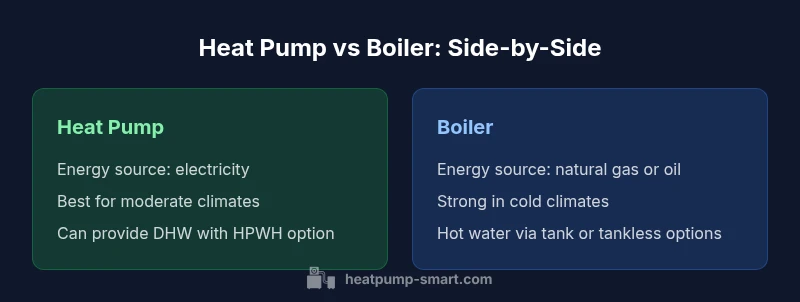
Comparison
| Feature | Heat pump | Boiler |
|---|---|---|
| Core mechanism | Transfers ambient heat via refrigerant cycle | Burns fuel to heat water or steam |
| Primary energy source | Electricity (grid or renewables dependent) | Natural gas, oil, or biomass |
| Efficiency emphasis | High efficiency by moving heat; COP varies with temperature | Efficiency tied to AFUE; condensing models strong but fuel-dependent |
| Upfront cost | Typically higher upfront due to outdoor units and installation | Often lower upfront, especially if existing gas lines and venting exist |
| Long-term costs | Potentially lower operating costs in favorable electricity climates | Fuel costs depend on local prices and consumption |
| Space requirements | Outdoor condenser + indoor distribution; ductwork or radiant systems | Boiler unit + fuel storage and venting; space for expansion and DHW |
| Maintenance | Regular filter, refrigerant, and electrical checks | Annual safety and combustion checks; system flushing |
| Best for | Mild-to-moderate climates with reliable electricity | Very cold climates or high hot-water demand |
Advantages
- High energy efficiency potential in suitable climates
- Lower operating costs with clean electricity in decarbonized grids
- Flexible options for new builds and retrofits
- Can pair with renewables and smart controls
Disadvantages
- Higher upfront cost and installation complexity for heat pumps
- Performance can drop in extreme cold without backup heat
- Fuel price volatility affects boiler economics
- Heat pump installation may require space planning and ductwork upgrades
Heat pump wins in moderate climates; boiler wins in very cold climates or where high DHW is essential
For most homes in temperate regions with affordable electricity, a heat pump offers better long-term operating costs and comfort. In very cold climates or where rapid hot water delivery is critical, a boiler or hybrid approach may be more practical. The Heatpump Smart team recommends evaluating a staged path or hybrid solution as a balanced baseline.
Your Questions Answered
Can a heat pump fully replace a boiler in a home?
In many homes, a heat pump can replace a boiler, especially where electricity is affordable and climate is mild. In colder regions, a hybrid setup or backup heat source may be needed for peak loads. Always perform a full load calculation and consult a licensed installer before switching.
Yes, heat pumps can replace boilers in many homes, but climate and hot-water needs matter.
Are heat pumps effective in cold climates?
Modern cold-climate heat pumps perform well, though efficiency drops at very low temperatures. Hybrid configurations or supplemental electric resistance can maintain comfort on the coldest days. Ground-source systems mitigate cold-weather effects but require more installation space.
Cold-climate heat pumps work well with proper design, but you may need backup heat.
What is the cost difference between heat pumps and boilers?
Upfront costs for heat pumps are typically higher due to equipment and installation. Boilers may be cheaper to install, especially if a gas line is already present. Over the system life, heat pumps can save on energy costs depending on electricity prices and usage patterns.
Boilers often cost less upfront, but heat pumps can save more over time depending on energy prices.
Do heat pumps provide hot water?
Yes, many heat pumps pair with dedicated heat pump water heaters or integrated DHW options. Some setups use indirect water heaters with a boiler as backup. Assess peak hot-water demand to ensure the chosen configuration meets needs.
Many heat pumps can provide hot water, often with a dedicated water heater.
What maintenance do heat pumps need?
Regular filter changes, coil cleaning, and annual professional checks cover heat pumps. Electric and refrigerant components deserve periodic inspection. Boilers require annual service for safety and combustion checks. Keeping both systems well-maintained extends life and efficiency.
Change filters, keep coils clean, and schedule annual service for heat pumps and boilers.
Is a hybrid system worth it?
Hybrid systems blend a heat pump with a supplemental boiler to cover cold days or high demand. They offer energy savings and resilience, especially in regions with variable winters. Cost and maintenance should be weighed against expected savings.
Hybrid can offer the best of both worlds for variable climates.
Top Takeaways
- Assess climate before choosing efficiency strategy
- Consider hybrid or staged systems for reliability
- Factor in incentives and long-term energy costs
- Plan for DHW needs alongside space heating
- Invest in insulation and air sealing to maximize results