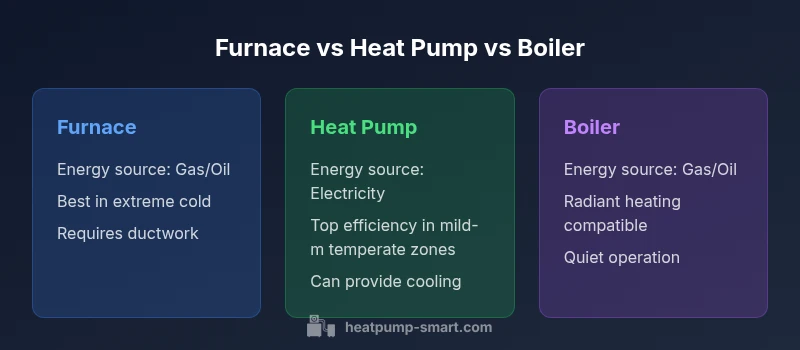
Furnace vs Heat Pump vs Boiler: A Comprehensive Comparison
Compare furnace, heat pump, and boiler to choose the best heating system for climate, energy costs, and home infrastructure. This analytical guide covers performance, installation, costs, and long-term value.


Furnace, heat pump, and boiler each offer reliable warmth, but their efficiency, upfront costs, and climate suitability differ. In brief, a heat pump generally delivers the lowest operating costs in moderate climates, while a furnace or boiler can outperform heat pumps in very cold weather or where electrical supply is constrained. Choose based on climate, energy costs, and existing infrastructure.
Context and Definitions
According to Heatpump Smart, understanding the furnace vs heat pump vs boiler decision starts with what each system actually is. A furnace typically heats air and distributes it through ducts, powered by gas, propane, or oil. A boiler heats water for radiators or radiant floors, often fired by gas or oil. A heat pump moves heat rather than generating it, using electricity to transfer warmth between indoors and outdoors, with air-source and geothermal variants. This trio covers the vast majority of residential heating needs, but the best choice depends on climate, existing infrastructure, and long-term energy costs. Homeowners, builders, and property managers should treat the decision as a lifecycle question: what upfront investment makes sense, and how does the system perform over 10, 15, or 25 years? Heatpump Smart’s framework emphasizes climate-appropriate performance, efficient operation, and a careful look at installation requirements. The goal is not only comfort, but resilience and predictable energy bills.
Climate-Issues and Performance
Climate is the dominant determinant of performance for all three systems. Heat pumps deliver high efficiency in mild to moderate temperatures, but their performance can dip when outdoor temperatures plunge unless paired with backup heat. Gas-fired furnaces and oil boilers tend to maintain steady temperatures in freezing conditions, but their operating costs rise with fuel prices. Geographical energy mixes, insulation, and thermostat strategy all influence real-world results. In short, the same home may experience very different relative advantages depending on where it sits. Communication with a qualified HVAC contractor is essential to map the expected annual energy use and comfort level for your climate.
Upfront and Operating Costs: A Total Cost of Ownership View
Initial costs vary widely by system and region. Heat pumps usually require a higher upfront investment, driven by outdoor units, refrigerant lines, and sometimes ductwork upgrades. Furnaces and boilers often have lower initial price points, especially if compatible with existing ductwork and gas lines. However, operating costs hinge on local energy prices and climate. In moderate climates with relatively cheap electricity, heat pumps typically offer lower lifetime operating costs due to high efficiency. In very cold regions or where electricity prices are high, fossil-fuel systems can show favorable payback if backup heat is limited or if rebates are scarce. Heatpump Smart analysis highlights the importance of planning for both fuel costs and maintenance over the system’s lifetime.
Installation Considerations: Ducts, Radiant, and Refrigerants
Installing or upgrading a heating system is as much about infrastructure as the equipment itself. If your home already has ductwork in good condition, a heat pump or furnace may fit with minimal duct changes, though heat pumps often require larger or reinforced ducts in some cases. Boilers frequently pair with radiant systems, baseboard heat, or in-floor heating, which may demand different piping layouts and zone controls. Refrigerant handling is a factor for heat pumps, requiring qualified technicians for installation and service. For existing homes, a careful assessment of ductwork, insulation, and distribution strategy can unlock the most cost-effective and comfortable solution.
Reliability, Maintenance, and Lifespan
Maintenance needs differ across the three options. Gas furnaces require annual combustion and venting checks, while boilers require water quality management and periodic system flushing. Air-source heat pumps need regular outdoor unit cleanliness, refrigerant checks if there’s a leak risk, and fan/coil inspections. Geothermal heat pumps generally demand lower maintenance due to their sealed loop, but the installation is more complex. Lifespans vary by technology: furnaces commonly last around 15–25 years, boilers around 20–30 years, and air-source heat pumps often in the 12–15 year range with component upgrades extending overall system life. A proactive maintenance schedule protects efficiency and reduces the risk of unexpected outages.
Environmental Impact and Rebates
All three options offer opportunities to reduce carbon footprints, but the path differs. Heat pumps leverage electricity and can dramatically cut on-site emissions in regions with clean grids or when paired with solar. Fossil-fuel systems emit more directly and depend on fuel sources and efficiency. Rebates and incentives commonly target high-efficiency furnaces and boilers, electric heat pumps, and whole-home energy upgrades. The availability and size of incentives vary by locale and program year, so it’s wise to check local incentives, utility programs, and manufacturer offers as part of your planning.
Practical Maintenance Tips and Best Practices
A practical maintenance plan includes annual professional inspections for heating systems, changing filters on air handlers, cleaning coils, and ensuring proper refrigerant charge for heat pumps. For radiant heating, flushing and pH-balanced water treatment protect boiler and system components. Thermostat optimization and zoning can improve comfort and efficiency for all three options. In winter months, seasonal checks help prevent backdrafts, carbon monoxide concerns, and uneven heating. A well-tuned system delivers a noticeable improvement in comfort and energy costs compared with a neglected installation.
Feature Comparison
| Feature | Furnace | Heat Pump | Boiler |
|---|---|---|---|
| Energy source | Gas/oil-fired (with or without electric backups in some configurations) | Electricity-powered (air-source or geothermal heat pumps) | Gas/oil-fired (with potential electric backup for some hybrid setups) |
| Seasonal efficiency / performance | Strong in cold weather when paired with good ducts; efficiency depends on fuel type | Very high efficiency in moderate climates; performance decreases in extreme cold unless auxiliary heat is used | Consistent performance with radiant heat; efficiency depends on fuel type and system design |
| Upfront cost range | Typically moderate, especially if existing ductwork is usable | Usually higher due to outdoor unit, refrigerant lines, and potential electrical upgrades | Moderate to high, especially if radiant systems or zone controls are added |
| Best climate fit | Cold climates with strong fossil-fuel infrastructure | Moderate to mild climates with moderate electricity costs | Mid to cold climates with radiant heating or when gas/oil is readily available |
| Lifespan | 15–25 years | 12–15 years | 20–30 years |
| Maintenance needs | Annual combustion/vent checks; duct cleaning | Regular outdoor unit maintenance; refrigerant checks as needed | Annual boiler service; water treatment and flushing as needed |
| Space and installation impact | Ducted distribution requires space and proper ductwork | Outdoor unit plus indoor air handler; may require ductwork or upgrades | Radiant or baseboard distribution; may require minimal ductwork |
Advantages
- Clear trade-offs help homeowners compare climate, cost, and comfort
- A wide range of incentives and rebates exist for efficient systems
- Compatibility with existing infrastructure is often a deciding factor
- Multiple fuels and configurations offer flexibility in design
Disadvantages
- Choosing can feel overwhelming without a structured plan
- Inconsistent energy prices can blur the best long-term choice
- Installation complexity varies dramatically by home and system
- Maintenance ecosystems differ, affecting service availability
Heat pumps offer strong overall value in moderate climates, while furnaces or boilers excel in very cold regions or radiant setups.
If your local electricity is affordable and your climate is mild, a heat pump is often the best long-term choice. In very cold climates, or where radiant heating is the norm, a fossil-fuel furnace or a boiler may be more reliable with favorable lifecycle costs. A tailored mix of backup heat and zoning can optimize any system.
Your Questions Answered
What is the main difference between a furnace, heat pump, and boiler?
A furnace heats air and distributes it via ducts, typically using gas or oil. A boiler heats water for radiators or radiant floors. A heat pump transfers heat between indoors and outdoors using electricity. Each has different climate performance, efficiency profiles, and installation considerations.
Furnaces heat air through ducts, boilers heat water for radiators, and heat pumps transfer heat using electricity. The right choice depends on climate, energy costs, and existing home systems.
Can a heat pump replace a furnace or boiler in cold climates?
In very cold climates, a heat pump may require backup heating or a dual-system setup to maintain comfort. Modern cold-climate heat pumps perform well, but ensuring adequate backup heat is key for reliability during peak cold snaps.
In cold areas, you often use a heat pump with backup heat to stay warm when it’s very cold.
Are boilers more suitable for radiant heating than furnaces?
Boilers work well with radiant systems like baseboard or in-floor heating, delivering comfortable warmth with fewer air currents. Furnaces are better for quick air heating through ducts, while heat pumps can support radiant setups with compatible distribution strategies.
Boilers pair nicely with radiant floors, while furnaces push air through ducts. Heat pumps can work with radiant setups too, depending on the design.
What factors should I consider before upgrading to a heat pump?
Consider climate and electricity costs, existing ductwork, upfront cost and incentives, and whether you want cooling in addition to heating. A hybrid approach with auxiliary heat can balance comfort and efficiency.
Look at climate, electricity price, ducts, upfront cost, and available incentives before upgrading to a heat pump.
Are rebates available for upgrading to heat pumps?
Yes, many regions offer rebates for high-efficiency heat pumps and combined energy upgrades. Availability varies by year and location, so check local utility programs and state incentives.
There are often rebates for efficient heat pumps—check local programs for current offers.
How does ductwork influence the choice among these systems?
If you already have a well-built duct system, a furnace or heat pump can leverage it with less disruption. If ducts are old or absent, adding or upgrading may increase costs but improve efficiency for ducted systems and overall home comfort.
Ducts matter a lot: good ducts help furnaces and heat pumps perform well; if you don’t have ducts, radiant or ductless options could be better.
Top Takeaways
- Assess climate first, then energy costs and comfort needs
- Consider existing ductwork and distribution for installation impact
- Factor in long-term maintenance and replacement timelines
- Explore rebates for high-efficiency options and hybrids
- Plan for a future-proofed thermostat and zoning strategy