Cold Climate Heat Pump Cost: A 2026 Guide
Explore cold climate heat pump costs, including installation, efficiency incentives, and potential rebates. Heatpump Smart analyzes 2026 trends to guide budgets.


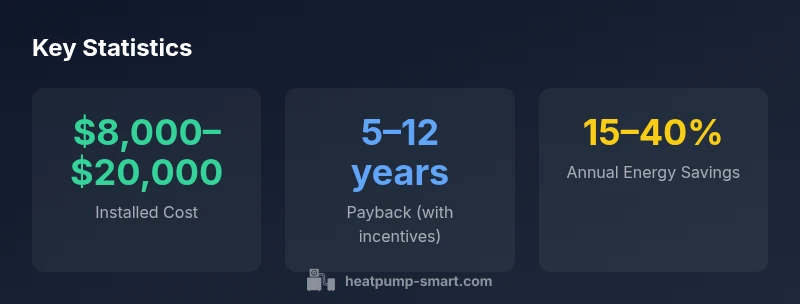
Typical installed costs for a cold climate heat pump range from $8,000 to $20,000, depending on system size, efficiency, and installation complexity, according to Heatpump Smart Analysis, 2026.
Why cold climate heat pump cost matters
For homeowners facing cold winters, the price tag on a cold climate heat pump is more than a sticker price—it shapes long-term comfort, energy use, and overall home performance. The upfront cost can seem substantial, but the value arrives through reliable heat delivery, reduced fossil-fuel dependence, and lower energy bills when paired with proper insulation. According to Heatpump Smart, evaluating cost alongside expected energy savings and local incentives provides a truer picture of affordability. In practice, budgeting for a cold climate heat pump means weighing equipment efficiency (COP and HSPF), installation complexity, and local climate factors that influence performance and maintenance needs. When you consider these elements together, the cost of a cold climate heat pump becomes a decision about long-term comfort and reliability, not just a single price point.
This article uses Heatpump Smart Analysis, 2026 as a baseline to explain how costs are built, what drives them in frigid conditions, and how to forecast total cost of ownership over 10–15 years. By understanding the components and incentives, homeowners—whether renovating or building anew—can make informed choices that optimize comfort and savings.
Key cost components: equipment, installation, and site readiness
Understanding the full cost of a cold climate heat pump requires breaking it into three primary components: equipment, installation, and site readiness. Equipment includes the outdoor unit, any indoor air handlers, and the inverter-driven compressor that governs efficiency in subfreezing temperatures. Installation covers labour, refrigerant piping, electrical work, and any required upgrades to electrical panels or wiring. Site readiness encompasses ductwork or retrofits, insulation quality, and accessibility for equipment placement. In cold climates, extra attention to frost protection, line set routing, and refrigerant charge can affect both the upfront price and ongoing reliability. When evaluating quotes, request a line-item breakdown to compare apples to apples, and remember that installer skill and local permitting costs can shift totals significantly.
Because costs vary by project, the key is to assess the total installed cost rather than unit price alone. Heatpump Smart Analysis, 2026 shows that even with similar equipment, installation complexity can create a substantial price delta. Always factor in potential duct modifications and electrical upgrades as part of the total cost of ownership for a cold climate system.
How climate affects equipment choice and pricing
Climate conditions determine how much heat the system must produce, which directly influences equipment size and efficiency requirements. In very cold regions, a heat pump may require supplemental heating or a secondary heat source during the coldest periods, which can raise initial costs but improve overall reliability. Higher efficiency models with advanced refrigerants and defrost technologies typically command a premium, yet they reduce long-term energy use and can improve comfort during routine cycles and peak demand events. When comparing options for cold climate heat pump cost, consider the long-term benefits of higher COP values, better defrost performance, and quieter operation. The relationship between climate, efficiency, and cost means a one-size-fits-all approach rarely delivers optimal value; instead, tailor selection to local climate bin, heating load, and occupancy patterns.
Installation nuances in cold climates
Cold climates introduce unique installation challenges that can influence cost. Frost depth, longer refrigerant runs, and the need for frost protection measures increase labour time and material costs. If an outdoor unit must be placed in an unheated or damp location, additional enclosure materials or protective housings may be required. For properties with older ductwork, retrofits to improve airtightness and insulation can add to both upfront and ongoing costs. Permitting, refrigerant handling, and commissioning by licensed technicians are essential for safety and performance—and they add to the total price. A well-planned installation minimizes post-installation service calls and ensures the system can achieve rated performance in subzero conditions.
Incentives, rebates, and financing options
Financing cold climate heat pump cost becomes easier when you factor in incentives. Federal, state, and local programs can offset a portion of the upfront investment, while utility-based rebates may target efficiency and peak-load reductions. The total net cost often drops significantly when these incentives are combined with manufacturer rebates or promotional financing. To maximize savings, research programs before selecting equipment and coordinate installation timing to align with eligibility windows. Heatpump Smart Analysis, 2026 highlights that timely application and proper documentation can unlock substantial reductions, turning a daunting upfront price into a more manageable investment.
Cost vs savings: modeling scenarios for homeowners
To estimate the real value of a cold climate heat pump, model several scenarios using current energy prices, local climate data, and potential incentives. If you currently heat with propane or electric resistance, switching to a heat pump can deliver meaningful energy savings, often in the 15–40% range depending on climate and usage. In areas with high electricity costs, the payback period tends to be longer unless incentives are available. For homes with excellent insulation and air sealing, a higher-efficiency heat pump may reach the shorter end of the payback spectrum, while older homes requiring major retrofits may extend the payback window. Always compare total cost of ownership, including maintenance, to a traditional heating system.
Practical tips to minimize upfront costs
- Prioritize a clean, well-insulated building envelope to maximize heat pump effectiveness and minimize required capacity.
- Get multiple quotes that include a full equipment, installation, and ductwork breakdown.
- Look for rebates, tax credits, and financing options to lower the net upfront cost.
- Consider slightly larger capacity only if your load calculations justify it; undersized systems drive higher cycling and inefficiency.
- Schedule installation during favorable weather windows to reduce labour delays and defects.
- Choose a reputable installer with cold-climate experience to minimize rework and warranty issues.
Choosing between air-source and geothermal options in cold climates
Air-source heat pumps are usually less expensive to install than geothermal systems, and modern cold-climate models perform well with proper sizing and defrost strategies. Geothermal systems offer excellent long-term efficiency but require significant underground loop work, which increases upfront costs and project duration. For many homes in cold climates, a high-efficiency air-source unit with a well-sealed envelope provides the best balance of upfront cost, performance, and long-term savings. The decision should hinge on local geology, available space for looping, and a clear assessment of installation risks and timelines.
Long-term maintenance costs and care
Ongoing maintenance for cold climate heat pumps is generally modest but important. Routine tasks include annual filter changes, blower cleaning, refrigerant checks, and system commissioning after installation. Regular maintenance preserves efficiency, reduces unexpected repairs, and ensures consistent performance throughout the heating season. Expect maintenance costs to be a small fraction of annual energy costs, but plan for periodic professional inspections to maintain warranty coverage and optimal operation in subfreezing conditions.
Final considerations before buying
Before committing to a cold climate heat pump, confirm that the system is properly sized for your heating load and climate, and verify that the contractor accounts for insulation and duct sealing improvements. Calculate the total installed cost, including any required electrical upgrades and ductwork, then subtract eligible rebates and financing offers to estimate net cost. Consider long-term energy savings, comfort levels, and system reliability alongside the initial price. With careful planning and a qualified installer, a cold climate heat pump can deliver dependable warmth and meaningful energy savings over its lifetime.
Estimated cost components for cold climate heat pumps
| Component | Estimated Cost | Notes |
|---|---|---|
| Equipment (outdoor + indoor units) | $4,000-$12,000 | Depends on capacity and efficiency |
| Installation labour & piping | $3,000-$8,000 | Site complexity & permits affect |
| Ductwork or retrofits | $1,000-$6,000 | Needed if existing ducts insufficient |
| Controls/auxiliary items (thermostats, sensors) | $500-$2,000 | Smart controls can add cost but save energy |
Your Questions Answered
What factors influence cold climate heat pump cost?
Home size, climate, system efficiency, and installation complexity all influence the final price.
Costs are driven by size, climate, efficiency, and install complexity.
Are there incentives that reduce cold climate heat pump costs?
Yes; rebates and tax credits can lower upfront costs, varying by region and program.
Rebates and tax credits can help cut upfront costs.
Is installation more expensive in colder regions?
Yes, cold-weather installation adds labor time, protective measures, and sometimes extra materials.
Colder regions can add labor and setup costs.
How long does payback typically take?
Payback depends on energy prices, usage, and incentives; ranges commonly span 5 to 12 years.
Typically 5 to 12 years, depending on incentives and usage.
Can I install a cold climate heat pump myself?
Most installations require licensed professionals due to refrigerant handling and electrical work.
Don't DIY; hire a pro.
What maintenance is required to keep costs down?
Annual filter checks, blower cleaning, and seasonal inspections help sustain efficiency.
Keep up with yearly maintenance.
“Cold climate performance hinges more on system design and installation quality than on the sticker price alone.”
Top Takeaways
- Define your budget early and plan for installation.
- Shop for efficiency and rebates in parallel.
- Compare total installed cost, not just unit price.
- Factor insulation and ductwork into the total cost.
- Consider financing options to spread upfront costs.