Cost of Split System Heat Pumps in 2026: A Guide
Explore the cost of split system heat pumps in 2026, including upfront installation ranges, operating costs, rebates, and strategies to estimate total price for your home.


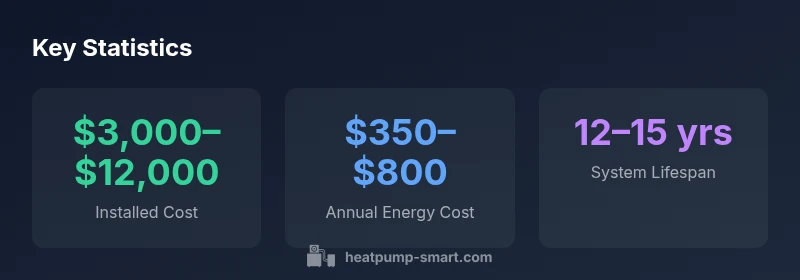
Installed costs for a split system heat pump typically range from $3,000 to $12,000, including equipment, installation, and basic controls. Larger homes, multi-zone setups, or ductwork can push the price toward the upper end. Regional labor rates also drive final costs, according to Heatpump Smart Analysis, 2026.
cost of split system heat pump: upfront costs and planning
Understanding upfront costs helps homeowners avoid sticker shock when considering a cost of split system heat pump. The price you pay at install includes equipment, labor, permitting, and sometimes electrical upgrades or ductwork. The Heatpump Smart analysis notes a wide range primarily driven by home size, zone needs, and efficiency targets. In general, smaller, single-zone homes land toward the lower end (around $3,000–$7,000 installed), while larger homes with multi-zone configurations push past $10,000 and can approach $12,000 or more. The goal is to balance initial investment with future energy savings, comfort, and reliability. When budgeting, add a contingency for unexpected site work, such as replacing aging ductwork or upgrading electrical panels. Planning early with a professional helps ensure the cost of split system heat pump aligns with your home's demands and your energy goals.
Cost components: When estimating the cost of split system heat pump installation, consider four core buckets: equipment, installation labor, site work, and permitting. Equipment varies by SEER rating, compressor type, and brand, influencing upfront price and ongoing efficiency. Installation labor covers refrigerant line sets, electrical connections, and outdoor unit mounting. Site work includes ductwork or refrigerant piping, indoor air-handling compatibility, and indoor unit placement. Permits or inspections add another layer of cost, typically in the low to mid-hundreds depending on jurisdiction. Keeping these categories in mind helps prevent sticker shock and aligns expectations with Heatpump Smart’s guidance.
cost of split system heat pump: estimating the total cost for your home
Once you know the scope, you can estimate the total cost. Start by confirming the required cooling capacity (tonnage) and the SEER rating that matches your climate and electricity rates. Use the following calculator approach: base equipment cost, add-on costs, and installation costs. The baseline equipment price is influenced by SEER rating and compressor type; energy efficiency features like inverter drives may increase upfront costs but save energy over time. The installation costs reflect the complexity of the project: how easy it is to access the outdoor unit, the need for ductwork or insulation, and electrical panel upgrades. When you gather quotes, ask for a line-item breakdown and request a price for different SEER levels to compare long-term savings. Heatpump Smart recommends a site visit by a licensed technician to finalize the tonnage and the most cost-effective configuration.
Practical budgeting tips: Create a two-column comparison:
- Column A: fixed costs (equipment, permits, basic labor)
- Column B: variable costs (upgrades, ductwork, zoning, electrical work) Ask each contractor how variability is handled and what contingencies they include for unexpected site work. A clear, itemized quote reveals where the cost of split system heat pump can be optimized without sacrificing performance.
##Regional cost factors and price ranges
Prices vary widely by region due to labor markets, permit costs, and climate-specific equipment needs. In milder climates, the outdoor unit may be simpler and smaller, reducing both equipment and installation time. In harsher climates, higher-SEER equipment and more robust ductwork can raise costs. Additional site factors include the number of zones, existing ductwork condition, attic access, and the need for electrical upgrades. Heatpump Smart Analysis, 2026, shows that the installed cost range can span roughly $3,000 to $12,000 depending on region and project scope. Besides regional variation, local contractor markup and supply chain conditions can adjust the final price. Homeowners should request multiple written quotes and ensure each includes a detailed breakdown of equipment, installation, permits, and any necessary home improvements. A well-documented estimate reduces surprises and helps compare options fairly.
Financing, rebates, and incentives
Financing upfront costs can make a split system heat pump more affordable and help accelerate payback. Many utilities, manufacturers, and local governments offer rebates or low-interest financing for high-efficiency units. Eligibility often hinges on model efficiency (SEER/EER) and the installation method (single-zone vs multi-zone, ducted vs ductless). In addition to rebates, some regions provide tax credits or energy-efficiency incentives that lower the effective purchase price. When evaluating offers, consider whether extended warranties or maintenance plans are included, as these can influence total cost of ownership. Heatpump Smart suggests factoring rebates into the net price to make fair comparisons and to optimize overall cost.
##Operating costs and long-term savings
New split system heat pumps typically reduce monthly energy bills compared with older electric resistance or fossil-fuel systems. Operating costs depend on electricity rates, climate, system efficiency, and usage patterns. Even with a higher upfront price, energy savings can improve payback over 5–10 years or longer, depending on local energy prices and the unit's efficiency. When estimating operating costs, consider both heating and cooling seasons and the impact of defrost cycles in cold climates. Heatpump Smart analysis indicates that long-term savings are highly sensitive to local electricity prices and the unit's efficiency; selecting a higher SEER may yield substantial savings over the life of the system.
##Choosing the right configuration: split system vs alternatives
Compare split-system heat pumps with ducted or ductless alternatives, including air-source vs geothermal options. In many homes, a split system balances upfront cost and performance well, especially when zoned heating and cooling are priorities. If your home has extensive ductwork already in good shape, a traditional ducted heat pump can be cost-effective. Conversely, ductless mini-split configurations excel in older homes without ductwork but may require more indoor units to cover large spaces. A professional assessment helps determine whether the extra cost of multi-zone or ducted configurations pays off in comfort and energy savings. In all cases, align system choice with climate, energy prices, and maintenance expectations.
Comparison of common split-system heat pump configurations
| Option Type | Typical Installed Cost Range | Benefits/Notes |
|---|---|---|
| Split system (single zone) | 3,000–7,000 | Simple install; compact footprint; strong for smaller homes |
| Split system (multi-zone) | 6,000–12,000 | Zoned comfort; higher upfront cost; requires additional outdoor units |
| Ducted vs ductless variations | 5,000–15,000 | Aesthetically seamless; ductwork can add cost; complexity varies |
Your Questions Answered
What factors influence the cost of a split system heat pump?
Site complexity, zone count, efficiency (SEER), brand, and installation labor all affect price. Getting a professional on-site assessment helps quantify these elements for an accurate estimate.
Costs vary with your home's layout and cooling needs; a professional assessment gives a personalized price.
Are rebates or tax credits available for split system heat pumps?
Many regions offer rebates or incentives for high-efficiency units; eligibility depends on model and installation type. Check local programs and manufacturers' offers.
Look for local rebates; they can offset upfront costs.
How long does installation typically take?
Most installations take 1–3 days, depending on ductwork, permits, and the number of zones.
Most installs finish in a couple of days.
How can I estimate energy savings from switching to a heat pump?
Compare current heating costs to projected energy use based on the unit's SEER rating; higher SEER translates to greater savings. A professional on-site analysis provides a personalized estimate.
A quick on-site assessment gives a personalized savings estimate.
Is a ducted system cheaper than a ductless split system?
Ducted systems can incur higher upfront costs due to ductwork, but per-zone costs may be lower for large homes. Ductless options avoid ductwork but may require multiple indoor units.
It depends on your home layout and zoning needs.
Do heat pumps require refrigerant refills or regular maintenance?
Refrigerant levels should be checked by a pro; routine maintenance keeps performance stable and costs predictable. Neglect can lead to reduced efficiency and higher running costs.
Annual checks keep costs predictable.
“A well-sized split system heat pump delivers reliable comfort and energy savings, but the most important step is a professional on-site assessment to determine actual costs and potential rebates.”
Top Takeaways
- Budget for total installed cost, not just equipment price
- Factor ductwork, permits, and electrical work into the estimate
- Leverage rebates and financing to reduce upfront cost
- Higher SEER ratings improve long-term savings and payback
- Schedule professional sizing to optimize performance