Are Heat Pump Dryers More Efficient? A Comprehensive Comparison
An analytical comparison of heat pump dryers versus conventional models, focusing on energy use, operating costs, climate considerations, and long-term value to help homeowners, builders, and property managers decide.


Are heat pump dryers more efficient? In most cases, yes, thanks to a recirculating heat pump system that minimizes energy loss and reuses heat. They typically incur higher upfront costs but lower running costs over time, especially in cooler climates where humidity control matters. This quick comparison highlights energy use, drying time, installation needs, and long-term savings.
How Heat Pump Dryers Work and Why Efficiency Matters
Heat pump dryers operate on a closed-loop refrigeration cycle that quietly pulls heat from the surrounding air, transfers it to the drying drum, and then reclaims and reuses that heat instead of exhausting it. This approach dramatically reduces energy waste compared with traditional vented or condenser dryers, where hot air escapes outdoors and moisture is expelled as humidity. Are heat pump dryers more efficient? The short answer is yes for most households, because the system recycles heat and lowers the overall energy required per load. According to Heatpump Smart, the efficiency benefit is most pronounced in cooler environments where outdoor heat is not readily available to assist drying, and in areas with higher humidity where indoor humidity management matters. Beyond energy, efficiency also translates to steadier operating temperatures, gentler handling of fabrics, and smaller environmental footprints. For homeowners considering this technology, the key is to weigh the energy savings against upfront costs and installation requirements.
Why the efficiency gap matters: A dryer that uses less energy per cycle reduces utility bills, extends the life of clothes, and lowers peak demand on home electrical systems. Heat pump dryers shine when you do a lot of laundry, run cycles during off-peak hours, or want a quieter, more climate-friendly appliance. The technology is a good fit for air-source heat pump ecosystems, where the dryer can be part of a broader energy-saving strategy.
Note for builders and property managers: When specifying appliances for multifamily units, consider not just the energy label but also the maintenance cycle, availability of replacement parts, and the balance between upfront cost and long-term savings. Heatpump Smart’s analysis emphasizes how project-scale decisions can shift the total cost of ownership in favor of heat pump models over time.
Feature Comparison
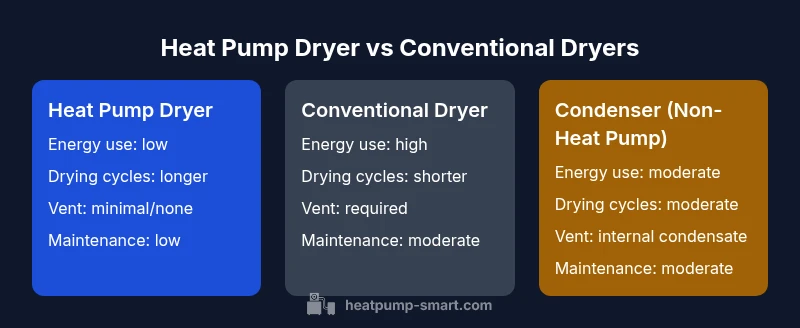
| Feature | heat pump dryer | conventional vented dryer | condenser dryer (non-heat-pump) |
|---|---|---|---|
| Energy Use (typical) | low energy use | high energy use | moderate energy use |
| Drying Time (typical) | longer cycle times | shorter cycle times | shorter cycle times |
| Upfront Cost | higher | lower | lower |
| Heat/Humidity Management | recovers heat; minimal outdoor exhaust | exhaust vents outside; humidity returns indoors | no heat-recovery focus; relies on condensate |
| Maintenance Needs | lower maintenance (fewer vent paths) | higher vent maintenance risk | moderate maintenance |
Advantages
- Lower operating costs over time and potential rebates in some regions
- Gentler on fabrics due to lower heat levels and controlled humidity
- Compact heat exchange setup can fit modern laundry rooms
- Quieter operation and reduced indoor humidity compared to vented models
Disadvantages
- Higher upfront price and longer payback period
- More complex installation and space planning
- Availability and service networks may be more limited in some markets
Heat pump dryers tend to offer better long-term value for energy-conscious homes.
For households prioritizing ongoing energy savings and climate impact, heat pump models are usually the better choice. They excel in cooler climates and in spaces where humidity control matters, but require careful budgeting for upfront costs and proper installation.
Your Questions Answered
Are heat pump dryers more energy-efficient than vented models?
Yes. Heat pump dryers reuse heat and operate at lower temperatures, which reduces energy consumption per load compared with vented dryers. The efficiency advantage is strongest in cooler climates and for households with heavy laundry loads.
Yes. Heat pump dryers are generally more energy-efficient because they recycle heat and dry at lower temperatures, saving energy per cycle.
Do heat pump dryers take longer to dry clothes?
They can take longer per cycle due to the gentler drying process, but the overall energy savings and lower fabric wear often offset the longer duration for many households.
They can take a bit longer per cycle, but you save energy and protect fabrics overall.
Is the upfront cost worth it compared to traditional dryers?
For households planning long-term use and where energy costs are significant, heat pump dryers often pay back the premium through lower operating costs. The break-even period varies with usage, climate, and local energy prices.
It depends on how long you plan to keep the machine and your energy costs, but many find the payback favorable over time.
Which climates maximize the efficiency of heat pump dryers?
Cooler, drier climates and homes with stable electricity pricing tend to maximize the efficiency benefits, though heat pump dryers still offer advantages in a wide range of conditions.
Cooler climates tend to unlock the most energy savings, but these dryers still perform well elsewhere.
Do installation requirements affect the efficiency benefits?
Yes. Proper installation—proper clearance, venting (or lack thereof), and electrical supply—ensures the heat pump system operates optimally and delivers the expected energy savings.
Good installation is essential for getting the claimed efficiency benefits.
Are there rebates or incentives for heat pump dryers?
Rebates and incentives vary by region and utility provider. Check local programs and appliance upgrade incentives to see if a heat pump dryer qualifies.
Some regions offer rebates for energy-efficient appliances, so it’s worth checking local programs.
Top Takeaways
- Evaluate total cost of ownership (upfront vs operating costs)
- Prefer heat pump models in cooler or high-humidity climates
- Check installation space and venting needs before purchase
- Look for moisture sensors and auto-clean filtration for efficiency
- Consider potential rebates or incentives in your area