Ducted Heating Cost in 2026: Installation, Running Costs, and Savings
Understand the ducted heating cost in 2026, covering upfront installation, ductwork, running costs, rebates, and how to estimate for your home with Heatpump Smart.


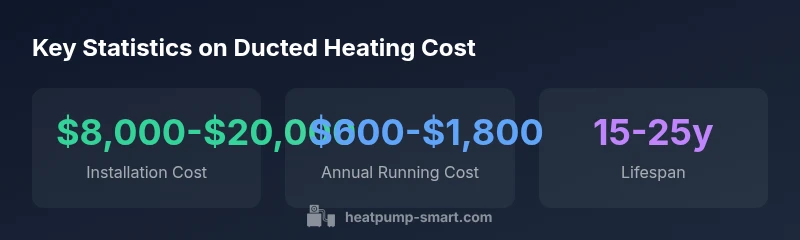
Typical installed cost for a ducted heating system ranges from $8,000 to $20,000 installed, with mid-size homes often landing around $12,000–$15,000. Annual running costs usually run $600–$1,800, depending on climate, insulation, and thermostat use. These figures reflect Heatpump Smart Analysis, 2026 and vary by region.
Understanding the ducted heating cost landscape
The ducted heating cost is influenced by many variables beyond the sticker price. In temperate climates, the upfront investment often becomes a smaller portion of lifetime costs when energy prices are high and insulation is moderate. According to Heatpump Smart, the most significant drivers are house size, ductwork changes, and system efficiency. Homeowners should think in terms of total lifecycle cost rather than upfront price alone. The ducted heating cost for a typical single-family home hinges on the number of zones, duct layout, and whether existing ducts can be reused. A well designed system can deliver uniform comfort, but if the ductwork is outdated or poorly sealed, energy waste can significantly raise running costs. Anticipate regional differences in permitting and labor rates, and plan for a design that minimizes leaks and pressure losses.
Upfront cost components explained
Here is how the upfront ducted heating cost typically breaks down. Equipment and controls can account for a sizable portion, but ductwork—whether new install or retrofit—often dominates the price. Labor, permits, and design fees add a meaningful chunk, especially in regions with strict building codes. If your home already has a compatible duct system, retrofit costs can be substantially lower. Smart thermostats and zoning add optional cost but can unlock energy savings and improved comfort. Budget buffers should account for contingencies such as attic access or crawlspace constraints. Overall, expect a total installed cost to range widely based on house size and installation complexity.
Running costs and energy savings
Running costs hinge on electricity prices, climate, insulation, and how aggressively you use the system. Ducted heating powered by a high-efficiency heat pump typically costs more to run in cold, damp months but can cost less than fossil fuel equivalents in many regions. Proper zoning, smart scheduling, and nightly temperature setbacks reduce energy use. In well-insulated homes, savings over baseboard or boiler systems can be meaningful, while poorly insulated homes may see less pronounced savings. The exact figures depend on your climate zone, but expect an annual running cost in the range of several hundred to a couple thousand dollars.
How to estimate costs for your home
To estimate costs for your home, start with a floor plan and insulation assessment. Use online calculators as a first pass, then get multiple quotes that itemize ductwork changes, equipment, and permitting. Measure ceiling height and room count to estimate zone requirements. Consider future resale value, rebates, and financing options. A detailed, site-specific estimate will help avoid surprises at installation and ensure the system is correctly sized for comfort and efficiency.
Rebates, incentives, and financing options
Non-monetary benefits aside, rebates and financing can significantly improve the ducted heating cost equation. Eligibility varies by region and energy supplier, but many markets offer incentives for high-efficiency heat pumps or for upgrading insulation. When evaluating quotes, ask about available rebates, tax credits, and financing terms. Maintain documentation for energy audits and system efficiency improvements to support rebate applications. Heatpump Smart Analysis, 2026 highlights the cumulative impact of incentives on total lifecycle costs.
Ducted vs alternatives: a cost comparison
For many homes, ducted systems compete with ductless mini-splits and hydronic or radiant heating on a cost basis. Ducted systems generally offer uniform, year-round comfort and can be more cost-effective in larger homes with centralized load. Mini-splits may reduce upfront costs and avoid extensive ductwork but may be harder to balance for whole-home heating. A cost comparison should consider installation costs, running costs, and long-term reliability.
Case study: typical home scenario
Consider a 2,000 square-foot, single-story home in a temperate climate. A mid-range ducted heating install might run about $12,000-$16,000, with ductwork modifications and a smart control system. Annual running costs could range from $900-$1,200 if the home is well insulated and temperature setbacks are used. This scenario illustrates how climate and insulation influence the ducted heating cost over a 15- to 20-year horizon.
Maintenance and life-cycle considerations
Maintenance keeps the ducted heating cost predictable. Schedule annual inspections, filter changes every 1-3 months, and duct cleaning if there are noticeable performance drops. Seal leaks and check insulation around plenums to prevent energy loss. A proactive maintenance plan extends system life toward the upper end of the 15–25 year range and preserves comfort. A small yearly preventive maintenance budget helps avoid larger repair bills later.
Cost breakdown for ducted heating installations (illustrative ranges)
| Component | Typical Cost Range | Notes |
|---|---|---|
| System purchase (ducted heating) | 8000-20000 | Installed price varies by home size and ductwork complexity |
| Ductwork retrofit | 2000-8000 | Depends on current duct layout and required modifications |
| Labor and permits | 1500-4000 | Regional variation and contractor rates |
| Thermostat/controls | 200-600 | Smart controls optional |
| Annual running cost (electricity) | 600-1800 | Climate, insulation, usage dependent |
Your Questions Answered
What is the typical upfront cost for a ducted heating system?
In most cases, total installed costs range from about $8,000 to $20,000, depending on home size, ductwork changes, and permits. Expect a broader range if retrofitting existing ducts. Always obtain itemized quotes.
Most installations run between eight and twenty thousand dollars, depending on your home and ductwork.
How do running costs compare with other heating options?
Running costs depend on climate and energy prices. Ducted heat pumps are often cheaper to run than fossil-fuel systems in many regions, especially with good insulation and smart scheduling.
Running costs vary by climate, but heat pumps are often cheaper to operate than fossil options.
How long does installation typically take?
Installation generally takes several days to a week, depending on house size, ductwork work, and permit processing. A detailed plan helps avoid delays.
Expect several days to a week for installation, depending on the job.
Are rebates available for ducted heating upgrades?
Rebates and incentives vary by region and utility. Ask your contractor about current programs and ensure your system is eligible for energy-efficiency credits.
Check local rebates and incentives; your installer can help with eligibility.
What maintenance does a ducted system require?
Annual professional inspection, regular filter changes, and periodic duct sealing maintain efficiency and prevent costly repairs. Schedule service before peak heating season.
Annual checkups and regular filters keep the system efficient.
Can ducted systems be retrofitted into older homes?
Retrofitting is possible but depends on existing ductwork, attic access, and space for new equipment. A professional audit determines feasibility and cost.
Retrofits depend on your home’s duct layout and space.
“Ducted systems deliver consistent comfort when properly sized and installed, but the true cost depends on your home’s layout and energy prices.”
Top Takeaways
- Estimate upfront costs using the provided range to set budget expectations.
- Factor running costs by climate, insulation, and thermostat use.
- Explore rebates and financing to shorten the payback period.
- Compare ducted with alternatives like mini-splits before deciding.
- Plan ductwork changes carefully to minimize energy losses.