Forced Air vs Heat Pump: Which Heating System Is Best For Your Home?
Explore forced air furnaces and heat pumps side by side. Learn how they work, compare efficiency, costs, climate suitability, and installation considerations to decide which heating system fits your home and budget.


According to Heatpump Smart, the choice between forced air vs heat pump hinges on climate, energy costs, and installation constraints. In short, furnaces provide proven reliability with fossil fuel heat, while heat pumps offer efficient heating and cooling with electricity, typically delivering long-term savings in moderate climates despite higher upfront costs.
What are forced air and heat pumps? A quick primer
In residential heating, a forced air system usually centers on a furnace that creates warm air and distributes it through a network of ducts with a blower. By contrast, a heat pump uses refrigerant cycles to move heat instead of generating it, delivering both heating in winter and cooling in summer via the same ducted or ductless setup. The Heatpump Smart team emphasizes that understanding these core differences helps homeowners evaluate how each system fits their home and climate. In addition, ductwork, existing infrastructure, and electrical capacity play major roles in feasibility and performance. When you compare forced air vs heat pump, you’re really weighing the reliability and fuel source of traditional furnaces against the efficiency potential and year‑round comfort of heat pumps.
How each system heats and distributes air
Forced air furnaces burn fuel to generate heat, which is pushed through ducts by a blower. The distribution path is straightforward: furnace, ductwork, registers, and rooms. Heat pumps, on the other hand, transfer ambient heat using refrigerant cycles and an indoor coil; in cooling mode, they reverse the cycle to remove heat from inside the home. In many setups, the same duct network serves both systems, though some homes use ductless mini-split variants for zone-level control. This distinction matters for energy usage, comfort, and the potential need for auxiliary heating in very cold weather. The Heatpump Smart analysis highlights that coil sizing, refrigerant charge, and proper defrost cycles are critical for consistent performance across seasons.
Energy efficiency and cost implications
Efficiency is central to a forced air vs heat pump decision. Furnaces show efficiency through fuel burn and annual fuel utilization efficiency (AFUE), while heat pumps emphasize heating and cooling efficiency with metrics like HSPF and SEER. Heat pumps often deliver lower energy consumption per heating season in moderate climates and with heat-pump‑friendly electricity rates. However, electricity prices, climate, and the availability of rebates or incentives influence true operating costs. Heatpump Smart notes that in many regions, long-term savings arise from higher COP values and the ability to heat and cool at a single cost, though initial installation and equipment costs can be higher compared with a basic furnace.
Climate suitability and cold-weather performance
Weather patterns determine how well each system performs. Furnaces are generally robust under extreme cold and can deliver steady heat regardless of outdoor temperatures, provided there is a reliable fuel supply. Heat pumps can operate efficiently in milder climates and with modern cold-climate variants, but very cold outdoor temperatures may require supplemental electric resistance heat. This is where hybrid or dual-fuel configurations become appealing: the heat pump handles most of the heating load, while a fossil-fuel furnace kicks in during peak cold snaps. Heatpump Smart stresses evaluating local climate data and utility incentives when weighing forced air vs heat pump decisions.
Installation considerations and space requirements
A furnace installation typically requires adequate space for the furnace itself, a venting system, and ductwork that can be substantial in older homes. Heat pumps can demand outdoor unit placement and additional electrical capacity; ductless mini-splits eliminate some ductwork but require wall-mounted indoor heads and outdoor units which may affect interior design. Retrofit challenges include refrigerant line routing, electrical upgrades, and potential zoning considerations. The Heatpump Smart guidance is to assess available space, insulation quality, and existing ductwork before committing to a forced air or heat-pump solution, since these factors influence both cost and comfort.
Maintenance, lifespan, and reliability
Regular maintenance is essential for both systems. Furnaces require annual burner inspections, filter changes, and venting checks, while heat pumps need periodic refrigerant checks, outdoor unit clearing, and coil cleanliness. Lifespan expectations vary by equipment type, usage, and maintenance frequency; proper service can extend systems well into their second decade. Heatpump Smart notes that consistent maintenance reduces inefficiencies and keeps efficiency metrics stable, which translates into more reliable performance over time. The goal is predictable comfort with minimal downtime, regardless of whether you favor forced air or a heat pump.
Comfort, zoning, and control options
Modern forced air systems offer advances like programmable thermostats, zoning solutions, and variable-speed blowers, all of which improve comfort and energy use. Heat pumps excel in delivering gentler, more uniform heat across rooms and often pair well with smart controls and zoning. Ducted heat pumps provide integrated cooling, which simplifies climate control. For homes with multi-level layouts or light sleepers, precise zoning can reduce temperature variations significantly. Heatpump Smart underscores designing a zoning plan early in the project for the best comfort and energy outcomes.
Hybrid solutions and future-proofing
Dual-fuel or hybrid configurations blend a heat pump with a furnace, letting the system switch automatically based on outdoor temperatures and energy pricing. This approach aims to combine heat pump efficiency with furnace reliability during very cold periods. Hybrid setups can require more intricate controls and system integration, but they offer a pathway to lower operating costs while preserving comfort. Heatpump Smart suggests evaluating hybrid options in regions with large temperature swings and where incentives support both technologies.
Decision framework: a practical checklist
- Assess climate and winter temperatures; 2) Compare upfront costs and available rebates; 3) Consider existing ductwork and electrical capacity; 4) Evaluate cooling needs as well as heating; 5) Plan for maintenance and service availability in your area; 6) Factor future energy prices and potential incentives. A careful scoring of these factors helps translate a forced air vs heat pump decision into a practical plan that suits your home and budget. Heatpump Smart encourages homeowners to consult local contractors and verify warranty terms before purchase.
Comparison
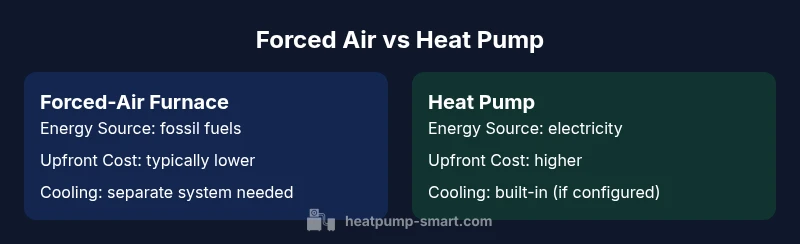
| Feature | Forced-Air Furnace | Heat Pump |
|---|---|---|
| Energy Source | Natural gas/oil/propane | Electricity |
| Primary Heating Mechanism | Burns fuel to generate heat, distributed via ducts | Transfers heat via refrigerant cycle; includes cooling function |
| Upfront Cost | Lower upfront cost | Higher upfront cost |
| Operating Cost | Fuel costs vary by price; can be lower or higher depending on fuel | Electricity-based; often lower per BTU in efficient setups; price varies by utility |
| Maintenance Frequency | Annual furnace service common | Seasonal checks for outdoor unit and indoor coil |
| Winter Performance | Reliable heat with fuel supply; steady performance | Can require supplemental heat in very cold climates |
| Cooling Capability | Requires separate cooling system | Provides cooling as part of the system (if configured as heat pump) |
| Lifespan & Durability | Typically durable with proper maintenance | Complexity of outdoor unit may influence maintenance needs |
Advantages
- Potentially lower long-term operating costs in fuel-advantaged regions when using a furnace
- Heat pumps offer built-in cooling and can simplify year-round climate control
- Wide service networks for furnaces and growing availability for heat pumps
- Zoning and smart controls improve comfort with either system
Disadvantages
- Higher upfront cost for heat pump installations and possible electrical upgrades
- Heat pumps may require auxiliary heat during very cold periods
- Furnace fuel costs can be volatile and depend on fuel prices
- Ducted systems may require retrofit work in older homes
Heat pump is the more future-facing choice for mild to moderate climates; a furnace remains a strong, reliable option in very cold areas or where electricity is expensive.
In climate zones with milder winters, heat pumps typically deliver better long-term efficiency and year-round comfort. For extreme cold or limited electricity access, a furnace or hybrid setup can be more practical. The Heatpump Smart team recommends evaluating climate, energy costs, and available incentives to guide your selection.
Your Questions Answered
Is a heat pump a better choice than a furnace for all homes?
Not always. Heat pumps excel in efficiency and comfort in milder climates and with modern cold-climate models, but a furnace may be more reliable in extreme cold or when electricity costs are high. A hybrid approach can offer a balanced solution in variable climates.
Heat pumps are great in milder climates, but if your winters are harsh or electricity is expensive, a furnace or hybrid system may be better.
Can a heat pump fully replace a furnace in cold climates?
In very cold climates, a heat pump may rely on supplemental heat or a backup furnace. Modern cold-climate heat pumps can perform well, but many homes still use auxiliary heat to ensure comfort during peak cold periods.
In very cold climates, you may still need supplemental heat with a heat pump.
Do heat pumps provide cooling as well as heating?
Yes. Heat pumps provide both heating in winter and cooling in summer, making them a dual-function system suitable for year-round comfort when properly configured.
Heat pumps cool in summer and heat in winter.
Are there incentives or rebates for switching to a heat pump?
Many regions offer incentives for heat pumps, including energy efficiency programs and tax credits. Availability varies by location and program requirements, so check local utilities and government resources.
Check local incentives and rebates for heat pumps in your area.
What maintenance does each system require?
Furnaces require annual burner and vent checks, and filter changes. Heat pumps require regular outdoor coil and refrigerant checks, plus seasonal inspections. Regular service keeps both systems efficient and reliable.
Regular maintenance is important for both systems to stay efficient.
How should I estimate long-term operating costs?
Compare expected energy use, local fuel and electricity costs, and maintenance needs. Consider rebates and tax credits that reduce net cost. A detailed quote from an HVAC pro will help refine the estimate.
Compare energy costs, rebates, and maintenance to estimate long-term costs.
What about hybrid or dual-fuel systems?
Hybrid systems blend a heat pump with a furnace, switching automatically based on temperature and energy pricing. They aim to maximize efficiency while preserving reliability in cold spells.
Hybrid systems use heat pumps most of the time, with a furnace for very cold days.
How long do these systems typically last?
Lifespan depends on usage, maintenance, and components. Furnaces and heat pumps can provide many years of service when properly serviced, with heat pumps generally built for mixed heating and cooling duty.
With good maintenance, expect many years of service from both types.
Top Takeaways
- Evaluate climate before choosing a system
- Weigh upfront costs against long-term savings
- Consider cooling needs in addition to heating
- Plan for maintenance and service availability
- Explore hybrid options where appropriate