Gas or Heat Pump: Which Is Best for Your Home?
Compare gas heating and heat pumps for home comfort, energy efficiency, and long-term costs. This guide highlights key differences, pros and cons, and practical decision factors for homeowners.


In most homes, a heat pump offers better energy efficiency and lower operating costs over time, especially in moderate climates with clean electricity. Gas heating remains advantageous in very cold regions or when electricity reliability is uncertain. The right choice depends on climate, insulation, energy prices, and available incentives.
Gas vs Heat Pump: An Overview
Choosing between a gas-based heating system and a modern heat pump is a decision that blends climate science, home performance, and practical budgeting. The phrase gas or heat pump captures two fundamentally different energy pathways: combustion of fossil fuels versus electric heat transfer. According to Heatpump Smart, homeowners often weigh upfront costs against long-term savings when choosing between these options, balancing comfort, reliability, and environmental impact. This section sets the stage for a deeper comparison, outlining how each system delivers warmth, how you evaluate your home’s performance, and what factors most influence total cost over a heating season. Throughout this guide, the goal is clarity about when each option shines and where compromises may occur, with a focus on real-world homeowners—whether you are a single-family homeowner, a builder, or a property manager seeking reliable guidance.
How Each System Works
A gas heating system typically heats air or water by burning natural gas in a furnace or boiler, producing heat that is distributed through ducts or radiators. The process relies on combustion and a venting pathway to exhaust byproducts. In contrast, a heat pump uses electricity to move existing ambient heat from outside your home into the living space, a method that can function even when outdoor temperatures are cool, depending on the model and climate. The key distinction is energy transfer rather than generation; heat pumps often provide space heating with high efficiency by leveraging ambient heat rather than creating it. This section lays the groundwork for deeper questions about efficiency, costs, and climate suitability.
Climate Implications and Comfort
Climate is a central factor in the gas versus heat pump decision. Gas systems can deliver rapid warmth in very cold weather, and their performance is less sensitive to outdoor temperatures. Heat pumps, while highly efficient in moderate climates, may require supplemental heat sources during harsh cold spells in some regions. The right setup may involve a hybrid approach, where a heat pump handles the bulk of heating in shoulder seasons and a gas furnace provides backup heat when temperatures plummet. In well-insulated homes, heat pumps can maintain comfortable indoor temperatures with minimal energy use. This section examines how climate, insulation, and building envelope influence comfort and system choice.
Energy Efficiency and Operating Costs
Energy efficiency is a core factor in any gas versus heat pump comparison. Heat pumps are designed to extract and transfer heat with electricity, and their efficiency is often described by a coefficient of performance (COP) or seasonal performance metric. In many markets, heat pumps offer lower operating costs than gas furnaces when electricity prices are reasonable and the home is well insulated. Gas systems, on the other hand, may exhibit lower upfront costs in regions with established gas infrastructure but can incur higher fuel costs over time, especially if gas prices rise. Heatpump Smart analysis shows the overall efficiency advantage of heat pumps tends to grow as homes become better sealed and insulated, and as electricity generation shifts toward lower-emission sources. This section explores how to compare total cost of ownership, factoring installation, maintenance, energy prices, and potential incentives.
Installation, Maintenance, and Longevity
Installation plays a major role in the overall viability of either option. A gas system may require venting, gas line work, and combustion safety considerations, which can add to upfront costs and project complexity. Heat pumps usually demand upgrading electrical capacity or adding outdoor units, but many installers note quicker, cleaner installation paths with fewer combustion safety concerns. Maintenance patterns also differ: gas furnaces typically require annual servicing to ensure safe燃烧 and efficiency, while heat pumps benefit from regular filter changes, outdoor coil cleaning, and periodic professional inspections. Longevity depends on usage, climate, and maintenance quality. This section provides practical maintenance checklists and planning tips to extend system life.
Environmental Impact and Rebates
Environmental considerations matter for long-term cost and sustainability. Gas systems burn fossil fuel, contributing to carbon emissions, especially if the gas mix or venting quality is suboptimal. Heat pumps powered by low-emission electricity can substantially reduce household emissions, particularly when paired with clean energy sources and efficient homes. Rebates and incentives for heat pumps are common in many regions, designed to offset upfront costs and encourage efficiency upgrades. This section discusses how to evaluate environmental impact, plan for clean energy transitions, and pursue available incentives when choosing between gas or heat pump options.
Practical Decision-Making: Step-by-Step Guide
To decide between gas or heat pump, start with these steps: (1) assess your climate data, insulation, and envelope performance; (2) estimate annual heating energy needs and potential fuel versus electricity costs; (3) review local rebates and incentives for heat pumps; (4) consider backup heating needs for extremely cold periods; (5) evaluate installation feasibility, including ductwork and electrical upgrades. A structured decision guide helps you compare total cost of ownership and comfort outcomes, ensuring you select a system aligned with your long-term goals. This section provides a practical checklist you can use in discussions with contractors and energy consultants.
Common Misconceptions
Many homeowners assume heat pumps won’t work well in cold weather or that gas heating is always cheaper to operate. In reality, modern heat pumps can deliver effective warmth in many climates, especially with proper insulation and right sizing. Conversely, some assume gas is always a lower upfront investment; the truth depends on local costs, installation complexity, and the availability of rebates. This section debunks widespread myths and clarifies what to test for when evaluating estimates from contractors.
Hybrid Solutions and Future-Proofing
Hybrid or dual-fuel systems combine the strengths of both gas and heat pump technologies, delivering heat with heat pump efficiency during milder conditions and switching to gas as needed in very cold weather. This approach can offer reliable comfort, improved energy performance, and resilience against energy price swings or power outages. Future-proofing also involves considering intelligent controls, properly sized equipment, and alignment with local energy plans. This section outlines scenarios where a hybrid setup makes sense and how to discuss it with installers.
Quick Reference Checklist
- Climate suitability: mild to moderate climates favor heat pumps; very cold climates may need backup heat.
- Home performance: ensure insulation and air sealing are sufficient to maximize efficiency.
- Cost lens: compare total cost of ownership, including incentives, maintenance, and energy prices.
- Installation complexity: assess ductwork, electrical upgrades, and potential retrofits.
- Reliability and resilience: consider power reliability and transitions during peak demand.
- Future-proofing: plan for smart controls and potential upgrades to meet energy goals.
- Rebates: investigate local programs for heat pump incentives and gas-related rebates where available.
- Environmental impact: weigh emissions, especially if clean electricity is not readily available.
Comparison
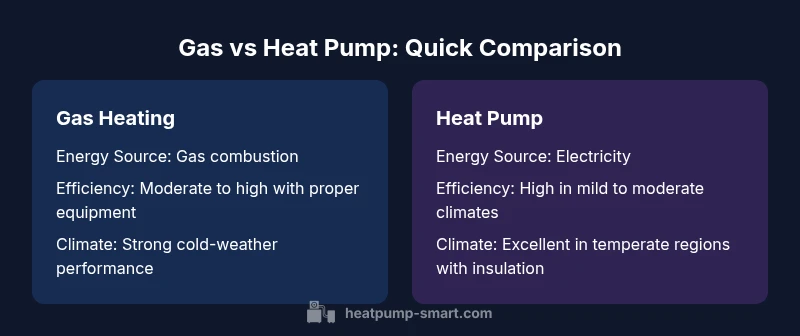
| Feature | Gas Heating System | Heat Pump System (air-source) |
|---|---|---|
| Energy Source | Gas combustion | Electric heat transfer |
| Energy Efficiency | Variable efficiency depending on furnace/boiler | High efficiency with modern heat pumps |
| Best Climate | Very cold climates benefit from gas backup | Moderate to mild climates excel with heat pumps |
| Typical Maintenance | Annual furnace inspection, venting checks | Regular filters, outdoor unit upkeep, annual service |
| Installation Cost | Potentially higher if venting and gas lines are required | Can be moderate but may require electrical upgrades |
| Long-Term Operating Cost | Fuel costs vary with gas price volatility | Electricity costs depend on rates and efficiency |
| Environmental Impact | Higher emissions with fossil fuel combustion | Lower emissions when powered by clean electricity |
| Rebates and Incentives | Gas rebates are regionally limited | Heat pumps often eligible for incentives |
| Noise and Aesthetics | Furnace location and venting influence noise | Outdoor heat pump unit may produce noticeable ambient sound |
Advantages
- Lower upfront costs in areas with existing gas infrastructure
- Proven, rapid heat delivery in very cold conditions with gas systems
- Well-established service networks for gas equipment
- Familiar maintenance routines for many homeowners
Disadvantages
- Higher ongoing fuel costs when gas prices rise
- Lower energy efficiency in some climates compared to heat pumps
- Higher emissions potential due to fossil fuel combustion
- Venting, combustion safety, and air quality considerations
Heat pumps generally provide better long-term value and lower emissions; gas may be preferred in very cold climates or where electricity reliability is uncertain.
For most homes, heat pumps deliver superior efficiency and environmental benefits. Gas can still be the right choice where climate demands rapid, robust heat or electricity access is unreliable; hybrid setups can bridge gaps.
Your Questions Answered
Is a gas furnace cheaper to install than a heat pump?
Installation costs depend on existing infrastructure. Gas furnaces can be cheaper where gas lines and venting are already in place, but adding new ducts or upgrades may offset savings. Heat pumps may require electrical upgrades yet often come with rebates that balance upfront costs.
Gas installations can be cheaper where gas lines exist, but heat pumps with incentives can also be cost-effective after rebates.
Are heat pumps effective in very cold climates?
Modern heat pumps perform well in many cold climates with proper sizing and auxiliary heat as needed. In the coldest regions, pairing with a gas furnace or using a dual-fuel approach may maintain comfort during extreme cold.
Heat pumps work well for most cold climates with proper sizing; in extreme cold, a backup heat source can help.
Can I run a gas system and a heat pump together?
Yes. A hybrid or dual-fuel system uses the heat pump for efficiency when temperatures permit and switches to gas for supplemental heat during very cold periods, guided by smart controls and weather conditions.
A hybrid setup uses heat pumps primarily, with gas as backup in cold weather.
What maintenance do gas and heat pump systems require?
Gas systems require annual furnace inspections and venting checks. Heat pumps need regular filter changes, outdoor coil cleaning, and periodic professional service to maintain efficiency and reliability.
Gas needs annual safety checks; heat pumps need routine maintenance and filter changes.
What rebates or incentives exist for these systems?
Rebates and incentives vary by region and program year. Heat pumps commonly qualify for energy efficiency incentives, while gas rebates may be more limited and environment-specific. Check local government and utility programs for current offers.
Check local programs for heat pump incentives; gas rebates vary by region.
Which is more important for home comfort: heat speed or efficiency?
Gas can deliver heat quickly, which some homes value for comfort. Heat pumps optimize efficiency and provide steady warmth, leveraging insulation and building performance. The best choice balances desired comfort, energy costs, and climate conditions.
Gas heats fast; heat pumps are efficient and steady; your climate and insulation determine the better fit.
What is a good hybrid setup approach for a mixed climate?
A hybrid setup blends heat pump operation with a gas backup to cover periods of very cold weather, offering comfort and reliability while aiming to minimize energy costs. A smart control system can optimize transitions based on outdoor temperature and energy prices.
Hybrid systems switch to gas when it’s very cold to maintain comfort and efficiency.
How should I evaluate total cost of ownership?
Consider upfront equipment and installation, ongoing energy costs, maintenance, potential rebates, and projected lifetime. A side-by-side estimate that includes worst-case and typical operating scenarios helps you compare apples to apples.
Compare upfront costs, energy usage, maintenance, and rebates to estimate total cost.
Top Takeaways
- Assess climate and insulation before deciding; heat pumps shine in moderate climates.
- Factor electricity prices and potential rebates into the decision.
- Gas remains strong in very cold climates or where power reliability is poor.
- Hybrid systems can offer resilience and optimized comfort.
- Check incentives and compare total cost of ownership across scenarios.