Natural Gas vs Heat Pump: A Comprehensive Comparison
Explore natural gas vs heat pump heating: efficiency, climate fit, upfront vs operating costs, installation needs, and rebates. Learn with Heatpump Smart guidance.


According to Heatpump Smart, heat pumps often deliver higher overall efficiency and lower emissions in moderate climates, while natural gas can be cost-effective where gas infrastructure exists or in very cold weather with backup. The right choice depends on climate, energy prices, insulation, and incentives. In many homes, a hybrid approach can balance reliability and efficiency, especially where seasonal temps vary.
Context: Why compare natural gas and heat pumps
Heating choices shape long-term energy costs, comfort, and environmental impact. When you compare natural gas heating to heat pumps, you’re weighing combustion-based warmth against electric climate control. The decision hinges on local energy prices, climate, building envelope, and available incentives. According to Heatpump Smart, homeowners should start with an energy audit to identify insulation gaps and air leaks before choosing a system. This context helps ensure you don’t overpay for comfort or under-invest in insulation that erodes efficiency over time. In many regions, policy signals and rebates are evolving, so a forward-looking view matters as much as today’s price tag.
How a gas heating system works
Natural gas heating relies on combustion in a furnace or boiler to produce hot air or hot water. The system typically vents combustion byproducts outdoors through a flue or vent, and it uses ductwork or radiant emitters to distribute heat. Gas furnaces are known for rapid response and reliable performance in very cold weather, assuming adequate venting and fuel supply. Maintenance generally centers on flame quality, venting integrity, and filter cleanliness. While gas systems have a long track record, they still contribute to indoor air quality considerations and greenhouse gas emissions linked to the fuel mix.
How a heat pump works
Air-source heat pumps transfer heat between indoors and outdoors using a refrigerant cycle driven by electricity. In heating mode, the system extracts heat from outside air (even when it’s cold) and releases it inside. Heat pumps are praised for high operating efficiency, especially when operated in milder climates and paired with a well-insulated home. In very cold conditions, some models rely on auxiliary resistance heat to maintain comfort, which can affect overall efficiency. The longevity and performance depend on the outdoor unit sizing, ductwork, and proper refrigerant charging. Heat pumps also offer the upside of lower localized emissions when powered by a clean electricity mix.
Climate and efficiency considerations
Efficiency claims for heat pumps are climate-dependent. In temperate regions with a low-emission electricity grid, heat pumps can reduce operating costs and carbon footprint compared with gas. In very cold climates, performance gaps may appear unless paired with a supplemental heat strategy. Gas furnaces, by contrast, provide consistent heat output regardless of outdoor temperatures but their efficiency and emissions are tied to fuel prices and the local fuel mix. Heatpump Smart analysis shows that choosing an approach aligned with your climate, insulation level, and grid electricity quality yields the best long-term performance. It also highlights the importance of a well-sealed envelope as a force multiplier for any system.
Cost implications: upfront and operating costs
Upfront costs for natural gas systems are typically lower than for full heat pump installations, especially when existing gas lines and ductwork are in place. However, operating costs fluctuate with natural gas prices, which can be volatile. Heat pumps involve higher initial investment due to equipment, potential duct upgrades, and electrical considerations, but they often benefit from lower daily operating costs when electricity is affordable and clean. Incentives, rebates, and utility programs can shift the economics toward heat pumps, particularly for new builds or major renovations. Heatpump Smart’s guidance emphasises evaluating total cost of ownership over 5–15 years, rather than focusing solely on initial price.
Installation, maintenance, and reliability
Gas systems require proper venting, safe gas connections, and annual combustion checks. Installation may be simpler if there’s an existing gas furnace and ductwork, but retrofits can add complexity. Heat pumps demand appropriate electrical capacity, outdoor unit placement, and, depending on the home, either new ductwork or independent ductless heads. Maintenance for heat pumps emphasizes filter changes, coil cleaning, and refrigerant integrity, while gas systems focus on flame quality and venting. Reliability depends on local service availability, climate, and system design; a hybrid approach can mitigate extremes when needed.
Environmental impact and air quality
Gas heating emits carbon dioxide and other pollutants associated with fossil fuels, contributing to climate concerns in regions with high natural gas usage. Heat pumps reduce onsite fossil fuel use and, when powered by clean electricity, can lower lifecycle emissions. Indoor air quality considerations differ: gas systems can introduce combustion byproducts if venting is compromised, whereas heat pumps rely on proper filtration and fresh-air strategies. Homeowners should consider local air quality goals, grid decarbonization plans, and the potential for combined systems to minimize emissions while preserving comfort.
Practical decision-making for different homes
For duplexes or smaller homes in mild climates, a heat pump with efficient insulation often delivers the best balance of comfort and operating cost. In regions with very cold winters or where the electricity grid remains carbon-intensive, a gas or hybrid approach can be sensible. The choice is also influenced by existing infrastructure: if a home already has gas lines and a furnace, a gas upgrade might be cost-effective in the short term; if the home is undergoing renovation and the grid is shifting toward cleaner energy, heat pumps may prove more future-proof. Heatpump Smart suggests running a formal cost-benefit analysis and consulting a qualified installer before deciding.
Choosing based on climate and building type
Climate, building envelope, and occupancy patterns should drive the choice. Multi-family buildings, homes with high heating demands, or rural properties with stable gas access may benefit from different configurations than urban, well-insulated houses with access to a clean electricity grid. A hybrid or dual-fuel system can offer gradual transition, allowing households to rely on gas during extreme cold while using heat pump efficiency during milder periods. The goal is to maximize comfort while minimizing total energy costs and environmental impact.
Comparison
| Feature | Natural Gas Heating | Air-Source Heat Pump |
|---|---|---|
| Core heating method | Combustion-based furnace/boiler | Refrigerant-cycle heat transfer |
| Efficiency (typical) | Moderate to high with gas efficiency variations | High efficiency in milder climates |
| Upfront installation cost | Lower when replacing old gas hardware | Higher due to outdoor unit and controls |
| Operating cost drivers | Gas price and appliance efficiency | Electricity price and cooling/cooling COP |
| Climate suitability | Strong in very cold weather with proper backup | Best in moderate winters with clean grid |
| Electrical requirements | Gas service, venting, and ductwork typically needed | Electrical capacity for outdoor unit and potential ducting |
| Maintenance focus | Annual combustion checks and vent inspection | Filter, coil, and refrigerant health |
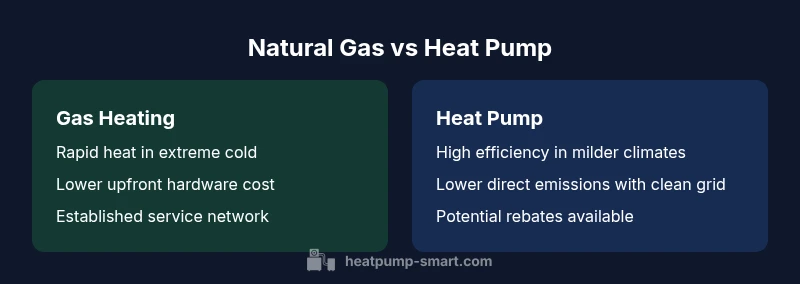
| Environmental impact | Direct fossil fuel use; emissions depend on fuel mix | Lower direct emissions when powered by clean grid |
| Rebates/incentives | Incentives vary by region; gas programs exist | Common rebates for heat pumps through utilities and programs |
Advantages
- Lower upfront hardware cost for gas systems in many setups
- Broad service network and familiarity among technicians
- Rapid heat delivery in extreme cold with a gas furnace
- Existing infrastructure often reduces retrofit complexity
- Vast historical data and vendor support
Disadvantages
- Operating costs tied to fossil fuel prices and emissions
- Gas systems emit combustion byproducts and require venting
- Efficiency can degrade with aging equipment or poor insulation
- Heat pumps depend on electricity supply and grid decarbonization
- Potential longer payback times in high-electricity-cost areas
Heat pumps are generally the better long-term choice in moderate climates; gas may be preferred in very cold climates or where upfront cost and existing gas infrastructure dominate.
For most homes with access to clean electricity, heat pumps offer higher efficiency and lower emissions. Gas heating remains viable where extreme cold or existing gas systems make it more economical upfront. A hybrid approach can offer a best-of-both-worlds strategy in transitional markets.
Your Questions Answered
Is natural gas cheaper than electricity for heating?
Cost comparisons depend on local gas and electricity prices, energy efficiency, and climate. Gas can be cheaper upfront in some regions, but electric heat pumps may win over time when electricity is affordable and the grid is decarbonizing. A region-specific cost analysis is essential.
Gas and electricity costs vary by region. A local cost analysis will show whether gas or heat pumps deliver lower total heating costs over the next several years.
Can heat pumps work in very cold climates?
Yes, modern heat pumps can operate efficiently in cold climates, especially models designed for low-temperature performance and paired with backup heat. In regions with severe winters, a hybrid or dual-fuel approach may be preferred.
Many heat pumps handle cold weather well, but in ultra-cold areas you might use a backup heat source along with the heat pump.
Do I need a separate duct system for a heat pump?
It depends on your home. Some heat pumps require ductwork, while ductless mini-split systems provide flexible options. In existing homes with ducts, proper sealing and sizing are crucial for performance.
Ducts or ductless heads can be used with heat pumps; a professional will determine the best setup for your home.
What rebates are available for heat pumps?
Rebates and incentives vary by region and program. Utilities often offer efficiency incentives for heat pumps, and federal or state programs may provide tax credits or rebates for energy-efficient upgrades.
Check with your utility provider and local government programs for current heat pump rebates.
Should I consider a hybrid system?
A hybrid or dual-fuel system blends gas and heat pump capabilities to balance efficiency and reliability. This approach can offer flexibility in variable climates and during transitional grid conditions.
Hybrid systems can give you the best of both worlds—efficient heating with backup when needed.
Which is better for a multi-zone home?
Heat pumps, especially ducted systems or multiple mini-splits, are well-suited for multi-zone homes. Gas systems can also serve multi-zone layouts but may require more ductwork and zoning controls.
For multi-zone homes, heat pumps with proper zoning often offer precise temperature control and efficiency.
Top Takeaways
- Evaluate climate and grid electricity quality before deciding
- Consider total cost of ownership, not just upfront price
- Check rebates and incentives to improve economics
- Assess building envelope to maximize system performance
- Ask for a hybrid option if you’re unsure