Geothermal Heat Pump Residential Cost: 2026 Guide
Discover the installed cost range for geothermal heat pumps in homes, with loops, site conditions, incentives, and long-term value. Heatpump Smart explains pricing drivers for 2026.


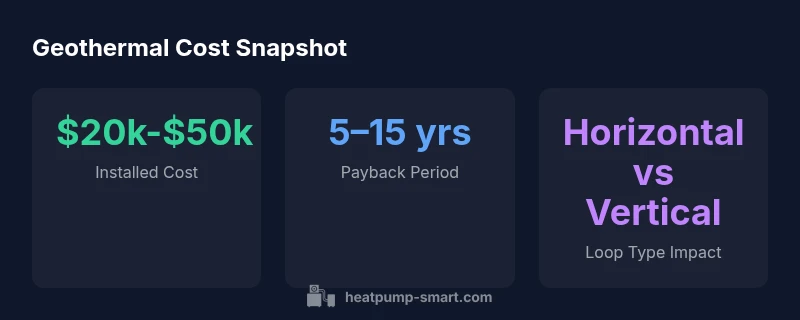
According to Heatpump Smart Analysis, 2026, the installed cost for a geothermal heat pump residential system typically ranges from $20,000 to $50,000, with variations by loop type and site conditions. Total cost depends on site conditions, electrical upgrades, and permit fees. The lower end reflects straightforward horizontal loops in favorable soils; higher-end projects may require vertical loops, deep boreholes, or water-source configurations.
Cost Structure and Drivers
Geothermal heat pump residential costs comprise upfront equipment, installation labor, loop field, drilling or trenching, heat exchanger, and possible electrical upgrades. The largest variable remains the loop configuration: horizontally installed loops generally cost less than vertical loops due to drilling and borehole work. Site assessment and soil conductivity influence digging depth, loop length, and the feasibility of slinky or serpentine layouts. Permitting, design fees, and potential electrical panel upgrades add to the bill. Weather and crew availability can also affect scheduling and price. For homeowners, obtaining multiple quotes and a detailed scope helps avoid cost creep. In practice, many projects see cost ranges that reflect local labor markets, geology, and the chosen loop strategy, which is why a site-specific assessment is essential.
Loop configurations and price impact
Loop configuration is a primary price driver in geothermal systems. Horizontal loops typically require more land but less drilling, reducing costs in suitable soils. Vertical loops involve deeper boreholes, specialized drilling, and longer project timelines, increasing upfront costs but potentially reducing land-use impact. Open-loop or water-side configurations have their own permitting and water-treatment considerations. When evaluating quotes, compare the scope of drilling, loop length, trenching, and any grouting or backfilling requirements. A well-designed loop also minimizes heat loss and extends equipment life, which affects long-term value.
Site conditions, drilling, and permits
Site conditions determine the feasibility of a geothermal installation and can dramatically affect price. Rocky soil, high groundwater, or limited access can require additional drilling or trenching, protective measures, and longer equipment rental. Permitting and utility interconnection may add fees and inspections. A thorough site survey should map soil conductivity, groundwater levels, existing utilities, and potential interference with landscaping. Contractors who provide 3D layout plans and contingency pricing help prevent surprise costs later in the project.
Financing, incentives, and long-term value
Beyond the upfront price, financing options such as energy-efficiency loans or energy-saving mortgages can improve affordability. Incentives, rebates, and tax credits can substantially reduce net cost in many regions, though availability varies by location and program year. When evaluating value, compare annual operating costs, system efficiency, and maintenance needs. Geothermal systems deliver stable heating and cooling, which can improve comfort and home resale value, but the long-term payoff depends on energy prices and local incentives.
Choosing a qualified installer and avoiding surprises
Select installers with geothermal specialization, valid licenses, and solid references. Ask for a detailed, itemized proposal and a measured plan for loop burial, borehole depth, grout type, and electrical work. Request performance-based guarantees or a maintenance package to reduce the chance of hidden costs after commissioning. Finally, verify that the installer will handle permits and coordinate with utility programs to maximize incentives.
Authority sources
For more information on geothermal cost factors and incentives, see the following authoritative references:
- https://www.energy.gov/eere/geothermal/geothermal-heat-pumps
- https://www.energy.gov/eere/geothermal/ground-source-heat-pumps
- https://nrel.gov/docs/fy16osti/66938.pdf
Estimated installed costs by loop type (order of magnitude)
| Model Type | Typical Cost Range | Site Requirements | Notes |
|---|---|---|---|
| Horizontal loop | $15,000–$40,000 | Moderate land area, accessible yard | Lower cost when soil supports serpentine loops |
| Vertical loop | $25,000–$60,000 | Limited land, boreholes | Higher drilling costs but compact footprint |
| Open-loop/Water-source | $25,000–$70,000 | Water access, permits | Can require treatment and seasonal restrictions |
Your Questions Answered
What factors influence the installed cost of a geothermal heat pump?
Key factors include loop type (horizontal vs vertical), site conditions (soil and groundwater), drilling costs, electrical upgrades, and permitting. Each factor can push the total price up or down. Getting a detailed quote that itemizes these elements helps you compare apples-to-apples.
Loop type and site conditions are the big cost drivers. Get a detailed quote to compare items like drilling and permits.
Is geothermal cheaper to operate than air-source heat pumps?
Geothermal systems typically offer lower operating costs due to higher efficiency, but the upfront price is higher. The long-term savings depend on electricity prices, climate, and how often the system runs.
Geothermal usually saves on operating costs, but the upfront price is higher; your climate and energy prices decide the payback.
What incentives help offset geothermal installation costs?
Federal and regional tax credits, rebates, and utility programs can reduce net cost. Availability varies by location and year, so check current programs and combine multiple incentives when possible.
Look for federal and local incentives to lower the upfront price.
How long does a geothermal system last?
Indoor components typically last 20–25 years, while the ground loop can last 50+ years with proper maintenance. Regular inspections help maximize lifespan and performance.
Most parts last decades with good maintenance, especially the loop field.
When is a geothermal system not cost-effective?
In small homes with low heating loads or when soils are unsuitable, the economics may not justify the upfront investment. In such cases, alternatives like air-source heat pumps may be more sensible.
If your home is small or soils are poor for geothermal, consider other options.
“Geothermal is a long-term investment that stabilizes energy costs and improves home comfort when properly sized and installed.”
Top Takeaways
- Budget for wide cost ranges due to loop type and site conditions
- Vertical loops raise upfront costs but save on land use
- Budget for permits, electrical upgrades, and potential contingencies
- Incentives can significantly reduce net price
- Get multiple quotes to ensure scope alignment