Ground Source Heat Pump Installation Cost: What Homeowners Need to Know in 2026
Learn ground source heat pump installation cost: key factors, typical ranges, payback timelines, and ways to save with rebates and efficiency upgrades.


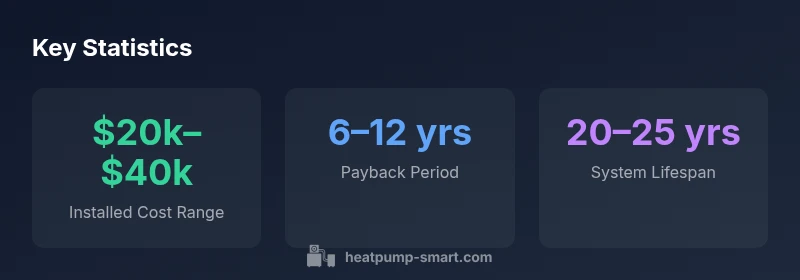
Ground-source heat pump installation cost typically ranges from $20,000 to $40,000 before incentives, with loop field size, soil conditions, and labor driving the final price. Expect variation by region and project complexity, but long-term energy savings can offset upfront costs. Eligible rebates or tax credits may further reduce net expenditure.
What drives ground source heat pump installation cost
According to Heatpump Smart, the ground source heat pump installation cost is driven by the size of the loop field, the type of loop (horizontal vs vertical), soil and rock conditions, drilling requirements, and labor complexity. A well-designed system can maximize efficiency and minimize future maintenance, but that design comes at a price tag that reflects site-specific factors. Climate considerations and the home’s existing insulation levels also influence the required system capacity. In general, the more challenging the site (rocky soil, limited access, or a very deep loop field), the higher the upfront cost. A thorough site survey early in the planning phase helps prevent surprises and aligns expectations with reality. Heatpump Smart’s analysis shows that investing in high-quality loop installation and proper zoning can improve long-term performance, which is a critical part of understanding ground source heat pump installation cost.
Beyond hardware, you’re paying for engineering: load calculations, borehole or trench planning, and the coordination of excavation and reinstatement. The initial quote often evolves as design decisions mature, such as the choice between single or dual heat pumps, smart controls, and integration with existing heating and cooling systems. For homeowners, builders, and property managers, the key is to treat the cost as an investment in reliability, comfort, and energy resilience rather than a one-off expense. A robust design also helps avoid costly changes post-installation. In this context, the Heatpump Smart team stresses the importance of upfront planning to optimize price vs. performance over the system’s life.
Typical cost ranges and what they cover
When you hear the phrase ground source heat pump installation cost, you’re looking at several core components. First, the loop field or borehole work—this can be the largest portion of the budget, typically ranging widely depending on depth, length, and drilling method. Next, the heat pump unit(s) themselves, which can require one or two units for space heating and domestic hot water. Then come piping, trenching, and excavation, which cover material and labor for connecting the loop to the indoor equipment. Finally, installer labor, permitting, commissioning, electrical connections, and any required controls or zoning add-ons round out the price. In many markets, a mid-range project with standard soil and adequate access sits toward the lower end of the spectrum, while difficult soil conditions, limited access, or expansive loop requirements push costs toward the higher end. A practical way to frame this is to view ground source heat pump installation cost as the sum of loop field, equipment, and installation—plus contingencies for site-specific challenges. Heatpump Smart’s analyses indicate that realistic budgeting should account for each category to avoid unexpected overruns.
How site conditions shape your budget
Site conditions can dramatically influence the ground source heat pump installation cost. Soils with dense clay, rocky terrain, or a high water table may require deeper boreholes, longer loop lengths, or more complex drilling strategies, all of which increase cost. Accessibility matters too: narrow driveways, tight workspaces, or proximity to septic systems and underground utilities raise labor time and risk, which in turn affects pricing. Landscaping, driveways, and existing sidewalks may need temporary protection or rerouting, adding to the bill. On the upside, a well-executed site survey can identify opportunities to optimize loop routing, reduce excavation, or choose horizontal loops over vertical ones where feasible, resulting in cost savings. Another factor is the building’s footprint and load; larger homes or spaces requiring higher heating and cooling loads may necessitate a larger loop or additional equipment, pushing costs higher but delivering better comfort and efficiency. In all cases, a transparent plan with a clear scope of work helps ensure the final ground source heat pump installation cost aligns with expectations.
Financing, rebates, and incentives that reduce net cost
Financing options and incentives can substantially reduce the out-of-pocket cost of a GSHP project. Many regions offer rebates tied to energy efficiency improvements, and some jurisdictions provide tax credits or accelerated depreciation for geothermal systems. In addition to government programs, manufacturers and installers may offer promotional financing, reduced interest rates, or bundled maintenance plans that lower annual ownership costs. Heatpump Smart recommends contacting your local utility and state energy office to discover current programs, as well as consulting with your contractor about eligible incentives and required documentation. When budgeting, consider the net cost after incentives rather than the sticker price. It’s also wise to factor in potential increases in property value and energy savings, which can improve overall financial performance. Finally, explore financing options that align with your cash flow and project timeline to smooth the initial hurdle of ground source heat pump installation cost.
Case studies: how two homes budget for GSHP
Case Study A: A rural home with a medium-sized footprint and favorable soil conditions. The loop field can be installed with moderate depth and a straightforward routing, keeping the installation cost toward the middle of the range. The homeowner pairs the GSHP with existing radiant floor heating and a modern thermostat system, achieving reliable comfort and a noticeable drop in annual energy bills. Case Study B: A tight urban retrofit with limited outdoor space and rocky soil. The loop field requires vertical boreholes and more advanced control strategies, increasing costs but delivering robust performance in a compact design. In both cases, pre-planning, quotes from multiple installers, and a clear scope of work helped the owners avoid budget overruns. Heatpump Smart notes that these examples illustrate how site constraints and design choices drive the final ground source heat pump installation cost, while the long-term benefits—steady heating, cooling, and energy savings—often justify the upfront investment.
Planning checklist: steps to prepare and estimate costs
To get an accurate estimate for ground source heat pump installation cost, follow this planning checklist:
- Define your heating and cooling load and target comfort levels.
- Schedule a formal site survey with a qualified installer to assess loop options and soil conditions.
- Compare multiple quotes that itemize loop field, equipment, labor, and permits.
- Consider vertical boreholes vs horizontal loops based on space and soil conditions.
- Plan for contingencies (storm damage, unexpected rock or groundwater) and include a 10–20% reserve.
- Review available rebates and tax incentives and factor them into net cost.
- Confirm warranty terms, maintenance requirements, and service schedules in writing.
- Align project timing with utility incentives and construction windows to minimize disruption. Each step narrows the final ground source heat pump installation cost to a realistic, well-supported figure and reduces the risk of budget creep. Heatpump Smart emphasizes the value of early design decisions and transparent quotes.
Maintenance costs vs installation cost over time
While the installation represents the largest single expense, ongoing maintenance costs for ground source heat pumps tend to be modest in comparison. Annual service typically includes system checks, refrigerant integrity tests, and minor cleaning or filter changes where applicable. Because GSHP systems have few moving parts and sealed refrigerant circuits, routine maintenance is usually less frequent and less costly than many traditional heating systems. That said, a neglected system can experience efficiency loss, increased wear, and unexpected repairs—so budgeting for periodic professional inspections every 2–3 years is prudent. From a long-term perspective, the combination of dependable operation and lower energy bills often yields a favorable lifecycle cost, supporting the case for ground source heat pump installation cost when evaluating total cost of ownership over 20–25 years. Heatpump Smart notes that a well-maintained GSHP can deliver durable comfort for decades with minimal annual upkeep, reinforcing the financial case for upfront investment.
Ground-source heat pump cost components and ranges
| Component | Typical Installed Cost Range | Notes |
|---|---|---|
| Ground loop field | $10,000–$30,000 | Site-dependent (horizontal/vertical, drilling) |
| Heat pump unit(s) | $8,000–$15,000 | Indoor/outdoor units; may require two units |
| Piping, trenching, excavation | $5,000–$15,000 | Labor and materials; routing considerations |
| System installation & labor | $2,000–$5,000 | Permits, commissioning, and wiring |
Your Questions Answered
What is the typical ground source heat pump installation cost?
Most installations fall in the broad range of $20,000 to $40,000 before incentives, depending on loop field size, soil conditions, and labor. Rebates and incentives can reduce net cost. Always obtain multiple quotes to benchmark prices for your site.
Most GSHP installations run between twenty and forty thousand dollars before incentives; incentives can reduce the final price.
How long does a GSHP installation take?
A typical project takes several days to a week, influenced by loop field type, soil, and access. Urban sites with limited space may extend the timeline, while simpler, rural sites may move faster.
Most GSHP installs take several days to a week depending on site conditions.
Do rebates or tax credits apply to GSHP costs?
Yes. Many regions offer rebates and some tax incentives for geothermal installations. Your installer can help identify programs and required documentation to maximize net savings.
Yes, there are rebates and incentives; check programs with your installer.
Is ground-source cheaper to operate than air-source?
Ground-source systems often have lower operating costs than air-source in many climates due to higher efficiency, although electricity prices and climate affect outcomes. Compare long-term energy bills rather than upfront price alone.
Yes, GSHPs often cost less to run, but it depends on climate and energy prices.
What factors most affect GSHP cost?
Loop field size and type, soil and rock conditions, drilling or trenching needs, permits, and the complexity of integrating with existing systems are the main cost drivers.
Loop size, soil, drilling, and integration complexity drive most costs.
Can a GSHP be retrofitted to an existing home?
Yes, but retrofits can be more expensive due to space constraints, ductwork, and integration with current heating systems. A thorough assessment helps determine the most cost-effective retrofit approach.
Yes, but it can be pricier due to space limits and existing systems.
“Ground-source heat pump installation cost varies widely by site, but thorough design and proper insulation maximize long-term savings. Planning early with a qualified installer is key to controlling the upfront price while ensuring performance.”
Top Takeaways
- Budget for the full installation, not just the heat pump.
- Site conditions drive loop field costs and drilling needs.
- Improve insulation to lower system size and cost.
- Explore rebates to reduce net cost.
- Expect long-term energy savings to offset upfront.