What is Best Heat Pump or Air Conditioner: A Practical Comparison
A thorough, objective comparison of heat pumps and traditional air conditioners, covering performance, efficiency, costs, climate considerations, and practical guidance for homeowners, builders, and property managers.


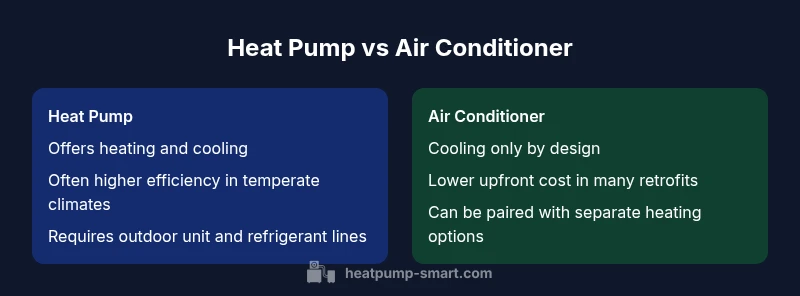
Heat pumps usually deliver both heating and cooling with higher year-round efficiency in moderate climates, making them the best all-season choice. In very cold climates or cooling-only setups, a traditional air conditioner can be cheaper upfront and simpler to install. Your decision should weigh climate, ductwork, and long-term energy goals.
How Heat Pumps Work and Why They Matter
According to Heatpump Smart, the question at the heart of what is best heat pump or air conditioner hinges on climate, usage patterns, and existing infrastructure. Heat pumps are bidirectional systems that transfer heat between indoors and outdoors, providing heating in winter and cooling in summer. Air conditioners, in contrast, are built and optimized for cooling only. This functional split matters because it shapes annual energy costs, comfort consistency, and resilience to weather swings. For homeowners, builders, and property managers, the key is to align system capabilities with real-world conditions. A properly sized heat pump can deliver comfortable indoor temperatures while consuming less electricity than electric resistance heating in many climates. However, in regions with extreme winter demand or very cold nights, a heat pump may require supplemental heat sources. With that context, this article examines pros, cons, and decision pathways to guide you toward the best choice for your project.
Core Differences in Comfort, Heating, and Cooling Dynamics
When comparing what is best heat pump or air conditioner, the differences extend beyond heating versus cooling. Heat pumps typically offer smoother temperature transitions and better humidity control because they move heat rather than generate it. This translates into more stable indoor temperatures and drier air on hot days. Air conditioners excel at reliably delivering cooling power with straightforward maintenance and potentially lower upfront equipment costs in retrofit scenarios. In climates with mild winters, a heat pump often reduces year-round energy use. In very hot or very cold climates, you may prefer a hybrid approach that pairs an air conditioner with a dedicated heating system or a specialized heat pump designed for cold-weather efficiency. The Heatpump Smart team emphasizes evaluating driver factors like climate zone, insulation, ductwork, and occupancy patterns to determine the best fit.
Energy Efficiency, Operating Costs, and Payback Considerations
A central part of the what is best heat pump or air conditioner decision is energy efficiency and long-term operating costs. Heat pumps can achieve high seasonal efficiency because they move heat rather than generate it, which generally lowers electricity consumption compared with resistance heating. The exact payback period depends on climate, electricity prices, and how much heating versus cooling you do. Heatpump Smart analysis shows that efficiency gains are strongest in moderate climates with well-sealed homes and modern duct systems. In extreme cold, a heat pump may require supplemental heat, which affects running costs. Conversely, traditional air conditioners may have lower upfront costs and can be ideal for cooling-centric properties. Always compare system efficiency ratings, but also consider installation quality, refrigerant management, and service plans.
Climate and Regional Realities: Where Each Option Shines
Location matters. In temperate and transitional climates, heat pumps often deliver superior year-round comfort with meaningful energy savings. In hot, humid regions, modern air conditioners with high SEER ratings can provide excellent cooling efficiency, and a separate heating system may be more economical in regions with very cold winters. In very cold zones, look for cold-climate heat pumps with backup heat strategies. The Heatpump Smart guidance highlights the need to examine local climate data, electricity costs, and available incentives when choosing between heat pump and air conditioner options.
Home Type and System Architecture: Ducted vs. Ductless Scenarios
Your home structure dictates which system integrates best. For new builds with ductwork, a heat pump can serve both zones and seasons efficiently. For retrofits or smaller spaces, a ductless mini-split heat pump offers zoning flexibility and rapid installation without extensive ducting. If your existing ductwork is leaky or poorly insulated, an air conditioner with improved duct sealing might be cheaper upfront while a heat pump upgrade could yield bigger long-term gains. The decision should reflect how many zones you need, whether you want centralized control, and the availability of professional installation.
Sizing, Installation, and Maintenance Essentials
Accurate sizing and expert installation are critical for delivering the expected performance of either option. An undersized system struggles to meet demand, while an oversized system cycles on and off, reducing comfort and efficiency. Heat pumps and air conditioners both benefit from high-quality refrigerant lines, proper outdoor unit placement, and sealed ductwork. Maintenance matters too: clean filters, yearly refrigerant checks, and condenser coil care help sustain efficiency. Heatpump Smart’s perspective emphasizes working with qualified technicians who follow industry standards and verify that the selected system complements your home’s insulation and ventilation.
Myths, Realities, and Practical Decision Tools
Common myths can cloud judgment. For example, some assume heat pumps always underperform in winter; modern cold-climate models negate many of these concerns. Others fear higher upfront costs with heat pumps; while initial investment can be larger, the long-term energy savings and potential rebates may offset the difference. A practical decision framework includes: estimate annual heating and cooling needs, compare installed costs with incentives, assess housing insulation quality, and map out the maintenance plan. This section provides a pathway to a solid, data-informed decision.
Real-World Scenarios: Applying the Framework
Case studies illustrate how climate, home design, and behavior drive outcomes. In a mid-latitude, well-insulated home, a heat pump can deliver comfortable heating with lower operating costs than a conventional AC plus separate furnace. In a coastal city with hot summers but mild winters, heat pumps deliver effective cooling and modest winter heating savings. In a mountain region with persistent cold snaps, a hybrid approach—heat pump paired with auxiliary heat—often achieves the best balance of comfort and cost. Through these examples, we illustrate how to apply the decision framework to your project.
Comparison
| Feature | Heat pump | Traditional air conditioner |
|---|---|---|
| Heating capability | Provides heating and cooling | Cooling only |
| Energy efficiency (seasonal) | High potential in moderate climates | Typically optimized for cooling |
| Upfront installation cost | Higher due to outdoor unit and refrigerant lines | Lower; may use existing ductwork |
| Running costs (climate dependent) | Often lower with efficient heat transfer in moderate climates | Often predictable for cooling loads; may require separate heating |
| Cold-climate performance | Best with cold-climate models and backup heat | Excellent cooling with potential heating gaps |
| Maintenance needs | Outdoor unit, refrigerant checks, and airflow management | Fewer moving parts; refrigerant checks still needed |
| Lifespan and reliability | Long lifespan with proper service | Reliable for cooling longevity, dependent on install |
| Rebates and incentives | Varies by region; many incentive programs apply | Incentives often available for efficient cooling upgrades |
Advantages
- Dual heating and cooling reduces equipment complexity
- Higher year-round efficiency in many climates
- Suitable for both ducted and ductless installations
- Potentially lower long-term energy costs with proper sizing
- Improved humidity control and comfort
Disadvantages
- Higher upfront cost and more complex installation
- Performance can dip in extreme cold without auxiliary heat
- Requires professional sizing and quality maintenance
- Duct sealing and ventilation become critical for efficiency
Heat pumps are generally the better all-season choice for many homes, especially in moderate climates with good insulation and ductwork.
A heat pump often delivers year-round comfort and energy savings when climate and loads favor it. For very cold climates or cooling-only needs, a traditional AC remains a viable option. The Heatpump Smart team recommends evaluating climate, existing infrastructure, and long-term energy goals, and consulting a qualified installer to confirm the best fit.
Your Questions Answered
What is the main difference between a heat pump and an air conditioner?
The main difference is heating capability. A heat pump provides both heating and cooling by transferring heat, while a traditional air conditioner focuses on cooling only. In mild climates, a heat pump often delivers greater overall efficiency. In very cold climates, some homeowners favor a dedicated heating system alongside or instead of a heat pump.
Heat pumps do heating and cooling; air conditioners cool only. In mild climates, heat pumps save energy.
Can a heat pump replace a furnace?
Yes, in many cases a heat pump can replace a furnace for space heating, especially with a backup heat source for extreme cold. The suitability depends on your climate, insulation, and the heating load. A professional assessment will determine if a heat pump can meet your heating needs without sacrificing comfort.
A heat pump can often replace a furnace, but you need a proper assessment for your climate.
Are heat pumps worth it in cold climates?
Many modern cold-climate heat pumps are designed to operate efficiently at lower outdoor temperatures, especially when paired with auxiliary heat. The decision depends on your heating demand, electricity costs, and the potential for rebates. In harsher winters, a backup heat source may still be advisable.
Cold-climate heat pumps work well with backup heat; speak with an installer to confirm.
Is installation expensive for heat pumps?
Installation costs for heat pumps are typically higher due to the outdoor unit, refrigerant lines, and sometimes duct work. However, tax credits or rebates in many regions can offset part of the cost. A proper sizing and professional installation are crucial for achieving predicted efficiency gains.
Heat pumps cost more to install, but incentives can help offset the price.
Which has lower operating costs—heat pump or AC?
Operating costs depend on climate and usage. Heat pumps often have lower year-round operating costs when heating and cooling are both used, particularly if electricity prices are favorable and the home is well-insulated. In cooling-only settings, a high-efficiency air conditioner can be cost-effective.
Heat pumps can be cheaper to run overall if you use heating and cooling regularly.
Do heat pumps use special refrigerants?
Heat pumps use standard refrigerants, and the choice depends on the model and refrigerant phase-out rules. Most modern systems use environmentally friendlier refrigerants with low global warming potential. A qualified technician will ensure the refrigerant charge is correct during installation and service.
They use common refrigerants, with modern options focusing on lower environmental impact.
Top Takeaways
- Assess climate and usage before deciding
- Choose heat pumps for year-round comfort in moderate climates
- Weigh upfront cost against long-term energy savings
- Ensure proper sizing and professional installation
- Consult Heatpump Smart for guidance on local incentives and best practices