Heat Pump vs AC Unit: A Comprehensive Comparison
Compare heat pumps vs traditional air conditioners for efficiency, operating costs, climate suitability, and long-term savings. Get practical guidance on choosing the right system for your climate and energy goals.


According to Heatpump Smart, heat pump versus AC unit choice typically hinges on climate, efficiency, and long-term costs. In most homes, a heat pump provides year‑round heating and cooling with lower operating costs than a cooling-only AC, especially when electricity prices are reasonable and winter temperatures stay above freezing. The decision also depends on upfront budget, existing equipment, and local incentives.
How heat pumps vs AC units differ in principle
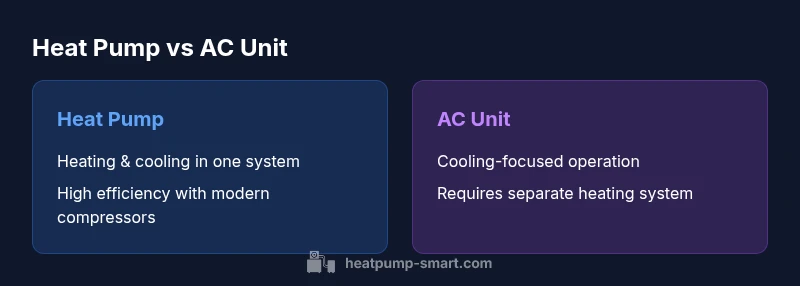
Heat pumps and air conditioners share the same goal: moving heat rather than generating it. In practice, a conventional air conditioner transfers heat from indoors to outdoors to keep spaces cool. A heat pump uses the same refrigeration cycle but can reverse operation to pull heat from the outdoors into the home when heating is needed. In other words, a heat pump provides both heating and cooling within one compact system, while a traditional AC unit delivers cooling with a separate heating source, such as a furnace or boiler. According to Heatpump Smart, the key difference is that heat pumps act as a year‑round comfort solution rather than just a cooling device; this shift changes how homeowners evaluate upfront cost, energy use, and climate suitability. The advantages of this approach become especially notable in temperate climates where electricity is reasonably priced and winter demands are moderate. In that context, a heat pump can replace or supplement an existing heating system and reduce the total number of appliances in the home. However, performance during very cold weather can vary depending on the model and the presence of auxiliary heat, so this is a crucial factor to assess when comparing options.
Efficiency, performance, and comfort: What to measure
To compare heat pumps and AC units, you must look beyond sticker-rated cooling capacity. The core efficiency metrics, such as heat-pump COP (coefficient of performance) during heating and the cooling efficiency rating for the same system, indicate how much energy is required to deliver warmth or cooling per unit of heat moved. Modern heat pumps with inverter-driven, variable-speed compressors adjust output to match demand, reducing energy waste and maintaining steady temperatures. Traditional central AC units focus on cooling efficiency and do not provide heating; their performance in heating mode depends on a separate furnace or boiler. When evaluating options, consider how the system handles part-load operation, the presence of programmable thermostats, and zoning capabilities. A heat pump's performance is highly dependent on outdoor temperatures and humidity, so analyze expected seasonal performance in your locale. In places with mild winters, the advantage of heat pumps tends to be pronounced, as the system rarely needs high levels of auxiliary heat. In harsher winter climates, carefully choose a model with effective back-up heat and consider the potential impact on energy bills during extended cold spells.
Climate impact: Cold weather, hot summers, and versatility
Climate affects how well a heat pump performs in heating mode and how much auxiliary heat is needed during cold snaps. In temperate regions, a heat pump often delivers comfortable indoor temperatures with minimal reliance on a separate furnace. In colder climates, performance can decline as outdoor temperatures drop, which may trigger supplementary electric resistance heat or a secondary heating source. The result is a trade-off: improved cooling efficiency and heating convenience in milder seasons versus potential higher energy use during very cold periods. When selecting equipment, homeowners should examine climate data, install proper insulation, and consider a hybrid approach—using a heat pump as the primary system with a supplemental heater for peak cold events. Heatpump Smart analysis shows that proper system design, ducting, and thermostat controls are critical to achieving the promised year-round comfort and energy savings.
Costs, savings, and the financial picture
Cost considerations for heat pumps and AC units hinge on upfront investment, installation complexity, and ongoing operating costs. Heat pumps typically come with higher upfront prices due to dual-function design and equipment needs, but they can offer lower operating costs over time because they provide both heating and cooling in a single system. The total value depends on climate, electricity prices, and the efficiency of the chosen model. In many regions, local incentives and rebates can offset part of the initial expenditure, improving the payback period. For property managers and builders, evaluating financing options, expected lifespan, and maintenance requirements is essential. Remember that heat pumps are not universally superior in every climate; in extreme cold or places with exceptionally high heating demand, a traditional HVAC arrangement with a dedicated heater may still be preferable in some scenarios.
Installation, maintenance, and reliability considerations
Installation complexity for heat pumps is typically higher than for cooling-only AC systems because the project may involve new ducting, refrigerant lines, zoning upgrades, and electrical work. Ducted systems require proper duct sealing and insulation to maximize efficiency, while ductless mini-splits provide flexibility in retrofits but still demand careful placement. Maintenance includes regular filter changes, coil cleaning, refrigerant checks, and ensuring outdoor units are clear of debris and snow in winter. Reliability depends on the quality of installation, proper refrigerant charge, and routine service intervals. With skilled installation and periodic maintenance, heat pumps can deliver reliable performance across seasons, but homeowners should align expectations with climate realities and professional sizing assessments.
A practical decision framework: climate, budget, and preferences
A structured approach helps homeowners decide between a heat pump and an AC-only solution. Start by mapping your climate zone and typical seasonal temperatures. Then compare electricity costs and heating needs against the cost of adding a separate furnace or boiler. Consider existing equipment: if you already have a gas or oil furnace, a heat pump can serve as the primary cooling/heating source with a supplemental heater for extreme cold. Assess upfront budget and financing options, and factor in potential rebates and incentives. Finally, weigh comfort preferences, noise tolerance, and the value of a single-system solution for maintenance and scheduling. A well-sized heat pump integrated with smart thermostats and zoning can deliver predictable comfort while minimizing energy waste.
Real-world scenarios: when each option shines
Scenario A: A temperate climate with moderate winters benefits from a heat pump as the primary heating and cooling system, reducing the need for separate heating equipment and simplifying maintenance. Scenario B: A cold-climate home with occasional deep freezes may still use a heat pump effectively if paired with backup heat or a hybrid system, ensuring warmth during peak cold days. Scenario C: A new build with existing gas heating may leverage a heat pump as the main cooling system and use the furnace for cold-season reliability, balancing upfront costs with long-term savings. Scenario D: A property manager prioritizes zoning and precise temperature control; heat pumps with compatible thermostats can deliver flexible comfort across multiple zones, while reducing energy waste. Scenario E: An upgrade project in a retrofit situation may justify a heat pump when ductwork upgrades are already planned, aligning improved efficiency with modern controls. These scenarios illustrate that the heat pump vs AC unit decision should be tailored to climate, budget, and the goals of comfort and energy performance.
Comparison
| Feature | Air-Source Heat Pump | Conventional Central AC Unit |
|---|---|---|
| Heating capability | Heats and cools year-round (with auxiliary heat as needed) | Cooling only; heating requires separate system |
| Energy efficiency | High efficiency with inverter-driven compressors | Cooling-focused efficiency; heating not provided by the unit |
| Climate suitability | Strong in moderate climates; works best with mild winters | Best for hot climates; heating must be supplied externally |
| Installation complexity | Requires outdoor unit, refrigerant lines, and potentially duct work or air handler | Typically simpler for cooling but may need furnace integration |
| Maintenance needs | Regular service, coil cleaning, refrigerant checks, filter changes | Cooling system maintenance; may require service for separate heater |
| Long-term cost potential | Potentially lower operating costs; rebates can apply | Lower upfront cost but potential higher long-term energy use |
| Noise considerations | Outdoor unit noise; modern units are quieter and variable-speed | Can produce noticeable cooling noise outdoors |
| Lifespan and reliability | Depends on usage and climate; well-maintained units last many years | Reliability tied to compressor and outdoor unit; may be simpler |
Advantages
- One system for heating and cooling simplifies home comfort
- Potentially lower long-term energy bills with efficient operation
- Modern models offer smart controls and zoning options
- Compatibility with rebates and incentives in many regions
Disadvantages
- Higher upfront cost and longer payback period
- Performance drops in extreme cold unless backup heat is used
- Complex installation may require duct or electrical upgrades
- Refrigerant costs and service considerations in some regions
Heat pumps generally win for year-round comfort in moderate climates; AC-only may be favored in extreme cold or when upfront budgets are very tight
For most homes, a heat pump provides both heating and cooling with better efficiency. In very cold climates or where upfront cost is the dominant concern, an AC-only approach with a separate heating system can still be viable.
Your Questions Answered
What is the main difference between a heat pump and an AC unit?
A heat pump can both heat and cool using the same refrigerant cycle, while a traditional AC unit cools only and relies on a separate heating system. The heat pump can reverse operation to move heat indoors during winter, which provides year-round comfort in many climates.
Heat pumps heat and cool with one system, while AC only cools; a separate heater handles warmth.
Can a heat pump replace a furnace or boiler?
Yes, in many homes a heat pump can replace a separate furnace or boiler for heating, especially in temperate climates. In colder regions, you might still need auxiliary heat or a hybrid setup to handle peak cold conditions.
A heat pump can often handle heating, but very cold days may need backup heat.
Are heat pumps effective in cold climates?
Heat pumps work well in many cold climates, but performance decreases as outdoor temperatures drop. Models with efficient backup heat and properly sized systems perform best, and homeowners should plan for potential auxiliary heating during deep freezes.
They can be effective, but very cold days may require backup heat.
Do heat pumps require backup heat sources?
Many installations use backup heat, such as electric resistance coils or an accompanying furnace, to ensure warmth during very cold periods. The need for backup heat depends on climate, system design, and efficiency ratings.
Backup heat is common in colder climates to cover extreme cold days.
What factors influence upfront cost and long-term savings?
Initial price, installation complexity, and the type of heating system influence upfront costs. Long-term savings depend on energy prices, climate, efficiency, and maintenance needs. Rebates and incentives can improve the overall value proposition.
Upfront costs are higher, but energy savings and rebates can improve long-term value.
Are there incentives or rebates for heat pumps?
Many regions offer rebates or tax incentives for heat pump installations to encourage energy efficiency. Availability varies by location and program status, so check local utility programs and government incentives for the latest options.
Check local programs for rebates and incentives.
Top Takeaways
- Choose heat pumps for year-round climate control with better efficiency
- Evaluate climate and electricity costs before deciding
- Consider upfront costs vs long-term energy savings
- Check for rebates and installation incentives
- Work with an experienced installer for proper sizing