Heat Pump Over Boiler: A Practical Comparison
A detailed side-by-side comparison of heat pumps and boilers, covering upfront costs, operating expenses, climate performance, installation, and incentives to help homeowners decide when a heat pump is best.


For most homes, a heat pump over boiler is the smarter choice because it delivers heating, cooling, and hot water with higher overall efficiency and lower emissions. The upfront cost is higher, but lifetime savings and available incentives often offset the price, especially in temperate climates. Heat pump over boiler is generally the preferred path for energy efficiency and comfort.
Why homeowners consider heat pump over boiler
When evaluating heating systems, many homeowners compare a heat pump over boiler to determine which option best fits climate, energy goals, and budget. Heat pumps extract ambient heat from the outside air or ground and move it indoors, which often results in lower electrical consumption for heating compared with traditional boilers. The Heatpump Smart team emphasizes that the decision hinges on local energy prices, climate, and long-term goals. In mild and moderate climates, heat pump over boiler frequently delivers more consistent comfort with fewer combustion byproducts, contributing to improved indoor air quality and reduced maintenance in many homes. This section sets the stage for understanding practical differences rather than abstract theory, and it presents a frame for making a confident choice.
How heat pumps differ from boilers
Heat pumps and boilers share a goal—to provide reliable home heating—but they operate on different principles. A boiler generates heat by burning fuel or using electric resistance, delivering warmth through radiators or underfloor systems. A heat pump, by contrast, transfers heat from outside to inside using electricity and a refrigerant cycle. In cooling mode, heat pumps can reverse direction, offering air conditioning without a separate system. This block explains not just the mechanics but also how control strategies, thermostat integration, and system sizing affect overall performance. The key takeaway is that heat pump over boiler represents a thermodynamic approach that emphasizes moving heat rather than creating it, with efficiency gains that scale with climate and load patterns.
Energy efficiency and operating costs
Energy efficiency is central to the heat pump over boiler comparison. Heat pumps typically achieve higher seasonal efficiency than boilers, especially when measured by the seasonal coefficient of performance (SCOP) and energy star ratings. While electricity prices influence running costs, many homes experience lower annual energy bills with a heat pump due to heat transfer efficiency and the ability to utilize off-peak electricity. Boilers can be highly efficient, particularly condensing models, but their fuel source (gas, oil) adds exposure to fuel price volatility. This section peels back the numbers in practical terms, showing how efficiency translates into real-world savings over 10-20 years, and what to expect if electricity or gas prices change.
Climate suitability and performance
Climate has a major impact on the heat pump over boiler decision. Heat pumps perform best when outdoor temperatures are above freezing for extended periods, though modern units with supplemental heating can operate effectively in colder weather. Geothermal heat pumps, while more expensive to install, maintain high efficiency regardless of outdoor temperature by drawing heat from the ground. Air-source heat pumps rely on outdoor air and may need auxiliary heat in extreme cold. Boilers, especially high-efficiency condensing models, perform consistently in cold climates but do not provide cooling. This section helps readers map climate profiles to system type, emphasizing that the best choice often depends on whether you prioritize peak winter comfort or year-round versatility.
System configurations: air-source, geothermal, and hybrids
The heat pump over boiler decision also hinges on system configuration. Air-source heat pumps are common for retrofit projects due to lower upfront costs and simpler installation. Geothermal systems draw heat from the ground and require more excavation but deliver exceptional efficiency in many climates. Hybrid configurations pair a heat pump with a boiler to balance efficiency and reliability across temperature ranges. Each option has installation considerations, required space for outdoor and indoor components, and specific electrical or plumbing requirements. This section outlines how to match the configuration to your home size, insulation, and heat load, so you can chart a path that minimizes disruption and maximizes comfort.
Installation considerations and timeline
Installing a heat pump over boiler typically involves electrical upgrades, refrigerant line work, and, for geothermal systems, significant ground work. A boiler replacement may be faster and cheaper upfront, but long-term savings and performance should be weighed. Proper siting of outdoor units, ventilation for indoor air handlers, and smart thermostat integration are critical for achieving promised efficiency. This section provides a practical look at project timelines, permitting, and what homeowners can expect during the first visit, the interim phase, and final commissioning. Heatpump Smart notes that preparation and professional sizing are essential to prevent undersized systems and underwhelming comfort.
Installation footprint, space needs, and aesthetics
Space planning is a practical concern when choosing heat pump over boiler. Outdoor units require clearance for airflow and noise considerations, while indoor components may need dedicated space in utility rooms or basements. Boilers often have a smaller visual footprint if a dedicated boiler room is available. In contrast, heat pumps may necessitate ductwork changes or air handler placement to balance airflow for radiant or forced-air heating. This section translates footprint into lifestyle impacts, such as yard layout, mechanical room design, and how to conceal equipment without sacrificing access for service.
Maintenance, reliability, and service needs
Maintenance expectations for heat pumps differ from boilers. Heat pumps generally have fewer moving parts than combustion systems but require routine coil cleaning, filter changes, and refrigerant diagnostics by trained technicians. Boilers demand annual service for burners, venting, and condensate management. Reliability hinges on proper sizing, quality components, and seasonal checks. The Heatpump Smart team highlights that proactive maintenance reduces the risk of heat pump outages in shoulder seasons when demand shifts. This section also covers warranty considerations and typical service intervals to help homeowners budget for ongoing care.
Incentives, rebates, and financing options
Incentives can tilt the economics of heat pump over boiler decisions. Many regions offer rebates, tax credits, or financing programs designed to reward energy efficiency and emissions reductions. While incentives vary by locale, educated buyers can combine multiple programs to offset installation costs. This section surveys common incentives, eligibility criteria, and how to document improvements for rebates. It also discusses how to factor financing terms into the long-term value of a heat pump installation, balancing upfront costs against projected energy savings and resilience.
Real-world scenarios: best-fit cases
No single answer fits every home. In temperate climates with moderate heating loads, a heat pump over boiler often yields lower total energy costs and higher comfort levels, especially when cooling is desired. In regions with very cold winters or high gas prices, a hybrid approach or a robust condensing boiler may be compelling. This section presents practical scenarios—from small homes to larger multi-zone residences—and explains why the heat pump option may or may not be the best fit, including considerations like insulation quality, solar gain, and thermostat strategy.
Common misconceptions about heat pumps vs boilers
Misconceptions can cloud judgment. Some homeowners believe heat pumps cannot handle cold weather, others assume they cannot supply hot water at scale, and some worry about noise from outdoor units. In reality, technology advances have reduced cold-weather gaps, domestic hot water integration is feasible with properly sized systems, and modern outdoor units are designed for quiet operation. This section debunks prevalent myths with evidence-based explanations, helping you avoid common pitfalls and misinformed choices when comparing heat pump over boiler options.
A practical decision framework: how to choose
A structured approach helps translate the comparison into action. Start with a climate and load assessment, then consider financial metrics such as payback period and internal rate of return. Assess electrical capacity, space constraints, and compatibility with existing radiators or underfloor systems. Finally, weigh incentives, maintenance commitments, and long-term utility trends. This framework is designed to give homeowners a clear, auditable path from initial inquiry to final installation, ensuring the chosen solution aligns with comfort, budget, and sustainability goals.
Heatpump Smart's recommended path forward
The Heatpump Smart team recommends a disciplined evaluation that prioritizes climate-appropriate configurations and verified performance. If your climate supports efficient heat transfer and you can access solid incentives, a heat pump over boiler often provides superior energy savings and resilience. For milder climates, a heat pump with a hybrid backup and clear sizing is a strong winner. If you must choose a boiler, select a high-efficiency condensing model and plan for upgrades that maximize overall system performance. This closing guidance emphasizes measured planning, professional sizing, and ongoing maintenance to sustain long-term value.
Comparison
| Feature | Heat pump | Boiler |
|---|---|---|
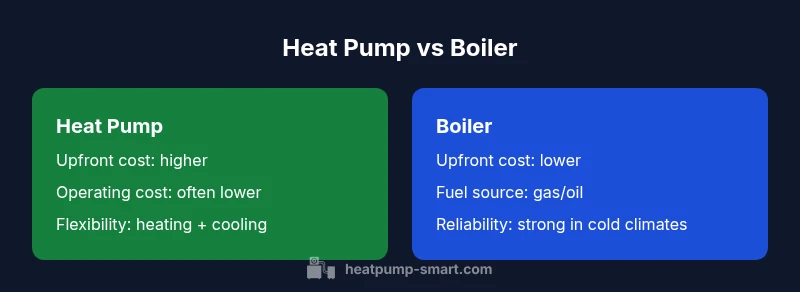
| Upfront cost (installation) | Typically higher due to outdoor unit, refrigerant lines, and electrical work | Often lower because it replaces existing boiler infrastructure |
| Operating cost (annual) | Generally lower overall due to heat transfer efficiency; varies with electricity price | Depends on fuel price and usage; can be higher if gas is inexpensive or climate is mild |
| Efficiency ratings | High COP/SCOP in heating mode; good performance with proper seasonal efficiency | High efficiency when condensing; depends on fuel type and boiler design |
| Climate performance | Strong in a wide range of climates with proper configuration | Reliable in cold climates; performance tied to fuel type and system design |
| Maintenance requirements | Fewer combustion-related upkeep; coil cleaning and refrigerant checks | Burner maintenance, venting, and condensate management |
| Space and footprint | Outdoor unit plus indoor air handler; may require ductwork | Typically smaller footprint if a dedicated boiler room is available |
| Incentives and rebates | Often eligible for energy efficiency rebates and climate programs | Typically fewer incentives, depending on region and fuel source |
Advantages
- Lower long-term energy costs in many climates
- Provides heating and cooling from a single system
- Reduces fossil fuel dependence and combustion emissions
- Eligible for rebates and tax credits in many regions
- Quieter operation and advanced controls
Disadvantages
- Higher upfront installation cost and potential electrical upgrades
- Performance can depend on electricity prices and climate
- Requires space for outdoor unit and proper clearance
- Maintenance and refrigerant service require qualified technicians
Heat pump generally wins in cost and comfort for most homes, with caveats.
For many climates, a heat pump over boiler delivers lower operating costs and added features like cooling. The decision should consider climate, incentives, and electrical readiness. The Heatpump Smart team’s assessment favors heat pumps when conditions align, while noting exceptions for extreme cold or limited retrofit space.
Your Questions Answered
What is the main advantage of heat pumps over boilers?
The main advantage is higher energy efficiency and the ability to provide both heating and cooling with electric power. This often reduces operating costs over time and lowers emissions compared with traditional boilers.
Heat pumps offer better efficiency and can cool your home too, which is useful year-round.
Are heat pumps effective in very cold climates?
Modern heat pumps perform well in many cold climates with proper sizing and, if needed, auxiliary heat. Geothermal systems are particularly strong in cold conditions due to stable ground temperatures.
They work well in cold climates with proper design and backup heat.
Do heat pumps require electrical upgrades?
Most installations require adequate electrical capacity and a dedicated circuit for the outdoor unit. An electrician should evaluate your panel and wiring before installation.
Your electrical system will be checked and upgraded if needed.
What incentives are available for heat pumps?
Many regions offer rebates, tax credits, or financing options to improve payback. Availability varies by location and program term, so check local energy offices and utility programs.
Check local programs for rebates or tax credits to reduce upfront costs.
How long does installation usually take?
A straightforward replacement can take a few days, while a geothermal system may require several days to weeks due to ground work and permitting. Your contractor will provide a schedule.
Expect a few days to complete for a standard swap, longer for geothermal installs.
Can heat pumps meet domestic hot water needs?
Yes, many heat pump systems include or connect to hot water tanks. Heat pump water heaters or geothermal setups can provide reliable domestic hot water with high efficiency.
Yes, you can pair a heat pump with a water heater for efficient hot water.
Top Takeaways
- Evaluate climate before choosing a system
- Consider hybrid configurations for mixed climates
- Factor incentives into the total payback
- Plan for electrical upgrades where needed
- Anticipate maintenance needs and select qualified installers