Heat Pump vs AC Unit: A Practical Side-by-Side Comparison
A rigorous, data-informed comparison of heat pumps and traditional air conditioners to help homeowners assess climate suitability, efficiency, costs, and installation considerations for year‑round comfort.


Choosing between a heat pump and an AC unit depends on how you heat and cool your home, your climate, and your long-term energy costs. This comparison highlights how each system works, their efficiency in different seasons, installation needs, and typical operating costs. Heatpump Smart's analysis helps homeowners make a clear, informed choice.
Why the heat pump or ac unit question matters for homeowners
According to Heatpump Smart, the decision between a heat pump or ac unit is more than a single‑season consideration. It touches daily comfort, energy bills, and the home’s long-term electrification potential. For many households, the right choice hinges on climate, insulation quality, and how energy prices shift over time. A well‑informed decision can reduce seasonal temperature swings, improve indoor air quality, and lower total operating costs over the life of the equipment. As you evaluate options, map out how often you heat and cool the space, how many people occupy it, and how much you value rapid temperature swings versus steady, even temperatures. The goal is a system that delivers comfort with predictable energy use, not just the lowest upfront price.
How a heat pump works vs. a traditional air conditioner
A heat pump uses the same basic refrigeration cycle as an air conditioner but is designed to transfer heat in both directions. In cooling mode, it extracts heat from indoors and dumps it outside; in heating mode, it reverses the cycle to pull heat from outdoors and move it inside. The efficiency of heat transfer matters more than the number of stages or bells and whistles, so a well‑designed system with properly sealed ducts can provide comfortable year‑round temperatures. Traditional air conditioners are cooling‑only devices that rely on electric resistance or separate furnaces for heating in cold climates. The crucial distinction for homeowners is that heat pumps can serve as a combined heating and cooling solution, while a cooling‑only AC typically requires a separate heating system or a different energy source for winter warmth.
Climate considerations: when each system shines
Climate profoundly influences performance. In mild to moderate winter climates, heat pumps often deliver reliable heating with high overall efficiency, especially when paired with good insulation and smart thermostats. In regions with harsh winters, heat pumps may be supplemented by auxiliary heating, but a dedicated furnace can offer faster warmth and robust performance. For hot, sun‑soaked summers without severe cold snaps, a cooling‑only AC might achieve lower upfront costs and very predictable cooling performance. The climate profile, together with energy pricing and the building’s thermal envelope, drives the long‑term value of either option.
Efficiency metrics and what they mean for your bills
When comparing heat pumps and AC units, homeowners should look at efficiency metrics as indicators of long‑term energy use. Visualize how well a system converts electrical input into useful heating or cooling, while also considering how climate affects those numbers. Key metrics include seasonal performance indicators, dehumidification effectiveness, and part‑load efficiency during milder days. A heat pump’s advantage often appears in shoulder seasons and moderate winter days, where its ability to move heat with less demand on resistance heating can translate into meaningful energy savings. However, performance can vary with duct design, system sizing, and outdoor temperature swings; that means a careful assessment of your home’s envelope and load is essential.
Cost considerations: upfront, operating costs, and long-term value
Upfront costs for heat pumps typically cover the equipment, ductwork changes if needed, and professional installation. Traditional AC units often present a lower initial price, especially if you already have existing heating equipment that can remain in place. Operating costs hinge on climate, electricity rates, and how often you rely on heating versus cooling. A heat pump can offer lower long‑term operating costs in many climates, particularly where winter heating is frequent, while high electricity costs or extremely cold winters can erode those savings. When evaluating options, compare total cost of ownership over the system’s expected life, factoring in maintenance, potential rebates, and replacement timing.
Installation prerequisites and home readiness
Installation complexity varies with the home: ducted homes may benefit from centralized heat pump systems, while older homes or new constructions with limited ductwork can leverage ductless mini‑split configurations. Existing heating systems influence installation time and cost; in some cases, you can upgrade to a heat pump without a full retrofit, while others may require more extensive work. Climate controls, such as smart thermostats, can optimize performance for either system, especially when paired with zones or multi‑room setups. Before committing, obtain a professional load calculation to ensure the selected system matches your home’s heat gain and loss characteristics.
Maintenance, reliability, and choosing a contractor
Both heat pumps and traditional AC units require routine maintenance, including filter changes, coil cleaning, and refrigerant checks. The reliability of either system depends on installation quality, generic wear, and local climate effects. Choosing a contractor with experience in your climate and a track record of proper sizing is essential because wrong sizing can erode efficiency and comfort. For longer‑term reliability, prioritize high‑quality components, regular preventive maintenance, and a service plan that includes seasonal inspections and refrigerant integrity checks.
Practical decision framework: a simple checklist
- Define climate tolerance: do you experience cold seasons that require robust heating?
- Assess energy pricing: are electricity rates favorable for heat pumps?
- Evaluate existing infrastructure: is ductwork ready for a heat pump, or is a ductless solution preferable?
- Consider installation disruption and timelines: can you accommodate a retrofit window?
- Review rebates and incentives: what programs apply in your area, and how do they affect net cost?
How to run a side-by-side comparison at home
Create a simple matrix that captures: upfront cost, estimated annual operating cost, heating suitability, cooling performance, noise levels, and maintenance requirements. Use manufacturer specifications and third‑party reviews to populate each row. Emphasize climate relevance: what works well in your region may not be ideal elsewhere. For best results, enlist a local contractor to perform a hands‑on comparison using your home’s floor plan, insulation quality, and occupancy patterns.
Comparison
| Feature | Heat pump | Traditional air conditioner |
|---|---|---|
| Energy efficiency | Higher year‑round efficiency when heating is used | Cooling efficiency with cooling focus |
| Heating capability | Yes, with heating mode | Cooling only (needs separate heat source) |
| Climate suitability | Best in moderate cold/averages | Best in hot climates or where winters are mild |
| Installation considerations | Can be ducted or ductless; may require heat‑pump compatible controls | Often simpler if existing ductwork is compatible |
| Best for | Homes seeking year‑round comfort and potential energy savings | Homes prioritizing upfront cost and cooling performance |
Advantages
- Year‑round comfort from a single system
- Potential energy savings in moderate climates
- Reduced maintenance complexity with one set of components
- Compatibility with modern smart controls and zoning
- Opportunities for rebates and incentives in many markets
Disadvantages
- Higher upfront cost and insulation requirements
- Performance can decline in very cold climates without auxiliary heat
- Electrical infrastructure may need upgrading
- Heat pump noise outdoors can be a consideration in compact lots
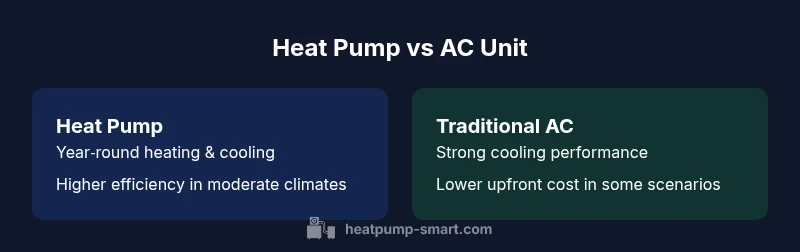
Heat pumps generally offer better year‑round efficiency and comfort in moderate climates; traditional AC units may be preferable for upfront cost and very hot climates.
Choose a heat pump if your winters are not extreme and you want heating plus cooling from one system. Opt for a traditional AC if you prioritize the lowest upfront cost and live in a climate with very hot summers and mild winters.
Your Questions Answered
What is the main difference between a heat pump and a traditional air conditioner?
A heat pump provides both heating and cooling by moving heat in or out of the home, while a traditional AC primarily cools in hot weather and relies on a separate heat source for heating. This dual functionality can simplify systems and improve year‑round comfort when climate and electricity pricing align.
Heat pumps heat and cool using the same system, while traditional ACs only cool and need another heating source.
In which climate is a heat pump most advantageous?
Heat pumps tend to perform best in moderate climates where winters aren’t extremely cold. They can still work in colder areas with supplemental heat, but cost and efficiency dynamics change depending on outdoor temperatures.
Heat pumps shine in milder winters and warm summers, with supplemental heat needed in very cold places.
What costs should I budget for installation of a heat pump or AC?
Installation costs vary by home size, ductwork, and system type. A heat pump may require equipment, refrigerant piping, and sometimes duct modifications, while a cooling‑only AC might be less intensive if heating is already provided by another system.
Installation costs depend on home layout and equipment choice; a contractor can give you a precise plan.
Can I convert my existing AC to a heat pump?
Converting a cooling‑only system to a heat pump is possible in many homes, but it requires evaluating the existing equipment, ductwork, and electrical capacity. In some cases, upgrading components or switching to a ductless configuration is more cost‑effective.
You can convert, but it depends on your current setup and electrical capacity.
Do heat pumps require special permits or rebates?
Permits or rebates vary by jurisdiction. Many regions offer incentives for efficient heat pump installations, but eligibility depends on local programs and system performance. Check with local utilities or government pages for current options.
There may be rebates and permits; check local programs to maximize value.
How do I size a heat pump or AC for my home?
Sizing should be performed by a qualified HVAC technician using a load calculation that accounts for insulation, windows, climate, and occupancy. An oversized or undersized system reduces comfort and efficiency.
Have a professional run a proper load calculation for the right size.
Top Takeaways
- Assess climate when choosing between heating and cooling needs
- Prioritize total cost of ownership over upfront price
- Evaluate ductwork and home insulation before installation
- Leverage smart controls and zoning for best efficiency
- Check local rebates and incentives to improve value