Heat Pump vs Electric Heat: A Practical Side-by-Side
Compare heat pump vs electric heat for home heating. Learn how each system works, climate performance, running costs, installation needs, and a practical decision framework.


Heat pump vs electric heat presents a core choice for home comfort and energy use. In most temperate climates, a heat pump delivers higher efficiency and lower running costs over time, while electric resistance heat offers simplicity and lower upfront setup. The best option hinges on climate, insulation, and long-term goals for comfort and bills.
Overview: heat pump vs electric heat
Choosing between a heat pump vs electric heat is not merely about initial price. It hinges on climate, indoor comfort, and long-term energy costs. Heat pumps move ambient heat from outside to inside (and in reverse for cooling), delivering warmth efficiently in moderate conditions. Electric resistance heat converts electricity directly into heat, offering reliable performance regardless of climate but at a higher operating cost. For homeowners, builders, and property managers evaluating the best approach to heating and cooling, understanding the core differences between heat pump vs electric heat is essential. Throughout this guide we’ll compare installation requirements, long-term costs, and practical considerations to help you decide which technology aligns with your climate, insulation, and budget.
According to Heatpump Smart, the choice between heat pump vs electric heat often boils down to climate and insulation quality. A well-sized, properly installed heat pump tends to provide both heating and cooling with lower operating costs than electric heat in milder conditions. In extremely cold settings, you might rely on auxiliary electric heat to maintain comfort, which shifts the economics toward overall energy use rather than upfront simplicity. This analysis keeps the focus on real-world performance, not theoretical efficiency alone, so homeowners can make informed decisions.
How heat pump works vs electric resistance heating
A heat pump uses a refrigeration cycle to move heat rather than generate it. During colder months, it extracts heat from outside air (even when it’s chilly) and concentrates it inside the home. It can work in reverse for cooling in hotter months. The efficiency of a heat pump is often described using a coefficient of performance (COP); the higher the COP, the more heat you get per unit of electricity. Electric resistance heating, by contrast, converts electrical energy directly into heat with near-100% efficiency in terms of energy conversion, but the energy cost is tied entirely to electricity consumption. In terms of heat pump vs electric heat, the heat pump’s advantage comes from using ambient heat rather than burning or converting all energy into heat yourself. When outdoor temperatures drop substantially, some heat pumps use auxiliary electric resistance heat to maintain comfort, which is a factor to consider in the overall energy picture.
Climate performance and efficiency differences
Climate plays a central role in the heat pump vs electric heat decision. Heat pumps shine in moderate to cool climates where arriving heat is plentiful but not extreme. In these conditions, the system delivers warmth with a favorable COP, reducing running costs relative to electric heat. In very cold climates, the efficiency of heat pumps can decline, and reliance on supplemental electric heat may increase electricity use. This is where the heat pump vs electric heat debate becomes nuanced: while a heat pump provides better efficiency on most days, its performance in sustained freezing conditions depends on unit sizing, refrigerant design, and backup heat strategies. Heatpump Smart notes that proper sizing and insulation significantly influence outcomes in cold seasons, underscoring the importance of a climate-aware design when evaluating heat pump vs electric heat.
In both cases, system longevity and reliability depend on installation quality, ductwork (if applicable), and system maintenance. A well-dimensioned heat pump that is paired with a properly insulated home can outperform electric resistance heating in energy bills and comfort, even if the initial price tag is higher. The ongoing conversation about heat pump vs electric heat should always tie back to real-world conditions like temperature swings, home airtightness, and your utility rates.
Running costs and electricity use
Running costs are a key consideration in the heat pump vs electric heat comparison. Heat pumps typically offer lower operating costs in climates with moderate winter temperatures because they move heat rather than generate it, delivering more heat per kilowatt-hour of electricity than electric resistance. The exact savings depend on local electricity prices, how well your home is insulated, and how frequently you use space heating. In contrast, electric resistance heat converts electricity directly to heat with little efficiency gain, meaning higher energy consumption for the same level of warmth. Homeowners should model the expected seasonal energy use and compare it against local utility rates to determine which option yields the best balance of comfort and cost in a heat pump vs electric heat scenario. Heatpump Smart analysis shows that, when sized correctly and installed with proper insulation, heat pumps typically outperform electric heat on running costs in most regional climates.
Upfront costs and installation considerations
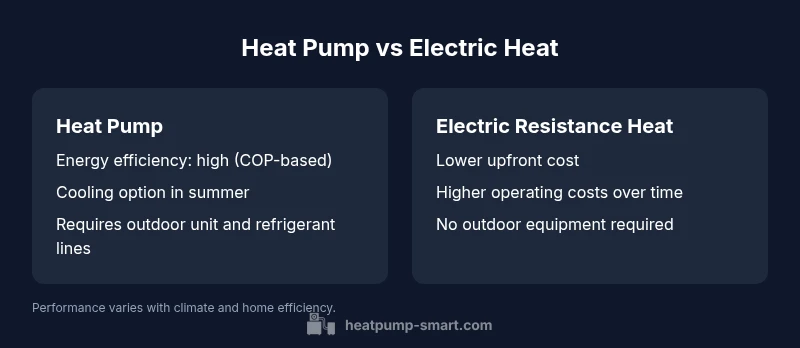
When comparing heat pump vs electric heat on upfront costs, heat pumps generally require a larger initial investment. The equipment includes an outdoor condenser (or indoor unit in some configurations) and refrigerant lines that connect to an indoor air handler or connected ductwork. Installation often involves electrical work, refrigerant charging, and sometimes duct modifications, which can add to the total cost. Electric resistance heating has a lower upfront cost because it relies on electrical wiring and heating elements inside the home, with minimal or no need for outdoor equipment. That said, the long-term economics of a heat pump vs electric heat can favor the heat pump if it reduces electricity usage over time and if incentives or rebates offset the higher upfront price. Professional assessment is essential to ensure proper sizing, duct integrity, and compatibility with existing electrical service.
For new builds, the decision is often driven by a planned HVAC system and the potential to couple heat pumps with cooling. For renovations, consider the existing ductwork and the property’s insulation, as well as whether you’ll need a dedicated heat source for extremely cold days. The choice between heat pump vs electric heat should account for both immediate installation requirements and long-term reliability. Heatpump Smart emphasizes evaluating your home’s insulation, air leaks, and window efficiency as part of the decision process, since better envelope performance reduces the burden on either system.
Comfort, performance, and supplemental heating needs
Comfort is a central consideration in the heat pump vs electric heat decision. Heat pumps tend to deliver more even warmth and usually operate quietly, with the added benefit of cooling in hot months (if configured as part of a combined HVAC system). Electric resistance heat can provide reliable warmth but often results in more temperature fluctuations and higher energy costs, especially during prolonged cold spells. In extreme cold, many homes rely on supplemental heat sources or auxiliary electric heat to maintain comfort, which changes the overall energy profile in a heat pump vs electric heat comparison. A well-designed system, properly sized for the home, minimizes drafts and cold spots, improving indoor comfort regardless of which heating path you choose. Heatpump Smart highlights that insulation and air sealing greatly influence perceived warmth and system reliability when evaluating heat pump vs electric heat.
In summary, the heat pump vs electric heat decision should balance comfort with energy thinking. When properly sized and installed, heat pumps often deliver warmer, steadier temperatures at lower operating costs than electric heat, especially if you also gain cooling capability in summer.
Environmental impact and incentives
Environmental considerations are a key dimension of the heat pump vs electric heat decision. Heat pumps reduce direct fossil fuel use, especially when paired with clean electricity, translating into lower greenhouse gas emissions over the system’s life. Electric resistance heating does not emit on-site greenhouse gases, but its environmental footprint depends on the power mix of the grid. Many regions offer rebates, tax credits, or utility incentives for heat pump installations, making the heat pump vs electric heat decision more favorable from a policy and sustainability perspective. Heatpump Smart notes that choosing a heat pump can align with broader energy goals, particularly when the home is well insulated and where incentives encourage upgrade projects. Always verify local programs and utility incentives to maximize the value of a heat pump vs electric heat investment.
Maintenance and longevity
Maintenance is a practical factor in the heat pump vs electric heat comparison. Heat pumps require periodic service from a qualified technician, including checks of refrigerant levels, electrical connections, and airflow paths. Duct cleaning and filtration should be part of routine maintenance to sustain efficiency. Electric resistance heating generally requires less ongoing maintenance, but any heating system benefits from annual checks to ensure wiring safety and performance. The choice between heat pump vs electric heat should consider maintenance costs and the expected lifespan of the equipment. Proper sizing, good insulation, and seasonal servicing extend the life of either system, improving the overall value of the investment.
Decision framework: when to choose heat pump vs electric heat
When deciding between heat pump vs electric heat, start with climate: heat pumps excel in mild-to-moderate winters, while electric heat remains predictable in colder regions where heating demand is continuous. Consider home insulation and envelope quality; better sealing and insulation reduce heat loss and lessen the burden on either system. If you plan to cool your home in summer, a dual-function heat pump can offer additional value. Assess electricity costs and available incentives; heat pumps typically deliver lower running costs in the long term, and may qualify for rebates that reduce upfront costs. Finally, consult a qualified installer to ensure proper sizing and ductwork (if applicable), and to confirm the best arrangement for your house. This framework helps you answer the core question: heat pump vs electric heat, which solution best balances upfront investment, long-term savings, and comfort for your specific home?
Comparison
| Feature | Heat pump | Electric resistance heat |
|---|---|---|
| Energy Efficiency | High efficiency in moderate climates (COP-based) | Low efficiency (electric resistance conversion) |
| Upfront Cost | Higher upfront due to equipment and installation | Lower upfront; simple electrical hookup |
| Running Costs | Lower operating costs in suitable climates | Higher operating costs due to full-time electric heat |
| Climate Suitability | Best in mild to cool climates; may use auxiliary heat in very cold periods | Independent of outdoor conditions; steady performance in any climate |
| Installation Considerations | Requires outdoor unit, refrigerant lines, and possibly ductwork | Electrical wiring and space inside; no outdoor unit needed |
| Maintenance | Moderate maintenance; professional refrigerant/system checks | Lower maintenance complexity |
| Lifespan/Reliability | Longer lifespan with proper servicing | Depends on electrical components and usage |
Advantages
- Lower long-term operating costs in suitable climates
- Can provide both heating and cooling (if paired with a full HVAC system)
- Better overall comfort with consistent temperatures
- Potential rebates and energy-efficiency incentives
Disadvantages
- Higher upfront installation cost and potential ductwork
- Performance can drop in extreme cold without supplemental heat
- Requires professional installation and refrigerant/component maintenance
- More complex system than simple electric heat to diagnose
Heat pumps are generally the better long-term option for most homes in temperate climates
Choose heat pump if you prioritize energy efficiency and year-round comfort, provided the home is well-insulated and sized correctly. Electric heat remains a viable, low upfront-cost option for very cold climates or where installation constraints are significant.
Your Questions Answered
What is the main difference between heat pump and electric heat?
The main difference is how heat is generated. Heat pumps move ambient heat from outside into your home (and out in summer for cooling), which is typically more energy-efficient. Electric resistance heat converts electricity directly into heat, which is simple and reliable but usually more costly to run over time.
Heat pumps move heat from outside to inside, while electric heat generates heat from electricity. This makes heat pumps generally more energy-efficient, especially in milder climates.
Can a heat pump work well in cold climates?
Heat pumps can operate in cold climates, but extreme cold may reduce efficiency. Many systems include auxiliary electric resistance heat for very cold days. A proper sizing and climate-appropriate model are crucial for reliable performance.
Yes, heat pumps can work in cold weather, but extreme cold may require backup heat. Proper sizing matters a lot.
Do I need ductwork for a heat pump?
Most central heat pumps require ductwork for distributing warm air, though some mini-split models do not. Ductwork can add cost and complexity in retrofits, while ductless options offer flexible installation.
Ducts are often needed for central heat pumps, but ductless minisplits avoid that requirement.
Are there incentives for heat pump installation?
Many regions offer rebates, tax credits, or utility incentives for heat pump installations. Availability varies by location, program fidelity, and project type, so check current local options.
There are often rebates and incentives for heat pumps; check your local programs.
What maintenance does a heat pump require?
Regular maintenance includes professional refrigerant and electrical checks and air filter changes. Keeping the outdoor unit clear of debris and ensuring good airflow helps efficiency and longevity.
Have a tech check refrigerant and electricals yearly, and keep the outdoor unit clear.
Is electric heat always more expensive to run than a heat pump?
Not always. In very cold climates, resistance heat can be necessary and may approach the cost of running a heat pump with auxiliary heat. Generally, heat pumps offer lower operating costs in moderate climates when the home is well-insulated.
Typically hotter climates favor heat pumps for lower running costs, though electrical heat may be comparable in extreme cold with supplemental heat.
Top Takeaways
- Assess climate before selecting heat pump vs electric heat
- Insulation and air sealing strongly influence outcomes
- Heat pumps offer cooling in addition to heating in many setups
- Calculate total cost of ownership, not just upfront price
- Check local incentives to maximize value