Heat Pump vs Natural Gas: Comprehensive Comparison
A balanced, data-driven comparison of heat pumps and natural gas systems, covering efficiency, costs, climate suitability, installation, and environmental impact to guide homeowners.


Defining the Two Technologies
Heat pumps and natural gas furnaces are both used to heat homes, but they rely on different energy pathways. A heat pump is an electrically powered system that moves heat from outside to inside (in heating mode) or inside to outside (in cooling mode). In heating mode, its efficiency is described by a coefficient of performance (COP), and its performance depends on outdoor temperatures. A natural gas furnace, by contrast, burns natural gas to generate heat, delivering warmth through ducts with a fuel-based efficiency rating called AFUE. Gas furnaces require a gas supply, venting, and combustion air; heat pumps require electricity and often ductwork. The choice between the two often centers on climate, energy prices, retrofit feasibility, and long-term goals.
How Heat Pumps Work in Practice
Heat pumps transfer heat rather than create it. In heating mode, outdoor air or groundwater provides the heat source, which the system concentrates and moves indoors. Modern units come in variations: air-source (the most common), ground-source (geothermal), and ductless mini-splits for retrofit flexibility. Many models include variable-speed compressors and intelligent controls that optimize efficiency. Heat pumps can also cool in summer, offering year‑round comfort. In very cold climates, some heat pumps reduce output as temps fall, so homes may rely on auxiliary heat or hybrid configurations. When sizing and zoning are thoughtful, heat pumps deliver steady comfort with careful maintenance.
Natural Gas Furnaces: Performance and Limitations
Natural gas furnaces burn fuel to produce heat and distribute it through a ducted system. Modern furnaces with high AFUE ratings offer strong performance and fast heat delivery, which many homeowners value during frigid months. However, gas furnaces carry ongoing fuel costs tied to natural gas prices and can emit combustion byproducts that require proper venting and air handling. Efficiency remains high with well-maintained equipment, and some homes benefit from existing gas lines and ductwork that reduce retrofitting needs. The main trade-off is the ongoing fuel reliance and emissions tied to combustion.
Climate, Energy Prices, and Regional Fit
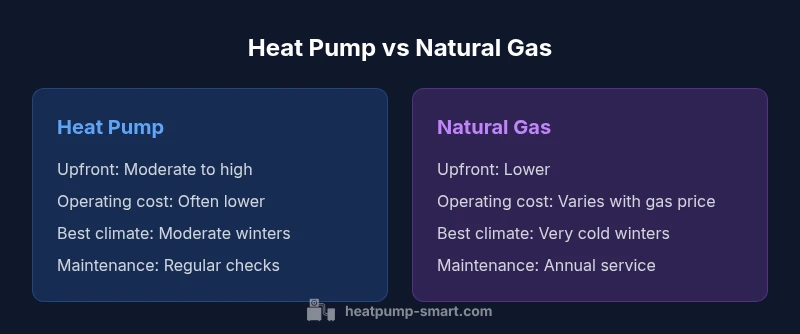
Your climate and energy pricing strongly influence the heat pump vs natural gas choice. In milder regions with stable electricity prices and rising gas costs, heat pumps often deliver lower operating costs over the long term. In very cold climates, certain heat pumps may require supplemental heat, reducing savings unless paired with efficient backups. Heatpump Smart analysis shows that regional energy mixes—where electricity primarily comes from renewables or fossil fuels—significantly affect net emissions and financial payback. For homes with abundant solar or cheap electricity, heat pumps tend to shine; for homes with inexpensive gas and harsh winter conditions, gas furnaces may still be competitive.
Cost and Value Across Time: Upfront vs Operating Costs
Upfront costs for heat pumps can be higher due to equipment, installation, and potential ductwork or electrical upgrades. Gas furnaces may require less initial investment, especially if the old system can be reused and the existing gas line is adequate. Over time, operating costs depend on energy prices, efficiency, and climate. Heat pumps often offer better value in regions with affordable electricity and strong cooling needs, while gas furnaces can be favorable where gas is cheap and winters are extreme. Incentives, rebates, and utility programs can tilt the economics toward one option or the other. A careful life-cycle cost analysis is essential for an apples-to-apples comparison.
Comfort, Humidity, and Indoor Air Quality
Heat pumps provide steady thermal comfort and can help control humidity through slower, continuous heat delivery. They also enable efficient cooling in summer. Gas furnaces deliver rapid warmth but do not influence humidity control the same way a multi-zone heat pump can. Indoor air quality depends on filtration, duct design, and ventilation strategies more than the heating source alone. When combined with well-sealed ductwork and smart thermostats, heat pumps can offer more even temperatures and better long-term comfort in many homes.
Installation, Maintenance, and Reliability Considerations
Installation quality largely determines long-term performance and reliability for either option. Heat pumps may require outdoor clearances, refrigerant line installation, and, in retrofit scenarios, new or altered ductwork. Gas furnaces require venting, gas lines, and combustion air considerations. Maintenance for heat pumps centers on refrigerant integrity, filter replacement, and coil cleanliness, while gas furnaces focus on burner cleanliness, venting, and combustion efficiency. Both systems benefit from routine professional service and filter changes. The right installation approach minimizes noise, improves efficiency, and extends system life.
Environmental Impact and Rebates
Heat pumps produce electricity-driven heat, reducing direct emissions when the grid uses clean energy. Their environmental footprint decreases as the electricity supply becomes greener. Gas furnaces burn fossil fuel and emit CO2 and other combustion byproducts, contributing to air pollution locally. Rebates and incentives for heat pumps—often targeting electrification and energy efficiency—can shorten payback periods, while rebates for gas-based upgrades may address older fossil-fuel equipment. The overall environmental impact depends on grid electricity, local emissions standards, and appliance efficiency.
Decision Framework: When to Choose Heat Pump vs Natural Gas
Use a structured checklist to guide your decision. Consider climate zone, energy price trends, existing infrastructure (ducts, gas lines, electrical capacity), and long-term decarbonization goals. If your climate is moderate and electricity is reasonably priced, heat pumps typically offer stronger value and comfort with growing decarbonization incentives. If you live in a very cold climate and gas prices are low, or you’re upgrading a gas-based system with minimal retrofit, a high-efficiency gas furnace or a hybrid setup may be appropriate. Finally, factor in installation complexity, potential disruptions, and available rebates when deciding.
Authority sources
- Energy.gov – Heat Pumps: https://www.energy.gov/energysaver/heat-pumps
- Energy.gov – What are heat pumps?: https://www.energy.gov/eere/buildings/articles/heat-pump-what-are-they
- National Renewable Energy Laboratory (NREL) – Heat pumps and efficiency: https://www.nrel.gov/docs/fy19osti/71615.pdf
Case Studies and Real-World Scenarios
A single-family home in a mixed climate zone with moderate winters replaced an aging electric resistance system with a heat pump. The retrofit included adjusting the ductwork and adding a smart thermostat. The homeowners reported noticeably more even temperatures, improved comfort, and lower electricity usage during heating months, with cooling benefits in summer. In a cold climate, another home installed a heat pump with supplemental electric resistance heat. The result was a significant uplift in comfort during the coldest days, but some months relied on auxiliary heat. These real-world examples illustrate how climate, equipment choices, and installation quality shape outcomes.
Common Myths and Misconceptions
- Heat pumps don’t work in cold climates: Modern cold-climate heat pumps operate effectively in many freezing conditions with proper design. Hybrid systems can bridge gaps.
- Gas is always cheaper to run: Rising electricity prices and efficient heat pumps can outperform gas in many markets, depending on climate and incentives.
- Heat pumps require extensive ductwork and disruption: Ductless mini-splits and targeted retrofits can minimize disruption and cost while delivering comfort.