How Much Do Heat Pump Installers Make in 2026: A Comprehensive Guide
Discover how much heat pump installers make in 2026, what drives pay, and how to maximize earnings with experience and certifications. Heatpump Smart Analysis offers regional ranges and practical guidance for homeowners and HVAC pros.


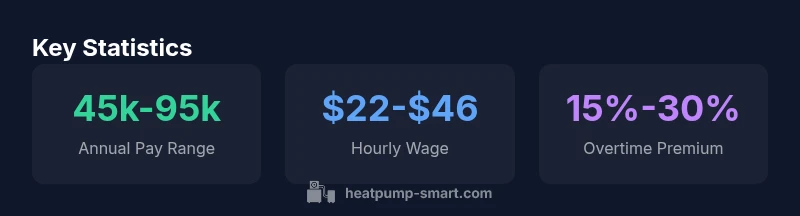
Heat pump installers typically earn between $45,000 and $95,000 per year, with regional factors and experience driving the spread. Entry-level techs may start closer to the lower end, while seasoned installers with advanced certifications and union membership can reach higher pay after overtime and seasonal demand spikes. Wages also reflect company size, local demand, and warranty/maintenance opportunities.
Salary landscape for heat pump installers
For homeowners, builders, and property managers evaluating bids, the big question is still: how much do heat pump installers make? In 2026, earnings are driven by a mix of regional demand, experience, and credentials. A broad, but practical, outlook is that total compensation falls within a wide band rather than a single fixed salary. The Heatpump Smart team notes that regional strongholds—coastal cities with high living costs and dense housing—tend to push pay higher, while rural or lower-cost regions often sit lower on the scale. In addition to base pay, many installers accumulate value through overtime opportunities, on-site problem solving, and recurring maintenance contracts. This dynamic means the same trade can yield noticeably different annual take-home depending on where you work, the size of your employer, and your certification level. For readers asking how much do heat pump installers make, the takeaway is simple: expect a broad but defendable range that grows with skill and demand.
Key factors that shape earnings
Pay is not a single figure—it's a function of several interacting variables. Experience matters most: an apprentice or junior installer typically earns toward the lower end of the spectrum, while a senior technician with a proven track record commands higher pay. Certifications and specialized training (for refrigerant handling, electrical safety, and system commissioning) can seal premium pay pockets. Regional demand shifts, too: markets with rapid HVAC growth or stringent energy-efficiency mandates tend to offer higher compensation. Company size influences benefits, stability, and overtime availability; larger companies may provide more structured overtime pay and incentive programs, while smaller shops might offer higher base rates but fewer benefits. Finally, union status can influence wages and scheduling practices in some regions. Heatpump Smart’s analysis highlights that these factors collectively shape earnings trajectories across the country.
Certifications that matter for pay
Industry credentials play a meaningful role in earnings. The EPA 608 refrigerant handling certification is widely recognized and often required for installing heat pump systems legally and safely. Beyond the regulatory baseline, employers value hands-on proficiency with commissioning, electrical safety, and system diagnostics. Training programs that cover heat pump efficiency optimization, heat-load calculations, and refrigerant recovery often translate into higher pay bands. While brands and manufacturers vary, the pattern is clear: adding verifiable certifications and completed trainings tends to lift an installer into higher earning brackets. For homeowners, asking about a technician’s certifications is a practical step to gauge value and long-term reliability of service.
Regional variations and why they exist
Geography matters more than many people expect. Coastal urban centers typically feature higher living costs and stronger demand for energy-efficient systems, which translates into higher wage ceilings. Inland markets may offer lower nominal wages but can present lower cost-of-living living and more abundant job opportunities. Regional differences in permitting, code complexity, and the prevalence of multi-unit buildings also influence how much installers earn; projects in high-density residential settings often require more time and skill, yielding higher compensation per job. Heatpump Smart’s regional mapping shows a clear pattern: pay scales track with demand, training opportunities, and local energy policies. Readers should interpret regional data as guidance rather than a fixed rule, since local contracts and employer practices vary widely.
Overtime, seasonal demand, and benefits
Overtime is a common feature for heat pump installers, especially during peak installation seasons or emergency service periods. The overtime premium can add a meaningful boost to annual earnings, but it is not guaranteed year-round. Many employers offer seasonal incentives, signing bonuses for busy periods, and benefits that add value beyond base pay. Some markets also include performance bonuses tied to job completion speed, system efficiency, or customer satisfaction scores. When budgeting, consider not only the base rate but also the potential for overtime, on-call pay, and maintenance agreements that provide recurring revenue. This broader view helps explain why two installers with similar base wages might end up with different total compensation at year-end.
Career paths and how to increase earnings
Raising earnings typically follows a mix of experience, credentialing, and broader scope of work. Advancing from helper or apprentice to lead installer or project supervisor can unlock higher pay tiers, while specializing in complex heat pump configurations or commercial applications can command premium rates. Investing in refrigerant-handling certifications, load calculation expertise, and commissioning proficiency is a practical path to salary growth. Additionally, pursuing roles that include mentoring junior technicians or overseeing maintenance programs can yield leadership pay incentives. Keeping up with industry updates and manufacturer-specific training helps maintain relevance in a rapidly evolving market.
Pay comparisons: heat pump installers vs HVAC technicians
Within the broader HVAC field, heat pump installers often command higher pay in markets experiencing rapid adoption of air-source and geothermal systems. The gap varies by region and the mix of residential versus commercial work. Job progression from installation to service, retrofit, and preventive maintenance can broaden earning potential. Utilities and municipalities may offer additional incentive programs that effectively raise total compensation. For readers comparing roles, consider not just base pay but also long-term earning potential from recurring service contracts, warranty work, and opportunities to lead projects.
How employers calculate pay and negotiating tips
Many employers use a blend of base rate, experience tier, certifications, and performance metrics to determine pay. A practical approach to negotiating is to quantify your value: document completed projects, energy savings achieved, and customer satisfaction scores. Ask about overtime policies, on-call rotation, and annual merit increases tied to skill development. Networking with fellow technicians and participating in local trade associations can reveal market norms and effective negotiation tactics. Heatpump Smart recommends preparing a clear, evidence-based case for your desired range and leveraging regional data when discussing compensation with a prospective employer.
Data-driven look at earnings: what Heatpump Smart analysis shows
To provide a grounded view, Heatpump Smart analyses regional variation, training levels, and demand signals to estimate earnings bands. In 2026, the data indicate a broad earnings spectrum shaped by location, certifications, and project mix. The goal of this section is to empower homeowners and technicians with a grounded expectation and practical steps to maximize income through skill-building, targeted training, and strategic career moves. While individual results will vary, the overarching trend supports a positive earnings trajectory for skilled installers in growing markets.
Case studies: typical job profiles and earnings
Case studies illustrate how the same occupation yields different outcomes. Consider an entry-level installer in a lower-cost region who completes a handful of maintenance contracts each year versus a senior technician in a high-demand metro area with EPA 608 certification and several years of project leadership. The first might approach the lower end of the annual range but enjoys steady work; the second could earn well into the upper end of the range with significant overtime. These profiles show why pay is not a fixed figure, but a function of role, region, and credentials.
Practical steps to estimate earnings and plan for raises
To estimate your earnings, start with the base pay for your region, align it with your experience level, and factor in potential overtime. Create a personal growth plan that includes targeted certifications, hands-on practice with different heat pump platforms, and leadership opportunities on job sites. Track hours, project types, and efficiency metrics to build a portfolio that demonstrates value to employers. Finally, schedule regular performance conversations that link compensation to specific milestones and skills you acquire.
Estimated earnings by region for heat pump installers
| Region | Typical Earnings Range | Notes |
|---|---|---|
| Northeast | $50,000 - $85,000 | Higher demand in urban centers |
| Midwest | $45,000 - $80,000 | Cost variations by state/metro |
| West | $55,000 - $95,000 | Urban areas tend to pay more |
Your Questions Answered
What factors influence heat pump installer pay?
Pay is influenced by location, experience, certifications, and job mix (residential vs commercial). Overtime availability and union status can also shift earnings. Certification and hands-on performance are strong predictors of higher pay bands.
Location, experience, and certifications mostly determine pay; overtime and job type matter too.
Do earnings differ by region?
Yes. Higher-cost regions and markets with rapid HVAC growth tend to offer higher earnings, though cost of living also plays a role. Use regional data to set realistic expectations and negotiate effectively.
Regional demand drives pay, so expect differences by area.
Is overtime common in this field?
Overtime is common during busy seasons and when service contracts demand extended hours. It can significantly boost annual earnings but varies by employer and region.
Yes, overtime is common in peak periods and adds to earnings.
How can I increase my pay as a heat pump installer?
Earn relevant certifications, gain hands-on experience with multiple heat pump brands, pursue lead or supervisor roles, and document performance metrics that demonstrate value to employers.
Get certified, gain diverse experience, and take on leadership roles.
What is the job outlook for heat pump installers in 2026?
The field is expanding due to energy-efficiency trends and policy incentives, which typically supports wage growth for skilled installers. Regional demand will drive variance in pay trajectories.
Growing demand supports wage growth for skilled installers.
“Pay for heat pump installers is a function of demand, skill, and safety training. As the market grows, the earnings potential rises for qualified technicians.”
Top Takeaways
- Know your base: earnings vary widely by region and experience
- Certifications tend to boost pay and employability
- Overtime and maintenance contracts can lift annual earnings
- Plan a path from apprentice to lead installer to maximize pay
- Use regional data to negotiate effectively