Mini Split Heat Pump Installation Cost in 2026
Discover the range of mini split heat pump installation cost, what drives price, and practical tips to estimate and save on a multi-zone system in 2026.


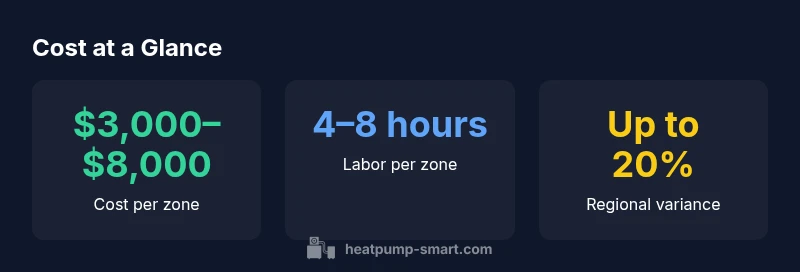
Most homeowners pay between $3,000 and $8,000 per zone for a professionally installed mini split heat pump, depending on system size, the number of indoor units, and electrical upgrades. In 2026, Heatpump Smart Analysis notes that outdoor unit efficiency and installation complexity drive the bulk of the cost. Prices vary by region and contractor fees.
Understanding the mini split heat pump installation cost
Cost visibility is crucial when planning a heat pump upgrade. The total installed cost for a mini split system is composed of equipment price, labor, and ancillary expenses such as permits and electrical work. In 2026, homeowners commonly see a wide range because the scope of projects varies with climate, home size, and existing electrical capacity. According to Heatpump Smart Analysis, 2026, the installation cost is highly sensitive to zone count, indoor-unit configurations, and whether electrical panels or wiring must be upgraded. A single-zone system with a basic outdoor condenser and a single indoor head is far cheaper to install than a multi-zone setup with several indoor units and longer refrigerant runs. The cost also reflects regional labor rates and contractor availability, so a bid from a local installer may differ significantly from a national average. When you estimate mini split heat pump installation cost, be sure to distinguish between purchase price (the unit) and installed price (all components and labor).
Key cost drivers for the mini split heat pump installation cost
Several elements drive the final price, and understanding them helps you plan a smarter investment. The number of zones, the capacity of the outdoor unit, and the efficiency ratings of the indoor heads all influence the base price. Longer refrigerant runs can require larger charges and more fittings, increasing material costs. Indoor unit type matters too: a basic wall-mounted head is cheaper than a ceiling cassette or ducted mini split head. Installation labor scales with complexity: the more walls you must access, the more time electricians and technicians spend, and the higher the labor bill. Permitting, electrical panel upgrades, and potential retrofits for wiring can add to the cost quickly. The quality of the refrigerant line insulation, the length of any added line sets, and the need for a condensate pump or drainage improvements all contribute. In short, mini split heat pump installation cost hinges on scope, configuration, and local labor markets.
Per-zone costs and system configurations
Pricing for mini split heat pump installation cost is often presented per zone, reflecting the modular nature of ductless systems. A typical single-zone configuration includes outdoor condenser, one indoor unit, basic wiring, and a standard line set; the installed price is significantly lower than multi-zone setups. When you add a second or third indoor unit, consider the impact on refrigerant line length, power supply needs, and control wiring. Each additional zone adds not only equipment and labor but potential distribution hardware like manifolds and thermostats. Multi-head configurations can improve comfort and efficiency but demand careful layout planning to avoid over-sizing or under-sizing, both of which affect long-term energy use. For homes with living spaces spread across several floors, a well-planned multi-zone system can offer real savings over time, but the upfront mini split heat pump installation cost will reflect the added components, refrigerant charges, and skilled labor required to balance the system.
Permits, wiring, and electrical upgrades
Permitting requirements vary by jurisdiction, but most projects require permits for electrical work and refrigerant handling. The cost of permits is typically a small percentage of the total installed price, but failure to obtain permits can lead to fines and insurance complications. Electrical upgrades—such as panel capacity, dedicated circuits, and wiring run length—are common cost drivers, especially in older homes. If your existing electrical system cannot safely handle the added load, you may face upgrade costs that influence the total mini split heat pump installation cost. Consider whether you need a dedicated outdoor disconnect, a weatherproof feed, or gravity drainage enhancements. All these items affect price but also ensure safer, code-compliant operation.
Labor, materials, and scheduling considerations
Labor costs vary by region and by the installer’s experience with ductless mini splits. In many markets, experienced technicians can complete a straightforward, single-zone install in a day, while complex multi-zone jobs may take multiple days. Material costs—refrigerant, mounting hardware, line sets, insulation, and condensate management—accumulate quickly if you face long runs or unusual angles. Scheduling can affect price: peaks in spring and early summer often come with higher demand and higher labor quotes. If you need quick turnarounds, you may pay a premium, whereas flexible timing can help bring mini split heat pump installation cost down.
Cost-saving strategies and rebates
There are practical steps to reduce the mini split heat pump installation cost without sacrificing performance. Select a system that matches your actual load to avoid oversizing. Choose standard efficiency and avoid premium models unless energy savings justify the extra upfront cost. Consolidate zone planning where possible to minimize indoor units and line-set lengths. Seek multiple bids, verify contractor licenses, and ask for a detailed breakdown of line-set length, refrigerant charge, and electrical work. Look for local rebates, incentives, and utility programs designed to encourage heat pump adoption; many incentives apply to mini split installations and can shorten payback periods. Heatpump Smart recommends combining energy-saving measures with a well-scoped installation to maximize value.
How to estimate your project and compare bids
Start with a load calculation to determine the required heating and cooling capacity. Collect three bids and request itemized quotes that separate equipment, labor, permits, and any electrical upgrades. Ask installers to show line-set lengths, indoor unit counts, and hardware costs. Compare total installed price and expected energy savings. Do not rely solely on upfront price: a lower bid may hide hidden costs. Finally, verify warranty terms on both equipment and labor and ensure the contractor follows local codes for refrigerant handling and electrical safety.
Regional variations and hiring tips
Prices for mini split heat pump installation cost vary across regions due to labor markets, permitting regimes, and climate-driven demand. Coastal cities with high labor rates will typically show higher installed prices than rural areas, but rebates and incentives can offset regional differences. When hiring, prioritize licensed, insured installers with ductless experience and solid references. Ask for a pre-installation site visit, a written scope of work, and a clear schedule. A well-communicated plan helps prevent miscommunications and cost overruns, ensuring your mini split heat pump installation cost stays aligned with expectations and value. Heatpump Smart’s team emphasizes due diligence and transparent bids to avoid surprises.
Cost factors and typical ranges for mini split installation
| Factor | Impact on Cost | Typical Range | Notes |
|---|---|---|---|
| Zone count | High | $3,000–$8,000 per zone | More zones increase equipment, labor, refrigerant length |
| Unit efficiency (SEER/IEER) | Moderate-High | Varies by model | Higher efficiency raises upfront cost but saves energy |
| Indoor unit configuration | Moderate | Single vs multi-head | More indoor units increase hardware and balance work |
| Electrical upgrades | Moderate-High | Panel/rewiring may add | Electrical capacity can be a barrier and drive cost |
Your Questions Answered
What factors influence the mini split heat pump installation cost?
The main drivers are the number of zones, outdoor unit capacity, indoor unit types, refrigerant length, and any required electrical upgrades or permits. Labor rates and regional variation also play a big role.
The cost is mainly driven by zones, unit choices, and any electrical work, with regional prices adding fluctuation.
Can I DIY install a mini split to save money?
DIY installation is generally not recommended due to refrigerant handling, electrical safety, and code compliance. Hiring a licensed professional reduces risk and often saves time and potential rework costs.
We don’t recommend DIY for safety and code reasons; a pro helps avoid costly mistakes.
Do rebates affect installation cost?
Yes. Rebates and incentives reduce the net installed cost and can shorten payback periods. Check local utility programs and national energy-efficiency rebates before bidding.
Rebates can significantly cut your total cost, so look for programs before finalizing bids.
Is there a price difference between single-zone and multi-zone setups?
Yes. Multi-zone systems add more indoor heads, longer line sets, and greater labor, which increases the total installed cost but can improve comfort and energy use.
Multi-zone setups cost more up front but can pay off with better comfort and efficiency.
What should I look for in a bid?
Look for a clear breakdown of equipment, labor, permits, and any electrical upgrades. Ask for line-set lengths, refrigerant charge, and warranty terms for both equipment and labor.
Make sure each bid lists all costs and includes warranties.
How long does a typical installation take?
A straightforward single-zone install can take about a day; more complex multi-zone projects may take longer, depending on site access and electrical work.
Most simple installs are done in a day, bigger jobs take longer.
“Understanding the scope of installation upfront helps homeowners avoid sticker shock and choose the best value, especially with the wide variations in mini split heat pump installation cost.”
Top Takeaways
- Plan per-zone budgets to scale with zones
- Expect higher costs from electrical upgrades
- Obtain at least three itemized bids
- Check permits and applicable rebates early
- Balance upfront cost with long-term energy savings