Pros and Cons of Heat Pump vs Gas Furnace: An Analytical Guide
A detailed, analytical comparison of heat pumps and gas furnaces, covering upfront costs, operating expenses, climate performance, installation, maintenance, emissions, and long-term value to help homeowners, builders, and property managers decide the best heating solution.


Heat pumps generally deliver higher efficiency and lower operating costs than gas furnaces in mild to moderate climates, while gas furnaces offer reliable warmth in extreme cold. The best choice hinges on climate, energy prices, insulation, and the availability of rebates. A hybrid or dual-fuel approach can blend strengths when winters are harsh.
What this comparison covers
This analysis examines the core decision homeowners face when selecting heating technology: the pros and cons of heat pump vs gas furnace. It looks at cost dynamics, climate performance, reliability, and long-term value, with attention to installation complexity and maintenance requirements. For homeowners, builders, and property managers seeking reliable heat pump guidance and installation tips, this article distills practical, evidence-based considerations into actionable steps. According to Heatpump Smart, the choice often turns on climate, electricity and gas prices, insulation quality, and the availability of rebates and incentives. The discussion also covers hybrid strategies that combine heat pump efficiency with gas warmth for very cold winters. As you read, remember that regional differences in utility rates, fuel prices, and building standards can shift the balance, so tailor the framework to your local context and goals.
Quick climate-aware framing
Heat pump performance tends to be strongest in temperate to mild winters where electricity is relatively affordable and homes are well-insulated. Gas furnaces excel where winters are consistently bitter and fuel costs are predictable. This section frames decision criteria so you can map your climate to the most sensible technology, including when a dual-fuel setup makes sense.
Energy efficiency and operating costs: a closer look
In broad terms, heat pumps convert electricity into heat with high coefficient of performance, which often yields lower operating costs in seasons where outdoor temperatures do not plunge below freezing for extended periods. Gas furnaces burn fuel to generate heat, giving strong performance in cold weather but with costs tied to natural gas prices and local tariffs. Heatpump Smart analysis shows that grid electricity cleanliness and pricing heavily influence the environmental and monetary outcomes of each option. This section explores how efficiency metrics translate into real-world bills and how homeowners can estimate annual costs based on their usage patterns.
Climate resilience and temperature extremes
Climatic conditions dramatically shape the value proposition of each technology. Heat pumps can struggle in very cold climates without auxiliary heat, raising operating costs during peak cold spells. Modern cold-climate heat pumps mitigate this through enhanced refrigerant and inverter technology, but a backup heat source is often prudent. Gas furnaces provide dependable warmth down to the coldest nights, largely independent of outdoor temperatures. The decision point hinges on your local winter profile, electricity reliability, and the availability of complementary systems such as thermostats and zoning.
Installation considerations and space needs
Installing a heat pump typically requires outdoor equipment (condenser) and an indoor air handler, plus adequate space for airflow and duct connections. Gas furnace installation requires a gas line, venting, and proper combustion air, which can entail more complex vent routing and code compliance. Existing ductwork, attic or crawlspace access, and electrical service capacity all influence both cost and duration. Retrofit projects may demand upgrades to electrical panels or ductwork, which should factor into the total cost of ownership.
Maintenance demands and reliability
Heat pumps have fewer moving parts than combustion systems but require coil cleaning, refrigerant checks, and periodic outdoor unit maintenance to avoid efficiency losses. Gas furnaces demand burner service, vent inspection, and ignition system checks, with potential maintenance complexity if venting or gas lines have age-related issues. Both systems benefit from regular filter changes, thermostat calibration, and annual professional inspection to preserve efficiency and safety. A proactive maintenance plan reduces unexpected downtime and extends equipment life.
Emissions, environmental impact, and rebates
Emissions depend on the energy mix powering the heating system. Heat pumps emit far less on-site pollution when electricity comes from low-emission sources, though their overall footprint follows the grid's decarbonization pace. Gas furnaces emit more direct greenhouse gases but can be cost-effective in regions with abundant, affordable natural gas. Rebates and incentives vary by region and program; both technologies can benefit from energy-efficiency subsidies, insulation upgrades, and smart controls that optimize performance.
Comfort, controllability, and lifestyle fit
Heat pumps deliver uniform heating and can provide efficient cooling in summer, enhancing year-round comfort and enabling advanced zoning with compatible thermostats. Gas furnaces deliver robust, rapid warmth but typically lack integrated cooling. The choice should reflect your comfort priorities, climate, and how important summer cooling is to your home’s overall climate control strategy. In many homes, a well-designed hybrid system balances comfort, cost, and reliability across seasons.
Long-term value and replacement considerations
Assessing long-term value involves more than upfront price. Heat pumps may have higher initial costs but can offer lower operating costs and cooling benefits, contributing to faster payback in suitable climates. Gas furnaces often have lower upfront costs and established service ecosystems, with long-term reliability in extreme cold. The ultimate decision should weigh total cost of ownership, anticipated longevity, potential rebates, and the ability to upgrade components (such as heat pumps with heat strips or high-efficiency gas furnaces) as technology and energy prices evolve.
hybrids and dual-fuel strategies: when they make sense
A dual-fuel or hybrid setup uses a heat pump as the primary heat source for most of the year and a gas furnace as a backup during the coldest periods or when electricity prices spike. This approach can optimize comfort and efficiency while reducing peak energy costs. Design considerations include proper sequencing, responsive thermostats, and ensuring the system’s controls can switch seamlessly between heat sources without comfort loss or safety concerns.
Practical steps to move from decision to installation
- Gather local energy price data and winter climate curves. 2) Have a professional assess insulation, ductwork, and existing electrical capacity. 3) Explore rebate programs and utility incentives before selecting equipment. 4) Compare two or three qualified installers, requesting written cost estimates, performance specs, and timelines. 5) Plan for a potential hybrid configuration if your climate experiences cold snaps and you want to balance efficiency with reliability. By following these steps, you can translate the analysis into a concrete project plan that minimizes risk and maximizes long-term value.
Summary: moving forward with clarity and confidence
The heat pump vs gas furnace decision hinges on climate, energy prices, and available incentives. A thoughtful approach that considers both current needs and future changes in prices and technology leads to a solution that delivers comfort, efficiency, and reliability over time. The Heatpump Smart team emphasizes tailored, region-specific planning and a staged implementation when appropriate.
Comparison
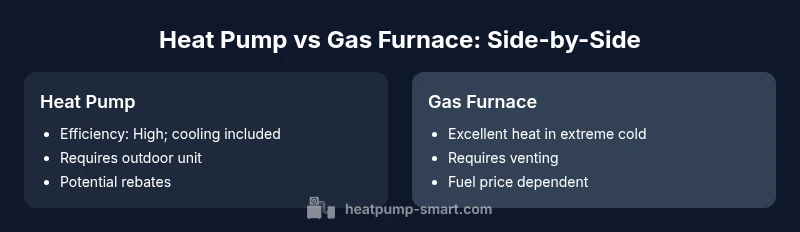
| Feature | Heat pump | Gas furnace |
|---|---|---|
| Upfront cost | moderate-to-high | low-to-moderate |
| Annual operating costs | often lower in mild climates; may rise with electricity prices | varies with gas prices and usage; can be steadier in regions with stable fuel costs |
| Efficiency (typical) | high overall efficiency with SEER/HSPF metrics; cooling included | high AFUE efficiency; direct heat production |
| Cold-climate performance | reliable with auxiliary heat in very cold weather | excellent warmth in extreme cold; gas fuel remains strong |
| Emissions | lower on clean electric grids; emissions depend on electricity mix | higher on-site emissions unless paired with clean fuel sources |
| Maintenance | coil cleaning, refrigerant checks, filter changes | burner service, vent inspection, filter changes |
| Space and installation | outdoor condenser + indoor air handler; ductwork may be needed | gas furnace with venting and gas line; ductwork if needed |
| Noise | outdoor unit noise; indoor unit quiet operation with proper zoning | furnace noise generally quiet; venting can add sound |
| Rebates/incentives | often eligible for efficiency programs and incentives | incentives vary; sometimes available for high-efficiency models |
| Warranty expectations | common compressor and system warranties; duration varies by model | typical parts warranty with burner/controls; coverage varies by brand |
| Best for | moderate climates seeking year-round comfort and cooling | very cold climates or where gas is cheap and reliable |
Advantages
- Higher efficiency with modern heat pumps in temperate climates
- Built-in cooling capability with heat pumps for year-round comfort
- Potentially lower operating costs when electricity is affordable and clean
- Hybrid options balance efficiency and reliability in cold climates
- Access to rebates and incentives for energy upgrades
Disadvantages
- Higher upfront equipment cost for heat pumps and retrofits
- Performance can drop in prolonged extreme cold without auxiliary heat
- Installation complexity can increase with retrofits or ducting needs
- Gas furnaces rely on fossil fuels and emit direct combustion byproducts
Heat pumps are generally the better long-term choice in moderate climates; gas furnaces may be preferred in areas with extreme cold or unreliable electricity.
For homes with mild winters and access to affordable, clean electricity, heat pumps offer efficiency and cooling benefits. In regions with severe cold or energy instability, a gas furnace or hybrid system can provide reliable warmth and resilience.
Your Questions Answered
What is the main difference between a heat pump and a gas furnace?
A heat pump transfers heat between indoors and outdoors, delivering both heating and cooling with electricity as the energy source. A gas furnace converts fuel into heat, producing warmth with combustion. Each has distinct cost, efficiency, and climate implications.
A heat pump moves heat and can cool your home; a gas furnace creates heat by burning gas. Both heat your space, but their energy paths and efficiency differ.
Are heat pumps effective in cold climates?
Modern cold-climate heat pumps perform well, but their efficiency can drop on the coldest days. Many homes use auxiliary heat or a hybrid system to maintain comfort without excessive electrical use.
Heat pumps work in cold weather, especially newer models, but you may want a supplemental heat source for the coldest days.
Do heat pumps provide air conditioning?
Yes. Heat pumps provide both heating and cooling, removing the need for a separate air conditioner in most setups. This can simplify the system and improve year-round comfort.
Yes—heat pumps heat and cool, serving as a single system for all seasons.
What factors influence upfront costs?
Upfront costs depend on system type, climate, ductwork condition, available space, and required electrical or gas connections. Retrofit projects can add expense due to duct updates, insulation, and permits.
Initial costs vary with system type, climate, and whether ductwork or new connections are needed.
What is a hybrid system?
A hybrid or dual-fuel system uses a heat pump as the primary heat source and a gas furnace as backup during the coldest periods. This approach aims to balance efficiency and reliability.
A dual-fuel setup uses heat pump most of the year and furnace backup when it’s very cold.
Are rebates available for these systems?
Rebates and incentives exist in many regions for energy-efficient heating solutions. Availability depends on location, program rules, and the specific equipment installed.
Yes, many programs offer rebates for efficient heat pumps or furnaces; check local options.
Top Takeaways
- Assess climate, energy prices, and insulation before choosing.
- Consider a hybrid/dual-fuel setup for variable winters.
- Factor cooling needs into the heating decision.
- Check rebates and long-term costs, not just upfront price.
- Plan installation carefully, accounting for ductwork and electrical capacity.