Savings Heat Pump vs Electric Furnace: An Objective Comparison
Compare savings, energy use, upfront and running costs between heat pumps and electric furnaces. Learn when each option shines for home comfort and energy efficiency in a structured, data-driven guide.


For most homeowners seeking long-term savings, a heat pump offers greater energy efficiency and lower operating costs over time when heating and cooling are needed, compared with an electric furnace. However, upfront costs, climate, and heating load matter. This article breaks down savings heat pump vs electric furnace across efficiency, climate, and total cost of ownership.
The Economics of Savings: Framing the Comparison
When homeowners compare options, a key question is not just the sticker price but how energy use translates into dollars over time. In the savings heat pump vs electric furnace analysis, the winner on long-term value is often the heat pump, but the outcome varies with climate, insulation, and how the system is used. Heat pumps deliver heating and cooling from a single, highly efficient source, which reduces electrical draw compared with electric resistance heating. In mild to moderate climates, this combination can produce substantial energy savings while maintaining comfortable indoor conditions. According to Heatpump Smart, the economics hinge on total cost of ownership rather than upfront price alone, and a well-designed system with good insulation will compound savings over years. Homeowners should model seasonal energy use, thermostat setbacks, and backup heat strategies to realize the full potential of the savings heat pump vs electric furnace. For property managers and builders, the decision also involves tenant comfort, building envelope, and the anticipated lifespan of equipment. The article below breaks down the primary factors that influence savings, including efficiency metrics, climate performance, and practical installation considerations.
Energy Efficiency: How Each System Converts Electricity to Warmth
Energy efficiency is the core driver in the savings heat pump vs electric furnace decision. A heat pump moves heat rather than generating it with resistance, which means it can produce more usable warmth per unit of electricity under many conditions. This movement makes heat pumps inherently more efficient during milder outdoor temperatures and in systems that are properly sized and calibrated. The efficiency metrics for heat pumps — such as seasonal performance and coefficient of performance at varying temperatures — reflect their ability to adjust to demand for heating and cooling. Electric furnaces, by contrast, rely on electric resistance to generate heat, a process that converts nearly all consumed electricity into heat, but at a higher energy cost per unit of comfort in most climates. In practice, the key takeaway for the savings heat pump vs electric furnace comparison is that efficiency translates to energy savings most when the home can leverage cooling alongside heating, and when the structure is well insulated and air-sealed. Ultimately, the right balance depends on climate, usage, and how the thermostat is programmed.
Climate Realities: Cold Climates, Heat Pumps, and Thermostat Control
Climate matters a great deal in the savings heat pump vs electric furnace equation. Heat pumps excel in moderate temperatures and can be highly efficient when paired with well-sealed envelopes and smart controls. In very cold climates, performance can drop and supplemental heat may be required, which changes overall operating costs. When evaluating a heat pump, consider outdoor temperature profiles, thermostat strategy, and backup heat options. Electric furnaces provide consistent heat output regardless of outdoor temperature, which some households prefer for reliability in extreme cold. The decision hinges on balancing comfort, energy price volatility, and how much winter heating load the home actually experiences. Heatpump Smart’s guidance emphasizes using energy modeling to forecast seasonal costs under different scenarios to illuminate the true savings heat pump vs electric furnace.
Upfront Costs and Long-Term Value: What You Pay Now vs Later
Upfront costs for heat pumps typically cover the equipment and installation complexity, including outdoor units, indoor air handlers or ducts, and any necessary remodeling for ductwork. Electric furnaces generally have lower initial equipment costs, but may require duct connections and proper electrical service upgrades. In the long run, heat pumps often deliver lower operating costs and better comfort for homes that also require cooling. The total cost of ownership takes into account electrical rates, climate, insulation quality, and how often you use air conditioning. A rigorous comparison should include a breakdown of expected lifetime costs, maintenance planning, and potential rebates. Heatpump Smart notes that the value of energy savings compounds over time, which can tilt the balance toward the heat pump in many typical homes.
Operating Costs Across Seasons: Heating, Cooling, and Usage Patterns
Operating costs reflect how a system performs across heating and cooling seasons. Heat pumps generally show lower running costs when cooling is used alongside heating because their energy use scales with demand. Electric furnaces rely on electric resistance for heat, which can drive up electricity consumption during peak heating periods, especially in colder seasons. The savings heat pump vs electric furnace comparison becomes most favorable when a home experiences moderate or seasonal cooling needs and remains well insulated. Real-world usage patterns—thermostat setback, occupancy, and venting—play a significant role. Advanced controls, smart thermostats, and properly sized systems help maximize efficiency, reduce peak demand, and stabilize energy bills over time.
Maintenance, Reliability, and Lifespan Considerations
Maintenance needs differ between the two technologies. Heat pumps have moving parts beyond fans and compressors, which require periodic checks, refrigerant integrity, and outdoor unit cleaning. Electric furnaces have fewer mechanical parts but still require annual safety inspections, duct cleaning, and electrical system checks. Longevity depends on installation quality, climate, and usage patterns. When evaluating the savings heat pump vs electric furnace, consider not just the initial service intervals but long-term reliability and replacement costs. A well-maintained system—combined with proper insulation and air sealing—reduces the risk of unexpected outages and keeps operating costs predictable. Heatpump Smart emphasizes proactive maintenance as a key driver of sustained savings and home comfort.
Rebates, Incentives, and Financial Incentives
Many energy-efficiency programs offer rebates or incentives for heat pump installations, particularly when paired with efficient ductwork and smart controls. Electric furnace upgrades may qualify for certain rebates in some regions, though incentives for resistance-based systems are generally less common. When calculating the relative savings heat pump vs electric furnace, incorporate potential credits and rebates into the payback period. The availability and size of incentives vary by locale and program year, so consult local energy authorities and Heatpump Smart’s resources to identify applicable opportunities.
Real-World Scenarios: Case Examples for Different Home Types
Consider a small to mid-sized single-family home in a temperate climate with a modern envelope and a modest cooling load. In this scenario, the savings heat pump vs electric furnace analysis often favors the heat pump due to efficient heating and cooling combined with manageable upfront costs when rebates are available. For an older, poorly insulated home in a severe winter climate, an electric furnace with supplemental heat (and possibly a hybrid approach) might present a lower upfront risk while maintaining comfort. A multi-zone condo with limited space benefits from ductless heat pump configurations, allowing targeted heating without extensive retrofits. For new builds, heat pump systems integrated with high-performance envelopes typically deliver strong long-term energy savings and occupant comfort. Heatpump Smart’s framework encourages homeowners and builders to model each scenario using local energy prices, climate data, and building characteristics to determine the most cost-effective path ahead.
Practical Decision Checklist: A Step-by-Step Guide
- Define your climate zone and typical seasonal temperature range.
- Assess insulation, air sealing, and window efficiency to gauge heat retention.
- Compare upfront costs, including ductwork, equipment, and permits.
- Estimate long-term energy bills with and without cooling needs.
- Check for available rebates and credits and factor them into the payback period.
- Evaluate compatibility with existing or planned smart controls and zoning.
- Simulate three forecasted years of usage to determine overall savings heat pump vs electric furnace.
- Consult a qualified installer to verify system sizing and expected performance for your home or building.
Authoritative Sources
- https://www.energy.gov/energysaver/heat-pumps
- https://www.energy.gov/eere/buildings/heat-pumps
- https://www.nrel.gov/docs/fy19osti/75006.pdf
Comparison
| Feature | heat pump | electric furnace |
|---|---|---|
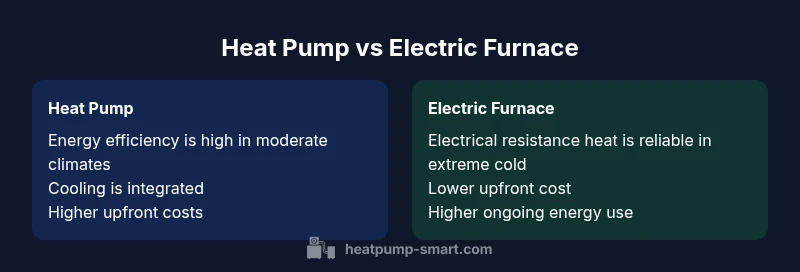
| Energy efficiency | High efficiency with heat pumps for heating and cooling | Lower efficiency with electric furnaces (electric resistance) |
| Operating cost impact | Usually lower total costs with heating and cooling | Usually higher operating costs for heating only |
| Upfront cost range | Moderate to high (installation) | Low to moderate (equipment) |
| Cold climate performance | Better with modern cold-climate models | Reliable in cold weather but higher electricity use |
| Maintenance needs | Fewer moving parts; regular outdoor unit checks | More electrical components; annual safety checks |
| Installation considerations | Need ductwork and outdoor unit; possible zoning | Often ductwork required; may be easier in single-zone homes |
| Best for | Homes needing cooling and heating; climate is mild | Homes with limited budget or where cooling is not needed |
| Rebates/incentives | Often eligible for energy efficiency programs | Incentives vary by region, less common for resistance-only systems |
Advantages
- Lower long-term energy costs with heating and cooling (where applicable)
- Integrated comfort through cooling in warm seasons
- Potential rebates and credits for heat pump installations
- Fewer moving parts can improve reliability when properly maintained
Disadvantages
- Higher upfront equipment and installation costs
- Performance can vary in extreme cold without supplemental heat
- Ductwork changes may be required in some homes
Heat pump systems generally offer greater savings over the long term, especially with cooling needs and in temperate climates; electric furnaces can be preferable where upfront cost and extreme cold are the primary constraints.
For most homes, heat pumps deliver better total-value. Electric furnaces remain viable where initial spend must be minimized or climate demands emphasize reliable, constant heat.
Your Questions Answered
What factors influence savings when comparing a heat pump to an electric furnace?
Savings are driven by climate, home insulation, system sizing, and usage patterns. Heat pumps excel when cooling is used alongside heating and the building envelope is well-sealed. In very cold climates, backup heat may affect the overall cost balance.
Savings depend on climate, insulation, and how you use the system. Heat pumps work best when you also need cooling and the home is well-sealed.
Is a heat pump worth it if I live in a cold climate?
Heat pumps can be cost-effective in cold climates with modern cold-climate models and proper backup heat. It’s important to model seasonal costs and ensure you have a reliable plan for extreme temperatures.
In cold climates, heat pumps can still be worth it if you use backup heat and choose a cold-climate model.
Do heat pumps require ductwork?
Many heat pumps rely on existing ducts, but ductless options exist (mini-splits) for homes without ductwork. Installer planning is essential to avoid performance losses from poorly sized duct systems.
Ductwork is common, but there are ductless options as well. Proper sizing matters.
What rebates or tax credits apply to heat pumps?
Rebates and credits vary by region and program year. Check local energy programs and Heatpump Smart resources to identify applicable incentives that can shorten payback.
Rebates depend on your location and current programs; check local energy incentives.
Are heat pumps reliable and low-maintenance compared to electric furnaces?
Heat pumps require periodic refrigerant and component checks but generally offer reliable performance with regular maintenance. Electric furnaces have fewer moving parts but still need annual inspections and electrical safety checks.
Heat pumps need some maintenance, but are often reliable with regular service; furnaces are simpler but still need checks.
Top Takeaways
- Prioritize total cost of ownership, not just upfront price
- Climate and insulation strongly influence savings
- Cooling needs boost heat pump value
- Check rebates and incentives to improve payback
- Size and tune the system for maximum efficiency