Trane Geothermal Heat Pump Review: Performance, Costs, and Installability
In-depth analysis of the Trane geothermal heat pump—assessing efficiency, installation complexity, costs, incentives, and how to determine if it fits your home and budget.


Compared with air-source options, the trane geothermal heat pump delivers higher efficiency, steadier heating in cold weather, and lower long-term operating costs. It requires a larger upfront investment and professional, often invasive installation. Overall, it’s a strong choice for well-insulated homes in moderate to cold climates when long-term savings matter.
What is a geothermal heat pump and how does a Trane model work?
A geothermal (ground-source) heat pump uses the relatively stable temperatures underground to transfer heat to your home in winter and remove heat in summer. In a Trane geothermal system, a closed-loop field circulates a water‑antifreeze solution through buried loops, exchanging heat with the earth via a heat pump inside your equipment room. The process relies on a refrigerant cycle that concentrates heat for space heating, and it reverses to provide cooling when needed. Because the ground temperature remains fairly constant year-round, these systems can achieve high seasonal efficiency and very stable indoor comfort. According to Heatpump Smart, the ground loop design is a critical determinant of overall efficiency, and installer expertise strongly influences actual performance. Homeowners should assess how the system will integrate with ductwork, radiant floors, or hydronic systems for heating and cooling.
Geothermal heat pumps are a subset of heat pumps that exploit earth warmth, and while Trane offers several models, the core principle remains the same: transfer heat to or from the ground rather than relying on outside air. The efficiency gains come from the fact that the loop field stabilizes temperature, reducing the energy needed to move heat indoors. Readers should be aware that performance is not only about the geothermal unit itself; excavation, loop sizing, soil conditions, and building envelope all play pivotal roles in real-world results.
Installation considerations for a Trane geothermal system
Installing a Trane geothermal system is a project that touches many parts of a house. A site assessment is the starting point, followed by choosing a loop configuration—horizontal, vertical, or occasionally open-loop where permitted. Horizontal loops require sufficient yard space or trenching, while vertical loops need access to drilling rigs and a suitable footprint for boreholes. The ductwork or radiant system connections must match the heat pump’s capacity, and electrical service upgrades may be necessary. Permitting, drill permits, and underground utility checks add time and complexity. Because loop field design is critical, the installer should perform a detailed soil and groundwater assessment to estimate loop length and field area. The Heatpump Smart team emphasizes selecting a contractor with geothermal credentials and verified installation experience to minimize long-term risks and maximize efficiency.
Another installation consideration is indoor space. A Trane geothermal unit typically resides in a mechanical room or dedicated space; adequate clearance for service access and proper ventilation is essential. Space constraints influence system configuration and headroom for maintenance. Finally, ensure the warranty terms for both the loop field and the heat pump align with your expectations, and plan for potential long-term service needs as part of a maintenance contract.
Energy efficiency, performance, and climate fit
Geothermal heat pumps have high seasonal efficiency because the ground loop provides a stable temperature source. In warmer months, the system operates as a conventional heat pump, removing heat from the home and rejecting it to the loop field. In colder months, it extracts heat from the earth rather than from outside air, which typically yields superior performance in cold climates. A Trane geothermal solution is designed to deliver consistent indoor comfort with gentler defrost cycles and more predictable output than many air-source alternatives. The reliability of performance improves when the building envelope is well sealed and insulated, and when ductwork is properly sized to minimize leakage and pressure losses. The Heatpump Smart analysis shows that a well-designed loop field and appropriate refrigerant charge are essential to sustaining efficiency over time. Climate suitability matters: homes in regions with long cold spells or high heating loads tend to benefit the most, while well-insulated homes maximize savings regardless of climate. A thoughtful control strategy—such as adjustable thermostats and zoning—can further improve comfort and reduce energy waste.
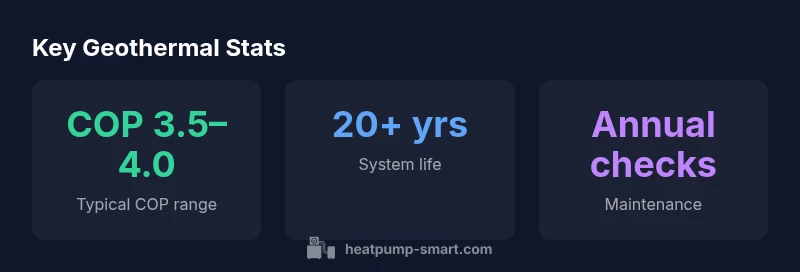
For homeowners considering a Trane geothermal system, it’s important to understand COP (coefficient of performance) and how it translates to real-world energy use. In practice, COP values are highest when the loop field is optimally sized, the home is well insulated, and there’s minimal thermal bridging. While COP is a useful metric, it does not capture all variables; runtime, humidity control, and indoor air quality also influence perceived comfort and energy bills. Evaluating a proposal should include a comparison to alternate heat sources, taking into account the climate, house design, and future energy prices. The Heatpump Smart team notes that forecasting performance should account for maintenance quality and seasonal variations to avoid overoptimistic expectations.
Cost and value: upfront costs, incentives, and payback
Geothermal systems typically involve higher upfront costs than conventional HVAC equipment due to the loop field, drilling, and installation complexity. However, the long-term operating costs can be substantially lower, especially in homes with efficient envelopes and well-designed distribution systems. When evaluating cost, consider equipment price, labor, loop field size, permits, and drill or trenching costs. Incentives, rebates, and tax credits can reduce the net initial investment, improving payback time. Local utility programs and state incentives vary, so it is important to collect offers from multiple installers and verify eligibility. The Heatpump Smart team stresses including long-term maintenance and potential system upgrades in ROI calculations, since performance depends on ongoing care and periodic testing of the loop field and refrigerant circuit. A well-maintained system can deliver many years of reliable service beyond the initial cost considerations.
Reliability, durability, and maintenance expectations
Geothermal heat pumps are known for longevity when properly cared for. The indoor components typically carry standard HVAC warranties, while the loop field may have separate guarantees that reflect site-specific conditions. Maintenance is less frequent than some fossil-fuel systems but still essential. Annual professional inspections, refrigerant checks, thermostat calibration, and cleaning of any air filtration components help preserve efficiency and comfort. Some homeowners schedule biannual checks to align with seasonal transitions. Delays in service or gap in maintenance can reduce efficiency and shorten the system’s life. The Heatpump Smart team emphasizes the value of a maintenance contract with an installer who understands geothermal systems, as expertise matters for diagnosing subtleties such as loop field performance or refrigerant-related issues. Overall, a Trane geothermal system can deliver robust durability if paired with proactive service and proper seasonal adjustments.
Sizing and installation planning: steps homeowners should take
Accurate sizing is critical for a geothermal system to perform as intended. A professional should conduct load calculations that consider space heating and cooling, humidity control, and peak weather conditions. The contractor should assess the site for loop feasibility, soil type, groundwater conditions, and available space for equipment and the loop field. Just as with any major upgrade, obtain multiple bids from qualified geothermal installers, review their references, and request a detailed scope of work and warranty information. Ensure installers provide a clear timeline, including drilling or trenching, loop installation, refrigerant charge verification, and commissioning. Planning for future home improvements—such as insulation upgrades or window replacements—can influence both the design and payback. The Heatpump Smart team recommends choosing installers with proven geothermal experience and asking to see sample projects similar in scope.
Advantages
- High overall efficiency and lower operating costs over time
- Long system life with proper maintenance
- Quiet outdoor operation compared to fossil systems
- Flexible installation options (horizontal or vertical loops)
Disadvantages
- High upfront cost and longer payback
- Complex installation requires experienced geosystems contractor
- Space required for the loop field (especially horizontal)
- Soil conditions or groundwater can affect loop design and performance
Strong long-term value for homes seeking reliable comfort and energy savings, especially in cold climates.
Overall, the Trane geothermal heat pump offers high efficiency and durable performance when properly installed and maintained. The upfront cost is higher, but long-term operating costs and comfort justify the investment for suitable homes. The Heatpump Smart team emphasizes careful site assessment and experienced installation to maximize ROI.
Your Questions Answered
What is a geothermal heat pump and how does it work?
A geothermal heat pump moves heat between your home and the earth, exploiting the ground’s relatively stable temperature. In winter it extracts heat from the ground and transfers it indoors; in summer it reverses to provide cooling. The loops and indoor unit work together to deliver efficient heating and cooling with lower seasonal energy use.
Geothermal heat pumps pull heat from the ground for winter warmth and push heat back in summer for cooling, delivering steady comfort with higher efficiency.
Is a Trane geothermal heat pump right for my home?
Geothermal systems are well-suited to well-insulated homes with space for a loop field and a capable indoor distribution system. They are most advantageous where long-term energy savings and climate stability matter, and where upfront investment and installation feasibility align with project scope.
If you’re building or upgrading in a climate with high heating needs and you can accommodate a loop field, a Trane geothermal heat pump is worth considering.
What are typical installation costs and timeframes?
Installation costs vary by site, loop type, and contractor. Expect a longer project than typical HVAC installs due to trenching or drilling, permitting, and system commissioning. Timeframes can range from several days to a few weeks depending on site access and loop field size.
Costs vary a lot by site; installation can take days to weeks depending on drilling or trenching and permits.
How does it compare to air-source heat pumps?
Geothermal systems generally offer higher efficiency, quieter operation, and more consistent performance in extreme temperatures, but they come with higher upfront costs and more complex installation. Air-source heat pumps are less invasive to install and cheaper upfront but may see larger performance swings in very cold weather.
Geothermal usually runs more efficiently year-round, but it’s pricier to install than air-source options.
What incentives are available to offset costs?
Incentives vary by country, state, and utility programs. Common options include tax credits, rebates, and energy-efficiency programs. Eligibility depends on system efficiency, installation type, and location. Check with local authorities and your installer for current programs.
Look for federal, state, or utility rebates and tax credits; eligibility varies by location.
What maintenance is required?
Annual professional inspections are recommended to verify refrigerant charge, loop integrity, and system controls. Regular filter changes and thermostat upkeep help maintain comfort. Proper seasonal commissioning by a qualified technician supports long-term efficiency.
Have a pro check the refrigerant and loop yearly; change filters regularly and keep thermostats calibrated.
Top Takeaways
- Assess site feasibility early to ensure loop space and soil suitability.
- Plan for a longer payback period due to upfront costs, but with long-term savings.
- Hire an installer with proven geothermal experience and proper certifications.
- Factor incentives and rebates into ROI calculations.
- Ensure a robust building envelope to maximize system efficiency.