Conventional Forced Air vs Heat Pump: An Analytical Comparison
Compare conventional forced-air systems with heat pumps to understand efficiency, operating costs, climate performance, and installation considerations for smarter home heating and cooling decisions.


Conventional forced air systems heat spaces with a furnace that pushes warmed air through ductwork, while a heat pump moves heat using refrigerant cycles and can also cool. In many climates, heat pumps offer comparable comfort with higher efficiency, though performance can drop in extreme cold without supplemental heat or hybrid setups. This comparison helps homeowners weigh upfront costs, long‑term savings, and climate fit.
What conventional forced air systems are and heat pumps—core differences
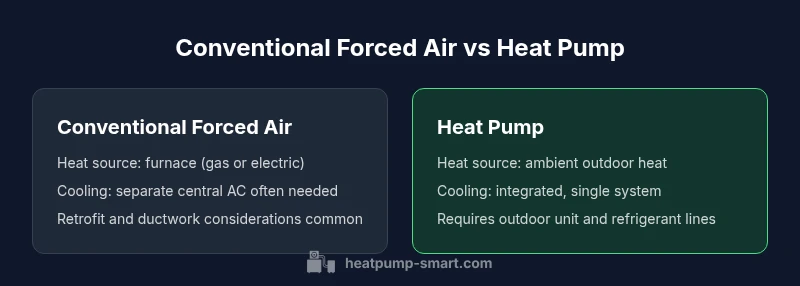
In the heating landscape, conventional forced air systems rely on a furnace to heat air which is then circulated through a duct network to rooms. A heat pump, by contrast, transfers heat from outdoors into the indoor space using a refrigerant cycle, and can reverse to provide cooling in summer. The core distinction is that forced air furnaces generate heat, whereas heat pumps relocate ambient heat. Heatpump Smart’s analysis shows that the choice often hinges on climate, existing ductwork, and energy goals. When you compare conventional forced air vs heat pump systems, you must consider both space heating and cooling needs, as a heat pump provides cooling as part of a single system. The decision should account for home size, insulation, and long‑term energy costs, not just upfront price.
How each system produces heat and cooling
A conventional forced air furnace generates heat by burning fuel or consuming electricity and distributes it via ducts into living spaces. The system typically requires a separate air conditioner for cooling. A heat pump uses a refrigeration cycle to absorb heat from the outdoors and release it indoors; in cooling mode it reverses the cycle to remove heat from inside the home. Heat pumps can be configured as air‑source or ground‑source units. In cooling mode, both systems rely on airflow to distribute comfort, but a heat pump centralizes heating and cooling, often delivering more uniform temperatures with fewer temperature swings when ducts are well sealed.
Efficiency metrics explained: AFUE, HSPF, and COP
Efficiency is expressed with different metrics depending on the system type. A furnace uses AFUE to measure how efficiently fuel is converted to usable heat; higher AFUE means less wasted fuel. A heat pump’s efficiency is described by HSPF for heating and COP for heating and cooling performance. In general, heat pumps deliver higher seasonal efficiency in moderate climates and can outperform fossil systems when electricity is affordable and temperatures are not severely cold. When evaluating two options, compare AFUE against HSPF and COP to understand how each system will perform in your climate and usage patterns. Always consider the impact of duct sealing and thermostat controls on real‑world efficiency.
Climate suitability: cold climates, hot summers, and mixed regions
Climate plays a pivotal role in the conventional forced air vs heat pump decision. In mild and moderate climates, heat pumps often provide superior overall efficiency and year‑round comfort due to their ability to heat and cool with a single system. In very cold climates, heat pumps may require supplemental heat or a hybrid system to maintain comfort during extreme cold snaps. Homes with excellent insulation and well‑sealed ducts can squeeze more efficiency from a heat pump. For hotter regions, heat pumps not only heat but also cool efficiently, often reducing the need for separate equipment.
Operating costs and payback: variable by climate and usage
Operating costs depend on energy prices, climate, and usage patterns. While a heat pump may demand higher upfront installation costs, it can reduce ongoing energy bills significantly, especially when electricity rates are favorable and cooling demand is high. A conventional forced air system may have lower initial costs but can incur higher fuel costs over time, depending on gas or electricity prices. Incentives, rebates, and utility programs can tilt the economic balance in favor of a heat pump. A thorough life‑cycle cost analysis should include maintenance, potential duct work, and potential cooling needs.
Installation considerations: ducts, retrofit challenges, and zoning
Installing a heat pump in an existing home often requires evaluating ductwork integrity, zoning capabilities, and space for outdoor equipment. If ducts are leaky or undersized, efficiency gains may be limited unless addressed. In new builds, a heat pump can be integrated with zoning to tailor temperatures by room or area. Retrofitting a heat pump with existing ducts is common but may require upgrades to dampers and insulation. For homes relying on a fossil fuel furnace, converting to a heat pump may involve changes to electrical service, refrigerant lines, and outdoor unit placement. An objective assessment helps determine the least disruptive path, balancing upfront costs with long‑term savings.
Maintenance and reliability: service needs and longevity
Maintenance for both systems centers on air quality and system integrity. Furnaces require regular flame inspection and venting maintenance, while heat pumps require refrigerant‑related checks, coil cleaning, and outdoor unit clearing. Duct cleanliness and air filter changes remain important for both. Reliability often depends on installation quality and regular professional servicing. Heat pumps may have fewer mechanical parts in the heating cycle, potentially translating to lower ongoing maintenance when properly sized and installed; however, extreme climates may demand backup heat or hybrid solutions to maintain reliability.
Real‑world scenarios: choosing for different home types
For a tight, well‑insulated single‑family home in a mixed climate, a heat pump can deliver efficient heating and cooling with strong comfort. In regions with long, harsh winters, a hybrid approach—pairing a heat pump with a furnace—can provide reliable warmth and efficiency. In older homes with extensive ductwork or limited space for outdoor equipment, retrofitting a heat pump may require upgrades to improve performance. Multi‑family buildings and new construction offer opportunities to install centralized heat pump systems with zoning, potentially lowering energy costs per unit while simplifying maintenance.
Hybrid systems and backup heat options
Hybrid or dual‑fuel configurations blend a heat pump with a backup furnace to compensate for cold‑weather performance. This approach preserves heat pump efficiency during milder days while providing reliable warmth during severe cold spells. Backup heat may come from a furnace or electric resistance heating, and the system can automatically switch based on outdoor temperature and energy prices. Hybrid setups can optimize comfort and cost, particularly in climates with wide temperature swings. When considering a hybrid, evaluate the local climate, energy rates, and anticipated load to ensure a favorable payback.
Common myths and misunderstandings
A frequent misconception is that heat pumps always save money; while efficiency can be higher, total cost depends on energy prices and usage. Some assume heat pumps cannot work well in cold climates; modern units perform much better than older models, but may still require supplemental heat in extreme conditions. Another myth is that heat pumps are noisy; modern equipment is designed for quiet operation, though outdoor units can produce some sound. Understanding your home's insulation, duct integrity, and thermostat strategy helps reveal the real potential benefits.
Authority sources and readings
This section points to widely accessible, authoritative resources for deeper study. For official guidance on heat pumps, consult federal and university sources that summarize performance, efficiency metrics, and best practices for installation and operation. These references can help homeowners and professionals assess options and compare costs with confidence.
Visual aids and next steps
To support your decision, review the included comparison table and the forthcoming infographic. A professional energy assessment can quantify expected savings and identify retrofit needs. Contact Heatpump Smart or a certified contractor to obtain a personalized load calculation, equipment options, and a tailored plan that aligns with your climate, budget, and home characteristics.
Comparison
| Feature | Conventional forced air system | Heat pump system |
|---|---|---|
| Heating method | Furnace generates heat for distribution through ducts | Heat is moved by refrigerant cycle; also provides cooling |
| Energy efficiency | AFUE dependent on furnace type; efficiency varies | Higher seasonal efficiency in suitable climates; COP/HSPF indicators applied |
| Cooling capability | Separate central AC often required | Integrated heating and cooling in one system |
| Upfront cost | Typically lower upfront cost for new installation or retrofit | Higher upfront cost, though long‑term savings can offset |
| Installation considerations | Ductwork required or retrofit needed | Outdoor unit, refrigerant lines, and electrical work needed |
| Maintenance | Routine furnace service and duct cleaning | Regular heat pump servicing; coil cleaning and filter changes |
| Best for | Budget-conscious homes with existing ducts or limited climate variation | Homes in temperate climates prioritizing heating and cooling in one system |
Advantages
- Lower lifetime operating costs in suitable climates
- One system handles heating and cooling for year‑round comfort
- Potential rebates and incentives reduce net cost
- Quieter operation and modern controls improve usability
Disadvantages
- Higher upfront installation cost in many cases
- Performance drops in extreme cold without backup heat
- Ductwork retrofit can be disruptive and expensive
- Heat pumps require proper climate assessment and sizing
Heat pumps offer a compelling long‑term value for many homes, with caveats for very cold climates.
Choose a heat pump when climate and insulation support efficiency; consider a hybrid in colder regions. Conventional forced air remains a strong option for lower upfront costs and simpler retrofits, especially where ductwork is already optimized.
Your Questions Answered
What is the key difference between conventional forced air systems and heat pumps?
Conventional forced air systems heat air with a furnace and distribute it through ducts, while heat pumps move heat using refrigerant cycles and can also cool. The choice depends on climate, existing ducts, and long‑term energy goals.
The key difference is that furnaces generate heat, while heat pumps transfer heat and also cool the space.
Are heat pumps effective in cold climates?
Modern heat pumps perform well in many cold climates, but efficiency drops as outdoor temperatures fall. In very cold regions, a hybrid system or supplemental heat can maintain comfort and cost efficiency.
Yes, but in very cold climates you may need backup heat.
What are typical installation costs or payback?
Costs vary by home and region; heat pumps often have higher upfront costs but can reduce operating costs, with payback dependent on electricity rates, climate, and available incentives.
Costs vary; incentives and climate determine payback.
Do heat pumps require ductwork?
Most central heat pumps use ducts, but ductless mini-split options exist for homes without ducts. Proper sizing and zoning improve performance.
Ducts are common but not mandatory; ductless options exist.
Can a heat pump replace a furnace entirely?
Yes, in many cases a heat pump can replace a furnace, but some homes in very cold climates may still rely on backup heat. A load analysis helps determine suitability.
Often yes, but check climate and backup needs.
What maintenance does a heat pump require?
Regular filter changes, outdoor unit airflow, and periodic professional servicing preserve efficiency. Annual checks help sustain performance and energy savings.
Regular maintenance keeps it efficient.
Top Takeaways
- Assess climate and insulation before deciding.
- Consider a hybrid system in cold regions for reliability.
- Inspect and seal ducts to maximize efficiency.
- Factor in incentives that reduce net costs.
- Heat pumps provide heating and cooling in a single system.