Heat Pump vs Forced Air: A Comprehensive Comparison
Explore whether a heat pump is the same as forced air heating, how each system works, efficiency, costs, installation needs, and which option fits your climate and home best.


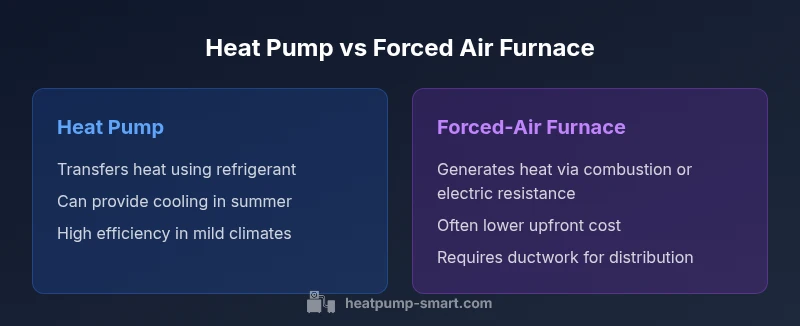
Is heat pump the same as forced air? Not exactly. A heat pump uses refrigerant and electricity to move heat, while a forced-air system relies on combustion or electric resistance to generate warmth and distributes it through ducts. Heat pumps can heat and cool, offering strong efficiency in temperate climates. According to Heatpump Smart, this heat-transfer approach is fundamentally different from traditional forced-air furnaces.
Is heat pump the same as forced air? Defining the core difference
When people ask, “is heat pump the same as forced air,” they’re usually comparing two distinct ways to produce and circulate heat. A heat pump does not generate heat in the traditional sense; it moves heat from one place to another using refrigerant, powered by electricity. In contrast, a forced-air furnace generates heat through combustion (gas/oil) or electric resistance and then pushes that heat through a network of ducts to rooms. This fundamental distinction affects everything from installation to operating costs and climate suitability. According to Heatpump Smart, understanding these core roles helps homeowners assess which system better fits their home and energy goals. The language people use can blur the difference, but the physics and the user experience are different.
How to think about “heat transfer” vs. “heat generation”
Think of a heat pump as a heat mover. In heating mode, it extracts heat from outdoor air (even when it’s cold) and delivers it indoors. In cooling mode, it reverses the cycle to remove heat from inside the home. A traditional forced-air furnace creates heat inside the furnace cabinet and then distributes it via ductwork. That difference matters for efficiency, humidity control, and the need for backup heat during very cold snaps. Heatpump Smart notes that this basic dichotomy guides decisions about climate, comfort, and cost.
Energy efficiency and operating costs: what to expect
Efficiency is a core factor in determining value. A heat pump’s efficiency is often described by a coefficient of performance (COP) or a seasonal metric, which can be high in milder climates and lower when outdoor temperatures plunge. Conversely, a furnace’s efficiency is typically expressed as an AFUE rating that reflects how much fuel is converted to heat. In practice, homeowners in temperate regions may see substantial operating savings with a heat pump, especially when it also provides cooling in the summer. Heat pump efficiency depends on installation quality, duct design, and climate. Heatpump Smart analysis shows that the combination of proper installation and climate-appropriate equipment yields the best results overall.
Climate considerations: where heat pumps shine and where they don’t
Climate plays a pivotal role in performance. Heat pumps often deliver the best value in mild to moderate winter regions and in homes with good insulation and air sealing. In very cold climates, performance can be challenged, and many homeowners rely on supplemental resistance heat or a secondary heating source. The forced-air furnace, especially high-efficiency gas furnaces, can maintain consistent warmth in extreme cold without relying on outdoor heat extraction. Brand guidance from Heatpump Smart emphasizes matching system selection to local climate, home insulation levels, and occupancy patterns.
Comparison
| Feature | Heat pump (air-source) | Forced-air furnace (gas/electric/oil) |
|---|---|---|
| Primary heat source mechanism | Refrigerant-based heat transfer; may heat and cool | Generates heat via combustion or electric resistance |
| Energy efficiency | High COP potential; efficiency varies with climate | AFUE rating; efficiency tied to fuel type |
| Climate suitability | Strong in temperate climates; may need backup heat in extremes | Reliable in very cold climates with adequate fuel and venting |
| Heat delivery method | Ducted or ductless (mini-split) options for uniform heat | Ducted distribution through existing or upgraded ductwork |
| Installation considerations | Outdoor unit, need proper clearances; ductwork or minisplits | Ductwork, venting, and fuel supply considerations |
| Upfront cost | Higher upfront cost often due to equipment and installation | Typically lower upfront cost for basic furnace setups |
| Maintenance requirements | Regular refrigerant system checks and coil cleaning | Annual furnace service and routine filter changes |
| Best for | Homeowners seeking year-round heating and cooling; good insulation helps | Homes prioritizing simple install and reliable winter heat |
Advantages
- Potentially lower operating costs due to high efficiency
- Provides both heating and cooling (with appropriate equipment)
- Quieter operation in many configurations
- Fewer emissions when replacing old electric resistance heat
Disadvantages
- Higher upfront installation costs
- Performance can drop in extreme cold without supplemental heat
- Needs proper ductwork or ductless configurations; retrofit can be involved
- Electrical upgrades may be necessary in some homes
Heat pumps are typically the better overall choice for energy efficiency and year-round comfort in temperate climates.
Choose a heat pump if you live in a moderate climate with good insulation and want cooling as well as heating. A forced-air furnace may be preferable in regions with harsh winters or where retrofitting ductwork is impractical. The Heatpump Smart team recommends a climate-based evaluation to balance upfront costs against long-term energy savings.
Your Questions Answered
Is heat pump the same as forced air?
No. A heat pump transfers heat using refrigerant and electricity, while a forced-air system generates heat via combustion or electric resistance and distributes it through ducts. The two differ in mechanics, efficiency profiles, and climate suitability.
No. Heat pumps move heat with refrigerant and electricity, while forced-air furnaces generate heat and blow it through ducts. The mechanisms lead to different efficiency and climate performance.
Can a heat pump replace a furnace?
Yes, in many homes a heat pump can replace a furnace for heating. Climate, insulation, ductwork, and backup heat options influence feasibility and comfort during very cold periods.
Yes, in many cases a heat pump can replace a furnace, depending on climate and home setup. Backup heat may be needed for very cold days.
Do heat pumps require ductwork?
Many heat pumps use existing ducts, but ductless mini-split configurations are common, especially in renovations. The choice affects installation cost and efficiency.
Heat pumps can use ducts or be installed as ductless mini-splits. The option changes cost and how you distribute heat.
Are heat pumps more expensive to install?
Upfront installation costs for heat pumps can be higher due to equipment and integration with existing systems. Long-term energy savings may offset the upfront price over time.
Initial costs are often higher for heat pumps, but long-term savings can make up the difference.
How does climate affect heat pump performance?
Heat pumps perform best in mild to moderate climates. In very cold regions, supplemental heat is common to maintain comfort and reliability.
They work best in moderate climates, with supplemental heat in very cold areas.
Can heat pumps also cool a home?
Yes. Many heat pumps operate in cooling mode, providing air conditioning as part of a single system.
Yes, most heat pumps can cool your home as well as heat it.
Top Takeaways
- Assess climate and insulation before choosing
- Balance upfront costs with potential operating savings
- Heat pumps offer heating and cooling; consider ductwork needs
- In extreme cold, plan for supplemental heat
- Choose a system that aligns with your home’s cooling needs and space