Difference Between Heat Pump and Air Conditioner: A Practical Guide
Explore the essential differences between heat pumps and air conditioners, including operation, efficiency metrics, climate performance, installation considerations, and practical guidance to choose the right system for your home.


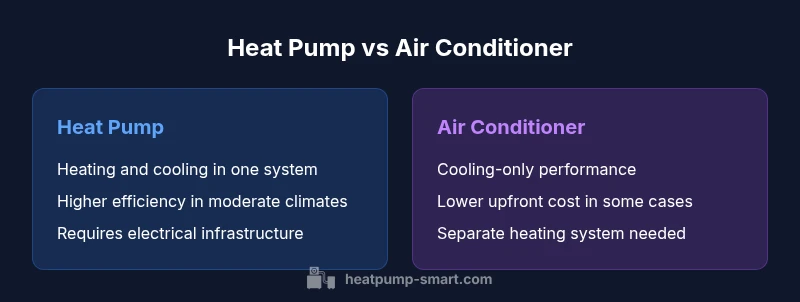
A heat pump provides both heating and cooling by moving heat with a reversible cycle, while a conventional air conditioner primarily cools. In many homes, heat pumps offer year‑round comfort and potential energy savings, but climate, electricity costs, and installation specifics influence performance. This comparison shows where each system excels and when one is a better fit for your home.
What is the difference between heat pump and air conditioner?
The difference between heat pump and air conditioner is more than a label; it defines how the system delivers comfort across seasons. A heat pump is designed to heat and cool by moving heat between indoors and outdoors, using a reversible refrigerant cycle. An air conditioner, by contrast, is optimized for cooling only, transferring indoor heat to the outside. In practical terms, a heat pump can keep a home warm on cooler days when outdoor temperatures are above freezing, while a traditional AC focuses on cooling during hot spells. According to Heatpump Smart analysis, the heating performance of heat pumps depends strongly on climate and outdoor temperatures, which explains why installation location and climate zone matter for long-term efficiency. For homeowners evaluating two options, the distinction helps forecast year-round operating costs and comfort. The takeaway is that the heat pump’s dual capability is its core advantage in many markets, but it requires careful sizing and control strategies to maximize savings.
How heat pumps operate vs traditional air conditioners
Both heat pumps and air conditioners rely on a vapor-compression refrigeration cycle. The key difference is the reversing valve, which allows the heat pump to switch between cooling and heating modes. In cooling mode, the outdoor unit rejects heat outside while indoor components absorb heat; in heating mode, the cycle runs in reverse, extracting heat from the outdoor air (even when it’s cold) and delivering it indoors. A traditional air conditioner lacks this reversible function, so it delivers only cooling unless paired with separate heating equipment. The efficiency and performance of either system hinge on components (compressor, coil design, refrigerant) and the control system (thermostat, zoning). Heat pumps can also integrate with smart controls and weather-appropriate defrost cycles to reduce energy use. Heatpump Smart’s guidance emphasizes proper commissioning and refrigerant management as critical levers for real-world performance.
Climate performance: heating in cold weather vs summer cooling
Climate plays a central role in how well a heat pump performs relative to a standard air conditioner. In moderate winter climates, heat pumps often deliver compelling comfort with lower energy use because they provide both heating and cooling from a single system. In very cold regions, performance can decline, and some models require auxiliary heat or backup furnaces to maintain comfort during the coldest periods. Air conditioners, when used in winter without a heat source, simply do not provide heating. For homes that experience seasonal temperature swings, a heat pump can reduce the need for multiple heating and cooling devices, but sizing and climate-appropriate specifications are essential to avoid gaps in comfort or excessive auxiliary heat. Heatpump Smart’s field observations indicate that climate‑driven design decisions—such as outdoor unit placement, insulation, and heat pump size—have a larger impact on real-world costs than the brand or model alone.
Energy efficiency metrics explained: COP, SCOP, SEER, EER, HSPF
Efficiency metrics help translate performance into operating costs. A heat pump’s efficiency is often described with COP (coefficient of performance) and SCOP (seasonal COP), which compare useful heat output to electrical energy input. Air conditioners use SEER (seasonal energy efficiency ratio) and sometimes EER (energy efficiency ratio) to rate cooling efficiency. Because heat pumps must perform in heating and cooling, SCOP is especially relevant for year‑round cost comparisons, while SEER remains a primary metric for cooling. A higher COP/SCOP indicates more heat delivered per unit of electricity, and therefore lower operating costs in heating mode. When comparing models, ensure you look at both heating and cooling metrics and how they translate to your local electricity tariffs. Heatpump Smart correlations show that performance is strongly affected by outdoor temperatures, humidity, and system controls, not just the nominal rating.
Installation, sizing, and home design considerations
A proper installation is essential for achieving the theoretical benefits of either system. Heat pumps require careful placement of the outdoor unit to maximize heat exchange and minimize noise, as well as ductwork or indoor air handlers suitable for the home’s layout. Sizing is critical: a unit that is too small can struggle in peak loads, while an oversized system may short-cycle, reducing efficiency and comfort. Ducted and ductless options offer flexible installation paths, especially in older homes where ductwork may be missing or leaky. Home design considerations include insulation, air sealing, and thermal comfort zoning. A well‑sized, well‑installed heat pump can outperform a poorly installed air conditioner in many climate zones, but the investment in ductwork, controls, and potential electric panel upgrades must be weighed against expected energy savings.
Costs, value, and payback: what homeowners should expect
Financial considerations drive decisions beyond the engineering merits. Heat pumps often require a higher upfront investment than traditional air conditioners, driven by equipment costs, installation complexity, and potential electrical upgrades. Over the system’s life, however, operating costs can be lower due to high efficiency, especially where electricity is competitively priced and heating demand is significant. Payback periods vary with climate, electricity tariffs, and usage patterns. It’s important to view cost as a two‑part equation: upfront investment and long‑term energy spend. The Heatpump Smart team notes that local rebates, incentives, and utility programs can materially affect the economics, so checking current programs can improve overall value.
Ductwork, zoning, and retrofit questions
Retrofit installations pose unique challenges, especially in homes without existing ducts. Ductless mini-split heat pumps can deliver focused comfort to individual rooms or zones, avoiding the costly ductwork overhaul. If you already have ducts, you’ll want to assess duct leakage and insulation, as poorly sealed ducts can erode performance and negate efficiency gains. Zoning adds another layer of flexibility, allowing different rooms to run on separate thermostats, which can reduce energy use and improve comfort. When planning a retrofit, work with a qualified installer who can model heat loss, heat gain, and air distribution to ensure the system aligns with your home’s design and occupancy patterns.
Maintenance, reliability, and common issues
Routine maintenance is key to long-term performance for both heat pumps and air conditioners. Regular filter changes, coil cleaning, and refrigerant checks help maintain efficiency and comfort. Heat pumps introduce some additional considerations, such as defrost cycles, outdoor unit cleaning, and ensuring that auxiliary heat (if used) does not dominate energy use. Reliability depends on quality installation, proper refrigerant charge, and component quality. Common issues include refrigerant leaks, frozen coils in winter, and fan or connection problems. Proactive maintenance plans and annual inspections can reduce the risk of unexpected failures and extend system life. Heatpump Smart recommends scheduling professional checks before peak seasons to prevent performance drops.
Environmental impact and policy considerations
Both heat pumps and air conditioners affect energy use and emissions. Heat pumps typically run on electricity, so their environmental footprint depends on the grid mix; in regions with cleaner electricity, heat pumps can significantly reduce emissions compared with fossil-fuel heating options. Rebates and incentives for heat pump installations are common and can improve the environmental and financial case. Energy‑star labeled models often deliver verified efficiency gains, and some programs offer additional incentives for high‑efficiency systems. When evaluating environmental impact, consider your local grid, climate, and the full lifecycle of the equipment, including manufacturing, refrigerants, and end‑of‑life disposal. Heatpump Smart notes that ongoing advances in refrigerants and compressor technology continue to improve both performance and sustainability.
How to decide: a step-by-step decision framework
To decide between a heat pump and an air conditioner, use a structured framework:
- Assess climate: do you need reliable heating in winter as well as cooling in summer? 2) Evaluate electricity costs and tariffs: is heating with electricity cost-effective in your area? 3) Inspect existing ducts and space: will ductwork upgrades be necessary? 4) Consider up-front budget vs long-term savings: what is your payback window? 5) Examine rebates and incentives: what programs apply to your home? 6) Check for compatibility with smart controls and zoning: can you optimize comfort with modern thermostats? Following these steps helps align your choice with comfort, energy efficiency, and total cost of ownership.
Authoritative sources
- https://www.energy.gov/energysaver/heat-pumps
- https://www.energy.gov/energysaver/air-source-heat-pumps
- https://www.nrel.gov/docs/fy20osti/76623.pdf
Comparison
| Feature | Heat pump | Air conditioner |
|---|---|---|
| Heating capability | Provides both heating and cooling | Primarily cooling (requires separate heating) |
| Cooling performance | Excellent cooling when sized correctly | Strong cooling performance in hot weather |
| Energy efficiency metrics | COP/SCOP-focused, year-round efficiency | SEER/EER-focused for cooling efficiency |
| Installation considerations | Can require ducting or air-handling zones | Typically simpler in cooling-only setups |
| Best climate | Moderate winters or climates with electricity cost advantages | Hot climates with mild winters may favor AC with supplemental heat |
| Maintenance and reliability | Similar maintenance, with added defrost and auxiliary heat considerations | Similar maintenance, fewer heating-related controls |
Advantages
- Dual heating and cooling in one system
- Potential year-round energy savings
- Space-saving if replacing two devices with one
- Zoning and smart controls can optimize comfort
Disadvantages
- Higher upfront cost and installation complexity
- Performance may decline in extreme cold without auxiliary heat
- Some climates require backup heating or hybrid systems
- Maintenance complexity for heat‑related components
Heat pumps generally offer the best long-term value for homes with moderate heating needs and access to clean electricity, while air conditioners remain a solid choice for cooling-only needs or where heating is provided by a separate furnace.
For most homes in temperate climates, a heat pump delivers year-round comfort with potential energy savings, especially when paired with appropriate electrical infrastructure and smart controls. In very cold climates, an air conditioner paired with a separate heat source may be more straightforward and reliable, depending on existing heating arrangements and local energy prices.
Your Questions Answered
What is the main difference between a heat pump and an air conditioner?
The main difference is that a heat pump can heat and cool, using a reversible cycle, while a conventional air conditioner cools only. In heating mode, a heat pump extracts heat from the outside air and moves it indoors. This makes the system adaptable to seasonal needs and can improve overall energy efficiency when properly sized.
Heat pumps do heating and cooling with one system, while air conditioners only cool. This means your home can stay comfortable year‑round with a single device.
Can a heat pump replace a furnace in all climates?
Heat pumps can replace a furnace in many climates, especially where winter temperatures don’t regularly drop below freezing. In colder regions, you might need auxiliary heating or a hybrid system to maintain warmth during the coldest days. A professional assessment will determine whether a heat pump plus supplemental heat is sufficient for your home.
Heat pumps can replace furnaces in many places, but very cold climates may still need extra heat sources at the coldest times.
Are heat pumps efficient in cold weather?
Heat pumps can remain efficient in cold weather, but performance depends on the model and outdoor temperatures. Cold-climate heat pumps maintain efficiency through advanced refrigerants and defrost controls, though auxiliary heat may be used during extreme cold. Look for ratings like SCOP and the manufacturer’s cold-start performance when evaluating options.
They can stay efficient in cold weather, but you might see some auxiliary heating in very cold days.
What factors affect the cost and payback of a heat pump installation?
Costs depend on equipment type, ductwork needs, and electrical upgrades. Payback is influenced by climate, electricity prices, and how much heating you convert to heat pump use. Check for local rebates and incentives, as they can shorten the payback period and improve overall value.
Payback varies by climate and incentives; rebates can help a lot.
Do heat pumps require ductwork or can they be ductless?
Heat pumps can be installed with ducts or as ductless mini-splits. Ducted systems provide central heating and cooling, while ductless variants offer flexibility for rooms or zones without extensive ductwork. The choice depends on your home design, insulation, and the desired level of zoning.
You can choose ducted or ductless options depending on your home.
What maintenance should I expect with a heat pump?
Regular maintenance includes filter changes, coil cleaning, and refrigerant checks. Heat pumps may require occasional defrost cycle checks and outdoor unit cleaning. Scheduling an annual professional inspection helps maintain efficiency and catch issues before they cause bigger problems.
Keep filters clean and have annual checks to stay efficient.
Top Takeaways
- Assess climate before choosing: heat pump vs cooling-only system
- Prioritize proper sizing and professional installation
- Factor electricity costs and potential rebates into the decision
- Plan for future upgrades with zoning and smart controls
- Expect higher upfront costs but potential long-term savings