Efficiency of Heat Pump vs Gas Furnace: A Comprehensive Comparison
An expert, data-driven comparison of the efficiency of heat pump vs gas furnace, covering COP, AFUE, climate impact, operating costs, maintenance, and installation considerations to guide homeowners and professionals.


Understanding the efficiency of heat pump vs gas furnace helps homeowners estimate running costs and comfort. In many climates, heat pumps deliver higher overall efficiency, while gas furnaces can be more reliable in extreme cold. This guide outlines metrics, costs, and maintenance to help you choose the best option for your home.
Understanding Efficiency in Heating Systems
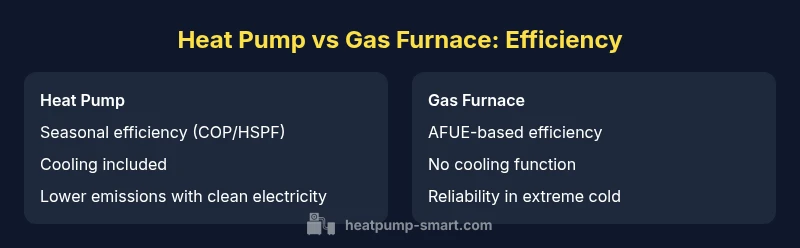
The term “efficiency” for heating technologies goes beyond a single number. For heat pumps, we look at seasonal performance metrics like COP (coefficient of performance) and HSPF (heating seasonal performance factor), which reflect how much heat is produced per unit of electricity consumed. For gas furnaces, efficiency centers on AFUE (annual fuel utilization efficiency), a measure of how effectively the furnace converts fuel into heat over a typical year. When comparing these two classes of equipment, it’s vital to translate the numbers into real-world outcomes: annual energy bills, comfort stability, and the environmental footprint of your electricity mix. According to Heatpump Smart, framing a decision around climate, energy prices, and home insulation yields the most meaningful insights, rather than chasing a single percentage value. The core question remains: how will the system perform when it’s most needed?
Comparison
| Feature | Heat pump system | Gas furnace |
|---|---|---|
| Primary efficiency metric | COP-based efficiency (seasonal) high for heat pump | AFUE-based efficiency (seasonal) moderate to high for gas furnace |
| Operating costs | Typically lower annual energy costs in climates with affordable electricity | Typically higher or more variable operating costs in regions with expensive gas or electricity |
| Climate performance | Excellent in mild to moderate climates; may require supplemental heat in extreme cold | Consistent performance in very cold temperatures with minimal reliance on auxiliary heat |
| Upfront price range | Higher upfront cost due to heat pump and potential duct/air handler upgrades | Lower upfront cost for a furnace replacement or simple installation |
| Maintenance effort | Refrigerant management and outdoor unit care; filter changes and annual checks | Burner cleaning and combustion inspections; venting and vent system checks |
| Noise and aesthetics | Outdoor unit noise present but typically integrated; indoor components quiet | Furnace cabinet is generally quiet; chimney venting can dominate aesthetics |
| Lifespan and reliability | Good long-term reliability with proper service; fewer moving parts but heat pumps include compressors and fans | Long track record with durable burners and heat exchangers; maintenance is key |
Advantages
- Lower operating costs in many climates for heat pumps
- Reduced emissions when electricity comes from clean sources
- Dual-use (heating and cooling) simplifies home comfort
- Potential rebates and incentives for high-efficiency systems
- Improved indoor comfort control through zoning potential
Disadvantages
- Higher upfront costs for heat pump installations and potential ductwork upgrades
- Performance can drop in extreme cold without supplemental heat
- Reliance on the electrical grid for heat; outages affect heating
- Refrigerant handling and leak risk require certified service technicians
Heat pump systems generally offer superior long-term efficiency in moderate climates, while gas furnaces remain a strong choice for very cold climates or where upfront costs must be minimized.
For homes in temperate regions, a heat pump or a dual-fuel setup often minimizes energy bills and maximizes comfort over the system’s life. In regions with harsh winters or limited electricity reliability, a gas furnace or hybrid approach may deliver steadier performance and simpler maintenance.
Your Questions Answered
What is the main difference in efficiency metrics between heat pumps and gas furnaces?
Heat pumps use COP and HSPF to measure seasonal electrical efficiency, while gas furnaces rely on AFUE to gauge fuel-to-heat conversion. These metrics reflect different energy sources and operating modes, so direct comparisons require translating each into expected annual energy use.
Heat pumps use COP/HSPF; furnaces use AFUE. To compare, translate both into annual energy use.
Do heat pumps work well in very cold climates?
Modern cold-climate heat pumps are designed to operate efficiently down to low temperatures and can use supplemental electric resistance or a gas backup when extremely cold. A properly sized system with a good backup strategy often performs well year-round.
Cold-climate units exist; some backup heat may be needed in very cold weather.
How do energy prices affect operating costs?
Operating costs depend on the relative prices of electricity and natural gas in your area. If electricity is affordable and the grid is clean, heat pumps can win on running costs; if gas is cheaper, the advantage shifts. A life-cycle cost analysis helps quantify this.
Costs depend on local electricity vs gas prices and the energy mix.
What maintenance is required to keep efficiency high?
Heat pumps require regular air filter changes, outdoor unit cleaning, and periodic refrigerant checks. Gas furnaces need annual combustion inspections and burner service. Regular maintenance preserves efficiency and prevents unexpected outages.
Keep up with filters and inspections to maintain efficiency.
Is a dual-fuel system worth it?
In very cold climates, a dual-fuel system can optimize efficiency by switching between heat sources to maintain warmth with lower energy costs. The decision depends on climate, electricity/gas prices, and installation costs.
Hybrid systems can offer reliable warmth with efficiency benefits in winter.
What about refrigerant leaks and safety?
Refrigerant leaks are uncommon with proper installation and maintenance but require professional service. Reputable installers and ongoing maintenance help keep systems efficient and safe.
Leaks are rare if you use qualified technicians.
Top Takeaways
- Assess climate and electricity/gas price trends before choosing
- Consider dual-fuel or hybrid systems for cold climates
- Plan for higher upfront costs with heat pumps but evaluate long-term savings
- Understand COP, HSPF, and AFUE to compare efficiency meaningfully
- Factor in ductwork, insulation, and thermostat strategy for true efficiency