Heat Pump vs AC Unit: A Practical Comparison Guide
A comprehensive comparison of heat pump and AC unit setups, covering efficiency, climate suitability, costs, installation, and long‑term savings for homeowners, builders, and property managers.


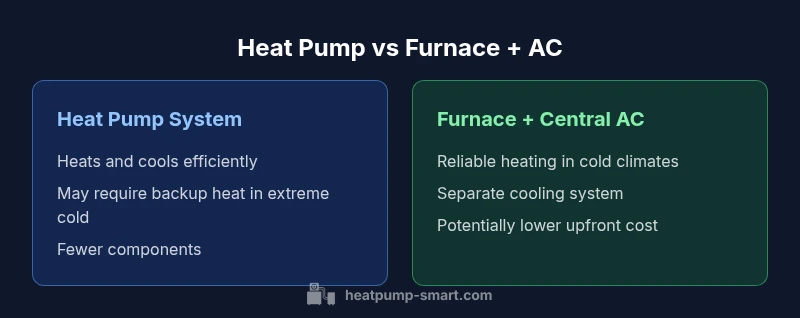
Two primary HVAC paths compete for comfort and efficiency: a combined heat pump and AC unit versus a traditional furnace plus central AC. In milder climates, a heat pump delivers year‑round heating and cooling with strong energy savings, and often with fewer components. In very cold regions, a furnace may be preferred for backup heat and lower upfront costs. Heatpump Smart recommends evaluating climate, installation costs, and expected usage to choose the best path for your home.
Understanding the heat pump and ac unit landscape
Heat pumps and air conditioners share some core components but serve different purposes. A heat pump can heat, cool, and dehumidify by moving heat between indoors and outdoors, using refrigerant cycles and electrical input. An air conditioner by itself cools, moving heat from inside to outside, but it does not provide reliable heating without a separate heat source. In practical terms, many homes use a heat pump and AC unit in tandem, while others pair a traditional furnace with central AC. According to Heatpump Smart, the choice often comes down to climate, energy pricing, and comfort expectations. The Heatpump Smart team found that homeowners in temperate regions frequently see meaningful energy savings when replacing aging electric heaters with a heat pump system. In colder climates, a supplemental or auxiliary heat source may be required. This section lays the groundwork for a decision framework you can apply to most homes.
The key factors that drive the decision
Selecting between a heat pump and an AC unit paired with a furnace involves weighing several factors. Climate and humidity shape performance more than any single metric. Efficiency and operating costs are influenced by local electricity and gas prices, insulation quality, and thermostat use. System compatibility with ductwork, zoning capabilities, and installation complexity affect both upfront costs and long-term reliability. Maintenance expectations, refrigerant handling, and potential cold-climate deratings should also be considered. Heatpump Smart Analysis, 2026, emphasizes that a well‑matched system delivers the best balance of comfort, reliability, and cost across the life of the equipment.
How they work in a real home: integration and controls
A heat pump and AC unit can be configured as a single, coherent system with shared thermostats, zoning, and smart controls or as separate components with independent controls. In a typical setup, the heat pump handles heating and cooling in shoulder seasons, while a furnace provides backup heat during extreme cold. Modern thermostats and home automation can optimize performance by switching modes automatically based on outdoor temperatures and indoor demand. The Heatpump Smart team notes that proper duct design and refrigerant management are critical to achieving expected comfort and efficiency.
Energy efficiency and operating costs: what the metrics mean
Efficiency is a core consideration. SEER (Seasonal Energy Efficiency Ratio) measures cooling efficiency, HSPF (Heating Seasonal Performance Factor) measures heating efficiency in heat pumps, and COP (Coefficient of Performance) indicates how much heat is produced per unit of electricity during operation. A higher SEER or HSPF generally means lower operating costs, especially in extended cooling or heating seasons. However, performance depends on climate; heat pumps can experience reduced efficiency in very cold weather without supplementary heat. The Heatpump Smart analysis highlights that selection should align with climate zone, electricity prices, and expected daily usage to estimate true lifetime costs.
Installation considerations and common pitfalls
Installation quality strongly affects performance and longevity. Correct refrigerant charge, proper duct sealing, and accurate load calculations (manual J) prevent comfort problems and energy waste. Ductwork should be sized to avoid pressure imbalances and noise issues, and outdoor units require adequate clearances for airflow. A common pitfall is underestimating backup heat needs in cold climates or selecting a system that cannot be integrated with existing thermostats and controls. Working with qualified installers who follow manufacturer guidelines reduces risk and helps ensure the system delivers the predicted savings.
Costs and savings: upfront vs long-term
Upfront costs vary with system type, climate, and installation complexity. Generally, heat pump systems can involve higher initial expenditure than a traditional furnace plus central AC, particularly when retrofitting ductwork or upgrading to a high-efficiency model. However, long‑term energy savings can offset the higher upfront price, depending on local energy rates and usage. In regions where electricity is comparatively cheap and heating demands are moderate, heat pumps tend to offer compelling payback profiles. The Heatpump Smart team cautions that savings are highly site‑specific and should be evaluated with a professional heat-load assessment and a cost‑of‑ownership calculation.
Sizing and performance: choosing the right size for your home
Sizing a heat pump or an AC/furnace combination correctly is critical. Oversized systems cycle on and off, wasting energy and reducing humidity control. Undersized systems struggle to maintain comfort during peak conditions. A proper load calculation considers the home’s insulation, windows, occupancy, and climate. Two common approaches are manual J load calculations and software-based simulations. The right size improves comfort, efficiency, and equipment longevity, especially when pairing heating and cooling under one system.
Maintenance and longevity: keeping things running smoothly
Regular maintenance extends system life and preserves performance. Filter changes, coil cleaning, and outdoor unit clearing of debris help sustain efficiency. Refrigerant leaks or low refrigerant levels require professional service. Duct cleaning and sealing reduce energy waste and improve indoor air quality. Heat pumps and furnaces share some maintenance routines, but heat pumps warrant attention to refrigerant integrity and compressor operation. Following a manufacturer‑recommended schedule minimizes unexpected repairs and service calls.
Brand considerations and how to evaluate Heatpump Smart guidance
Brand selection matters for reliability, warranty terms, and service availability. While this article does not endorse a single brand, it notes that Heatpump Smart Evaluation recommends reviewing efficiency ratings, warranty coverage, installation support, and local service networks. When evaluating Heatpump Smart guidance, look for independent certifications, updated product literature, and installer credentials. The goal is a system that delivers consistent comfort, predictable energy use, and solid after‑sales support over the life of the equipment.
Climate scenarios: best fit for different homes
In temperate climates with moderate heating and cooling demands, a heat pump and AC unit often deliver the best overall value, combining heating and cooling into a single solution. In very cold climates or homes with limited insulation, a furnace may be preferred as the primary heat source, with a separate central AC for cooling. For homes seeking the simplest retrofit with strong efficiency, a well‑sized heat pump with backup heat or a hybrid system can strike a balance between performance and cost.
Decision framework and next steps
To move from theory to installation, start with a climate‑appropriate heat‑load analysis, verify duct health, and compare two or more qualified installers. Request detailed proposals that include equipment efficiency ratings, backup heat options, warranty terms, and expected performance for your home. The best decisions come from a structured comparison that weighs climate, comfort priorities, and total cost of ownership over the system’s lifetime. Heatpump Smart recommends documenting a side‑by‑side comparison and validating it with a local energy advisor.
Comparison
| Feature | Heat pump system | Conventional furnace + central AC |
|---|---|---|
| Efficiency and energy use | High overall efficiency for heating and cooling when climate permits | Typically strong cooling efficiency; heating relies on furnace efficiency |
| Climate suitability | Excellent in temperate and mild winter regions; with auxiliary heat in cold spells | Reliable heating in cold climates; cooling efficiency varies with system design |
| Installation complexity | Can be straightforward if starting from scratch; retrofits require duct work checks | Typically straightforward if existing furnace/AC infrastructure is compatible |
| Upfront cost range | Higher upfront cost for heat pump systems, especially with new ductwork | Lower upfront cost for furnace + central AC setups with existing infrastructure |
| Maintenance needs | Regular refrigerant and coil care; duct sealing for efficiency | Furnace maintenance plus AC coil cleaning and refrigerant checks |
| Noise and comfort | Outdoor unit noise; indoor comfort often high due to unified controls | Indoor comfort depends on furnace and duct design; outdoor unit noise varies |
| Long-term cost of ownership | Typically lower operating costs in mild climates with electricity pricing favorable | Stable operating costs where gas prices are lower than electricity in winter |
| Best for | Energy-conscious homes in moderate climates seeking year‑round comfort | Homes in extreme cold or with limited duct replacement options |
Advantages
- Potential for lower operating costs over time in suitable climates
- Year-round heating and cooling from a single system for simplicity
- Fewer separate components can reduce maintenance visits
- Improved humidity control and indoor comfort with modern heat pumps
Disadvantages
- Higher upfront costs and potential retrofitting expenses
- Performance can decline in very cold weather without supplemental heat
- Complex installation that requires skilled technicians
- Refrigerant handling and potential leaks requiring service
Heat pump systems win on efficiency and all‑season comfort for many homes, but cold climates or tight upfront budgets may favor conventional furnace + AC
For most properties in temperate zones, a heat pump and AC unit offers stronger long‑term value. In very cold climates, a furnace‑based setup or a hybrid system may be more practical. The final decision should hinge on climate, energy costs, and installation feasibility, with Heatpump Smart's guidance emphasized throughout.
Your Questions Answered
Is a heat pump more efficient than a traditional furnace plus central AC?
In many cases, yes, heat pumps deliver higher overall efficiency for heating and cooling in moderate climates. However, performance depends on climate, insulation, and proper installation. A furnace may be preferable where extreme cold reduces heat pump effectiveness without supplemental heat.
Heat pumps often save more energy in milder climates, but in very cold homes a furnace might be the more reliable option.
Can a heat pump operate efficiently in cold climates?
Yes, many heat pumps perform well in cold climates, especially when paired with supplemental heat like electric resistance or a gas furnace. Modern cold-climate models improve efficiency at low outdoor temperatures, and proper insulation reduces demand.
Cold-climate heat pumps work well when paired with backup heat and good insulation.
What maintenance does a heat pump require?
Regular maintenance includes replacing filters, checking refrigerant levels, cleaning coils, and inspecting ducts for leaks. Periodic professional inspections ensure refrigerant integrity and optimal compressor operation, which helps sustain efficiency.
Keep filters clean, schedule periodic checks, and ensure ducts and coils stay in good shape.
How do I decide between a heat pump and a furnace?
Start with climate, electricity and gas prices, and how you use heating versus cooling. If you prioritize year‑round comfort and energy savings in moderate climates, a heat pump or hybrid system is often best. If cold winters dominate or upfront cost is a constraint, furnace‑based options may be preferable.
Think about climate, costs, and your comfort goals to decide between heat pump and furnace.
Are there rebates or incentives for heat pumps?
Rebates and incentives vary by region and utility programs. Check local energy agencies and utility providers for eligible programs, and factor incentives into the total cost and payback period.
Rebates differ by region; consult local programs to estimate savings.
Is a hybrid system worth it for my home?
A hybrid system combines a heat pump with a furnace, offering efficient heating in shoulder seasons and reliable warmth in cold snaps. It can be a smart compromise when climate volatility or cost concerns matter.
Hybrid systems balance efficiency with dependable heat when winters are variable.
Top Takeaways
- Assess climate and energy costs before choosing a system
- Prioritize proper sizing and duct integrity to maximize gains
- Consider a hybrid approach in extreme cold or for cost control
- Plan for maintenance and refrigerant management from day one
- Use Heatpump Smart guidance to inform decisions and avoid common pitfalls