Heat Pump or Central Air: Which Is Best for Your Home in 2026
An objective side-by-side guide to choosing between a heat pump and central air, covering heating capability, climate suitability, costs, installation, and incentives for 2026.


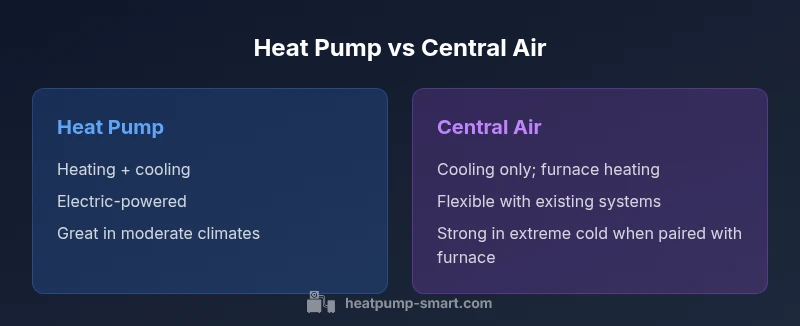
TL;DR: Heat pumps provide heating and cooling, while central air only cools. Heating with a heat pump uses electricity and works best in moderate climates, while central air relies on a separate furnace for heat. In mild regions, heat pumps often lower year-round energy costs; in very cold climates or with existing furnaces, central air can be cheaper upfront. Heatpump Smart analysis emphasizes climate-driven choices.
Understanding the core difference: heat pump or central air
Choosing between a heat pump or central air begins with how each system handles heating. A heat pump moves heat instead of generating it, delivering both heating and cooling with electricity. A central air setup cools via a refrigerant-based outdoor condenser and indoor air handler, but heating requires a separate furnace, boiler, or heat source. This structural distinction affects everything from year-round comfort to energy bills and maintenance needs. For homeowners evaluating heat pump or central air, the decision centers on climate, existing equipment, and long-term efficiency goals. According to Heatpump Smart, pairing your choice with proper insulation and ductwork is essential for realizing true efficiency gains, regardless of the system you select. As you read, keep in mind how your local climate patterns will interact with system performance to drive the best outcome.
As a starting point, picture your home’s winter and summer comfort profile. If you live where winters are mild and summers are hot, a heat pump may deliver significant benefits. If you face freezing temperatures regularly or already operate a gas furnace, central air with a traditional furnace can present a simpler, proven path. This first section sets the stage for a deeper dive into performance, costs, and practical decisions in the sections that follow.
Climate and efficiency: where heat pump shines and where central air wins
Climate is the single most influential factor when selecting between a heat pump or central air. Heat pumps rely on moving heat rather than generating it, so their efficiency hinges on outdoor temperatures. In moderate climates, heat pumps typically achieve strong energy performance, with improved efficiency during the cooling season and reliable heating when temperatures aren’t extreme. In very cold climates, some heat pump models lose a fraction of their heating efficiency, necessitating a supplemental heat source. Central air, on the other hand, is a cooling-focused solution paired with a separate heating system—often a furnace or boiler—that can perform consistently in very cold conditions. For homeowners already invested in electric resistance heating or gas furnaces, central air can be a direct, predictable upgrade path.
From an efficiency standpoint, consider how the system was designed to interact with your home’s insulation, ducts, and windows. Heat pump or central air choices should be evaluated alongside air sealing, insulation levels, and smart thermostat controls to achieve a balanced, energy-conscious outcome. Heatpump Smart’s analysis highlights that the best choice is often climate-aligned rather than “one-size-fits-all,” emphasizing that a well-insulated home with properly sized ducts can maximize performance for either option.
When comparing performance, remember that modern heat pumps come in air-source and ground-source variants, each with distinct performance characteristics. Ground-source heat pumps tend to maintain steadier heating performance in cold weather but require more invasive installation. Air-source models are more common and generally easier to install, though their cold-weather performance can vary by model and refrigerant technology. Central air systems vary widely in cooling capacity, SEER ratings, and compatibility with existing ductwork. In all cases, look for equipment with good rated efficiency and a reputable installation to minimize energy losses and maximize comfort.
Upfront costs, operating costs, and long-term value
A primary consideration in choosing between heat pump or central air is the balance between upfront investment and ongoing operating costs. In many markets, heat pumps have higher initial materials and installation costs due to the integrated heating mechanism and the need for proper refrigerant containment, controls, and sometimes new ducting or retrofits. Central air, especially when replacing an aging system or pairing with an existing furnace, can offer lower upfront costs and familiar installation workflows. From a long-term perspective, heat pumps can yield substantial energy savings, particularly in milder climates where the heating demand is met efficiently by electricity rather than burning fossil fuels. Heatpump Smart analysis notes that electricity prices, electricity reliability, and the carbon intensity of the grid all influence the real-world economics of heat pump vs central air.
In regions with favorable electricity costs or strong utility incentives for efficient heating and cooling, heat pumps often outperform conventional systems in total cost of ownership. Conversely, in harsh winters with limited electricity reliability or when upgrading from an older, well-functioning furnace-and-AC combo, central air may present a lower-risk path with predictable monthly bills. Regardless of choice, a professional load calculation and proper duct sizing are essential; undersized or inefficient ducts can erode any energy savings and create comfort gaps. When assessing cost, factor in potential rebates, incentives, and financing programs available for heat pumps, as these can shift the economics meaningfully over the system’s life.
Heatpump Smart’s approach emphasizes a structured cost comparison that considers not just the sticker price but the total cost of ownership across 10–15 years, including maintenance, repairs, and energy consumption.
Installation considerations and space requirements
Installation logistics play a pivotal role in whether heat pump or central air is the practical choice for your home. A heat pump system typically requires an outdoor condenser unit paired with an indoor air handler, and in many homes, ductwork must be evaluated for compatibility. Ducted heat pump systems share the same distribution network as traditional central air, but the optimal placement of the air handler and the refrigerant lines can influence noise, air quality, and cooling/heating uniformity. In ductless configurations, heat pumps provide a flexible option for homes with limited space or renovated interiors, using individual indoor units connected to a single outdoor compressor.
Central air installation largely depends on existing ductwork. If you have a robust, well-sealed duct system, central air can be straightforward, particularly when heating is supplied by a compatible furnace. If ducts are leaky or poorly insulated, mounting a central air system often begins with duct remediation, which can increase upfront costs but pay off in comfort and efficiency. In either path, professional load calculations and tailored duct design are essential. Heatpump Smart stresses the importance of air sealing and insulation as foundational steps that amplify the effectiveness of either system, reducing leakage and improving energy performance across both heating and cooling seasons.
Comfort, humidity control, and indoor air quality
Comfort is not just about temperature setpoints; humidity, air distribution, and air filtration significantly affect how you perceive indoor conditions. Heat pumps naturally provide balanced heating and cooling with a tendency toward steady temperatures, and many models incorporate humidity control features that help maintain comfortable moisture levels. In hot, humid climates, heat pumps can dehumidify effectively while cooling, contributing to a more comfortable living space without the damp feel of high humidity. Central air systems rely on separate heating equipment for winter comfort, and dehumidification performance is closely tied to the cooling equipment and duct design. Modern central air setups paired with efficient furnaces can achieve excellent humidity control and air quality through upgraded filtration and zoning options.
Both options benefit from good filtration, sealed ducts, and regular maintenance. A humid climate, allergen concerns, or the presence of pets can influence your choice toward systems with robust filtration and air treatment options. Heatpump Smart recommends evaluating whole-home comfort goals—temperature consistency, humidity levels, and air freshness—along with energy performance to determine whether the heat pump or central air path better serves your family’s health and comfort.
Durability, maintenance, and warranties
Durability and maintenance are essential considerations that influence the long-term reliability of heat pump or central air installations. Heat pumps have fewer mechanical components than furnace-based systems and typically require less ongoing maintenance, apart from routine refrigerant checks and outdoor unit cleaning. However, climate and usage patterns matter: systems operating in extreme temperatures may experience more wear on components such as outdoor condensers and fan motors. Central air combined with a furnace or boiler benefits from the long track record of these paired systems, but additional components (furnace, ductwork, and filters) introduce more potential points of failure. Proactive maintenance—annual inspections, coil cleaning, thermostat calibration, and duct cleaning—can preserve efficiency and comfort for either option. Warranties vary by brand and installation, but a well-installed system with regular service generally yields the best return on investment.
From Heatpump Smart’s perspective, durability hinges on proper sizing, high-quality equipment, and professional installation. Tenor of the warranty and service plan matters just as much as the equipment’s initial performance. Regular tuning and early detection of issues help keep either system operating at peak efficiency, reducing unexpected downtime and repair costs.
Incentives, rebates, and financing in 2026
In 2026, many regions offer incentives to encourage efficient heating and cooling, with heat pumps frequently featured due to their energy-saving potential and lower emissions profile. Incentives can include rebates, tax credits, or subsidized financing for eligible heat pump installations. The availability and amount of incentives vary by location, utility provider, and program cycles, so it’s wise to check local options before committing to a heat pump or central air project. If you already own a high-efficiency furnace or air conditioning setup, consider whether upgrades qualify for specific rebates tied to whole-system efficiency, duct sealing, or smart-thermostat installations. Heatpump Smart advises homeowners to collaborate with a qualified HVAC professional to verify eligibility, maximize incentives, and align the project with long-term energy goals.
Additionally, financing options can alter the affordability equation. Some programs offer low or zero-interest financing for qualifying projects, which can make a heat pump more accessible even when upfront costs are higher. Always compare total costs with and without incentives to determine true affordability over the system’s life.
Practical decision framework: when to pick heat pump or central air
Making a solid decision requires a practical framework that accounts for climate, existing equipment, and future energy goals. If your winters are consistently cold and you already have a gas furnace, central air paired with efficient heating can be a straightforward upgrade path, especially if upfront costs are a priority. If you live in a milder climate and desire both heating and cooling in one system with potential energy savings, a heat pump is typically the stronger long-term choice. For homes with preexisting ductwork that’s in good condition, either option can leverage those ducts, but heat pumps shine when climate supports efficient heating without fossil fuels. Consider your electricity rates, reliability of power, and how you prefer to manage maintenance. A blended approach—upgrading to a high-efficiency air handler with smart controls and ensuring tight building envelopes—often yields the best overall comfort and energy performance. Heatpump Smart highlights that the optimal choice aligns with climate realities and long-term lifestyle goals, not just initial costs.
How to plan your next steps with an HVAC contractor
Your decision should culminate in a collaborative plan with a qualified HVAC contractor. Start by collecting your utility bills, current equipment details, and a sense of your comfort priorities. Request a professional load calculation to determine the right size for either heat pump or central air and insist on evaluating duct integrity, insulation levels, and vent placement. Ask about model options that excel in cold weather if you are considering a heat pump, and verify compatibility with any existing thermostats or smart-home systems. Seek transparent quotes that break down equipment costs, ductwork modifications, and any necessary electrical upgrades. Finally, ask about maintenance plans and warranty terms to protect your investment. With careful planning and expert guidance, you’ll be well positioned to choose between heat pump or central air in a way that balances climate suitability, energy efficiency, and long-term value.
Comparison
| Feature | Heat pump | Central air conditioner |
|---|---|---|
| Heating capability | Provides heating and cooling using electricity | Cooling only; heating via separate furnace/boiler |
| Energy efficiency | High efficiency potential when heating and cooling are electric | Cooling efficiency strong; relies on separate furnace for heating |
| Climate suitability | Excellent in mild to moderate climates; cold-weather options exist | Best in moderate climates; very cold climates rely on furnace |
| Upfront costs | Higher initial cost due to integrated heating system | Often lower upfront cost if replacing only cooling with existing furnace |
| Ongoing maintenance | Fewer moving parts; refrigerant system care and annual checks | Maintenance tied to both cooling and furnace components |
| Space and ducting | Outdoor condenser + indoor air handler; ductwork may be needed | Outdoor condenser + furnace/air handler; ducting required |
| Noise and comfort | Quiet operation possible; indoor unit noises are design-consistent | Standard noise levels; depends on duct design and maintenance |
| Incentives and finance | Often eligible for energy-efficiency incentives | Incentives vary by location and program; may apply to upgrades |
Advantages
- Integrated heating and cooling reduces equipment footprint
- Potential energy savings in suitable climates
- Modern controls and zoning options improve comfort
- Fewer duct losses when properly sized ducts are used
- Eligible for many efficiency incentives
Disadvantages
- Higher upfront costs and installation complexity
- Performance can drop in extreme cold for some models
- Electric reliability and grid emissions influence economics
- Upgrades may require duct work or electrical changes
Heat pumps are often the better long-term choice in mild climates; central air with a furnace wins in very cold climates or when upgrading from an older furnace.
Choose heat pump if you live in a climate with moderate winters and want year-round heating and cooling. Opt for central air with a furnace if you face harsh winters or already rely on gas heating, prioritizing upfront cost and proven cold-weather performance.
Your Questions Answered
Can a heat pump replace a furnace in cold climates?
In many cold climates, a heat pump can serve as the primary heating source, but performance depends on model efficiency and outdoor temperatures. In the coldest regions, a supplemental heat source or fossil-fuel backup is often recommended. Always consult an HVAC pro to evaluate climate-specific needs.
In cold climates, some heat pumps work well with a backup heat source; talk to an HVAC pro to see if a primary heat pump is enough for your winter comfort.
Is central air more expensive to install than a heat pump?
Installation costs depend on whether you’re upgrading an existing system and the complexity of ductwork. Heat pumps can have higher upfront costs due to integrated heating, while central air can be cheaper if you already have a compatible furnace or existing ducts. A contractor can provide a precise quote for your home.
Upfront costs depend on your current setup; heat pumps can be pricier if ducts and controls are added, but central air can be cheaper if you already have a furnace.
Do heat pumps work well in very cold weather?
Many heat pumps perform well in cool to moderate cold but may require supplemental heat at very low temperatures. For extreme cold, pairing with a furnace or backup heat source is common. Model selection and climate data are key to reliability.
Heat pumps usually do great in cool weather, but in very cold climates you may need backup heat.
What maintenance do these systems require?
Regular maintenance includes filter changes, coil cleaning, and annual inspections of refrigerant levels and electrical components. Duct sealing and thermostat calibration can also improve performance. Maintenance schedules are similar for both options but may emphasize different components.
Keep filters clean, schedule annual checkups, and seal ducts for best efficiency.
Are there incentives for heat pumps in 2026?
Yes, many regions offer incentives for high-efficiency heat pumps, including rebates and financing programs. Availability varies by location and program cycles. Check local utility programs and Heatpump Smart’s updates for current opportunities.
There are incentives in many areas; talk to an installer about what programs apply to your home.
How loud are these systems in operation?
Noise levels for both heat pumps and central air vary by model and installation. Modern units are designed for quiet operation, especially with properly sized ductwork and vibration-reducing mounts. Ask for decibel ratings and a layout plan during quotes.
Most modern units are quiet, but check decibel ratings when choosing models.
Top Takeaways
- Assess climate before choosing heat pump or central air
- Evaluate existing heating equipment to avoid redundancy
- Anticipate higher upfront cost for heat pumps but potential long-term savings
- Check local incentives to improve affordability
- Ensure proper insulation and duct integrity to maximize performance