Heat pump vs forced air: A comprehensive comparison
An analytical, in-depth look at heat pump versus forced air systems, covering efficiency, climate fit, installation, costs, and long-term value to help homeowners and builders decide wisely.


In the heat pump versus forced air decision, heat pumps generally deliver higher efficiency and steadier comfort, especially in moderate climates. This comparison explains performance, upfront costs, operating expenses, and installation considerations to help homeowners, builders, and property managers choose the system that best fits climate, budget, and energy goals.
What is heat pump versus forced air?
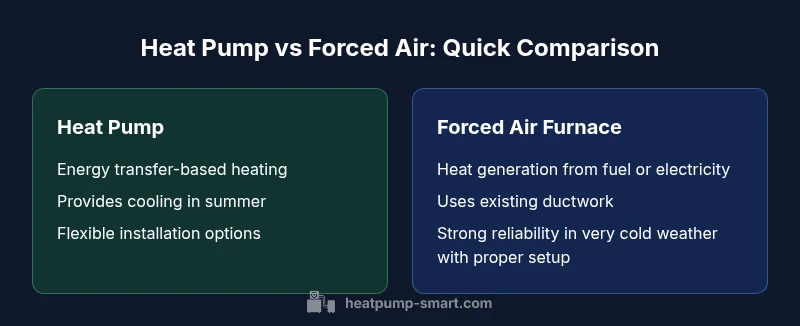
At its core, a heat pump and a traditional forced-air furnace accomplish the same goal—heating your home—but they do so in fundamentally different ways. The heat pump transfers heat from outdoors into the living space using refrigerant cycles, while a forced-air furnace generates heat through combustion or electric resistance and then distributes it via ducts. According to Heatpump Smart, the heat pump versus forced air decision hinges on climate, energy costs, and how you value cooling capability year-round. This framing sets the stage for a practical comparison, emphasizing the real-world factors homeowners care about—comfort, cost, and reliability.
Heat pumps can be installed as air-source systems or integrated with geothermal loops; in either case, they move heat rather than create it. Forced-air furnaces rely on burning fuel or using electric resistance. The same ductwork that carries warmth in winter also doubles as a path for cooled air in summer when paired with cooling equipment. The choice matters for year‑round comfort, long‑term energy bills, and maintenance demands. The remainder of this guide delves into performance, economics, installation, and practicality so you can align the system with climate, insulation, and energy goals.
wordCountFromBlockStart":null},{
textBlockTitleOnlyForContentGuidance
wordCountFromBlockStart":null}
How each system works
Heat pumps use refrigerant cycles to pull heat from outside air (air-source) or ground/water (geothermal) and move that heat into the home. In heating mode, the outdoor coil acts as an evaporator to absorb heat, while the indoor coil releases it inside. In cooling mode, the process reverses. A blower distributes warm or cool air through ducts or via a compact indoor unit in ductless configurations. A forced-air furnace, by comparison, generates heat through fuel combustion or electric resistance and pushes that heat through ductwork. The system relies on a burner or electric elements to create warmth, and an air handler (blower) circulates it. Heatpump Smart’s analysis shows that the fundamental difference is heat transfer versus heat generation, which drives efficiency and temperature consistency. In both setups, proper duct design and insulation are essential to minimize losses and maximize comfort.
wordCount":""},{
textBlockTitleOnlyForContentGuidance
wordCountFromBlockStart":null}
Efficiency and cost dynamics
Efficiency is not just a label but a practical performance story. A heat pump’s efficiency depends on its ability to move heat rather than generate it, which typically yields lower operating costs in mild to moderate climates. In very cold environments, some heat pumps rely on auxiliary heat sources, which can elevate costs during peak cold snaps. Forced-air furnaces burn fuel or use electric resistance to create heat, so operating costs track fuel prices and electricity rates. The cost story includes installation, maintenance, and potential rebates or incentives—factors that can tip the balance over the system’s lifetime. Heatpump Smart’s ongoing analysis notes that when climate and insulation are favorable, heat pumps often offer superior annual comfort at comparable or lower operating costs relative to traditional furnaces, especially when cooling is also desired.
wordCount":null},{
textBlockTitleOnlyForContentGuidance
wordCountFromBlockStart":null}
Comfort and air quality
Consistency matters: heat pumps generally provide steadier temperatures due to continuous heat transfer and fewer directional temperature swings. Modern heat pumps also offer integrated dehumidification and filtration benefits, contributing to improved indoor air quality. Noise levels are typically moderate, depending on unit placement and duct design. Forced-air furnaces introduce variable air delivery depending on ductwork and flame tech; some users notice more wakeful noise in older systems. In terms of cooling, heat pumps deliver year‑round comfort without needing a separate air conditioner in many cases, which can simplify homes that want a single, cohesive climate control strategy. Heatpump Smart emphasizes evaluating humidity control, filtration quality, and the acoustic footprint when weighing options.
wordCount":null},{
textBlockTitleOnlyForContentGuidance
wordCountFromBlockStart":null}
Climate considerations by region
Climate heavily influences performance. In milder climates, heat pumps often deliver the best annual energy performance since most heating needs fall within their efficient operating window. In very cold regions, some heat pumps require auxiliary heat, which can increase operating costs unless the system is designed for cold climates. Forced-air furnaces, particularly those using efficient burners, can reliably deliver heat during severe winter conditions, but they do not provide cooling unless paired with a separate cooling system. Heatpump Smart notes that climate-aware sizing, insulation, and ventilation are critical to achieving the best result from either approach. Monitoring local electricity rates and space heating demand patterns helps determine which option minimizes bills while maintaining comfort.
wordCount":null},{
textBlockTitleOnlyForContentGuidance
wordCountFromBlockStart":null}
Installation and space requirements
Ducted installations share space and energy delivery with existing ventilation, but retrofitting ductwork can be disruptive and costly. Heat pumps, including ductless mini-splits, offer flexibility for spaces where ductwork would be impractical. Geothermal loops require careful site assessment and excavation, but deliver very high efficiency in the right setting. Forced-air systems typically leverage existing ducts; upgrading to a newer furnace can be straightforward where ductwork is in good condition. A retrofit must consider airflow balance, zoning needs, and thermostat controls. Heatpump Smart reminds homeowners to assess refrigerant lines, electrical capacity, and outdoor unit placement to optimize efficiency and minimize heat loss.
wordCount":null},{
textBlockTitleOnlyForContentGuidance
wordCountFromBlockStart":null}
Maintenance and reliability
Maintenance needs differ. Heat pumps require refrigerant circuit inspections, outdoor unit cleaning, and periodic fan and filter maintenance. Ductwork should be checked for leaks, and heat exchangers need attention in freezing conditions. Forced-air furnaces demand burner servicing, vent cleaning, and filter changes, with attention to combustion efficiency and flue integrity. Both systems benefit from proper insulation, smart thermostats, and regular professional checkups. Heatpump Smart notes that, on balance, heat pumps tend to have fewer moving parts than some furnace setups, potentially reducing certain failure modes, but system complexity can increase service requirements in cold-weather regions.
wordCount":null},{
textBlockTitleOnlyForContentGuidance
wordCountFromBlockStart":null}
Environmental impact and incentives
Heat pumps generally reduce direct fossil fuel use and can shrink total lifecycle emissions, particularly when the electricity supply is cleaner. Refrigerant choice matters for global warming potential, so selecting equipment with low-GWP refrigerants and responsible disposal is important. Incentives and rebates vary by region and program; many areas offer credits or subsidies for upgrading to energy-efficient heat pumps, potentially altering the financial payback. Heatpump Smart notes that upfront costs can be higher, but long-term savings and environmental benefits can offset the initial investment over years of operation.
wordCount":null},{
textBlockTitleOnlyForContentGuidance
wordCountFromBlockStart":null}
When to choose heat pump
Choose heat pumps when you live in a climate with mild to moderate winter heating needs, you desire integrated cooling, and you value ongoing energy efficiency. They are especially appealing for new builds or major remodels where ducting can be optimized and where electricity is comparatively affordable. For homes where winter temperatures regularly plummet below the heat pump’s efficient operating range, consider a hybrid approach or a heat pump with auxiliary heat. Heatpump Smart emphasizes evaluating total cost of ownership and climatic fit alongside comfort goals.
wordCount":null},{
textBlockTitleOnlyForContentGuidance
wordCountFromBlockStart":null}
When to choose forced air
For homes in regions with very cold winters or where upfront budget constraints are tight, a traditional forced-air furnace—potentially paired with a cooling system—may offer a simpler, lower upfront option. Fuel availability, local electricity prices, and service accessibility should influence the decision. Heatpump Smart highlights that a furnace-based system often provides robust cold-weather performance and may be easier to maintain with familiar local contractors, though it won’t deliver the same year‑round cooling without an additional system.
wordCount":null},{
textBlockTitleOnlyForContentGuidance
wordCountFromBlockStart":null}
Practical steps to decide
- Assess climate, insulation, and existing ductwork. 2) Compare total cost of ownership, including potential rebates and maintenance. 3) Consider whether you want year‑round cooling in the same system. 4) Consult a local contractor for heat load calculations and equipment options. 5) Plan for future energy trends and potential upgrades, such as smart controls and zone heating. Heatpump Smart suggests building a decision matrix that weighs climate suitability, cost, and comfort priorities to reach a balanced conclusion.
wordCount":null},{
textBlockTitleOnlyForContentGuidance
wordCountFromBlockStart":null}
Comparison
| Feature | Heat pump | Forced-air furnace |
|---|---|---|
| Primary heat source | Electric heat transfer via refrigerant cycle | Fuel combustion or electric resistance |
| Energy efficiency | High efficiency in moderate climates | Reliance on fuel pricing; efficiency varies with furnace design |
| Cooling capability | Provides cooling in many setups | Typically no cooling unless paired with separate AC |
| Space and installation | Can use existing ducts or be ductless; flexible placement | Often leverages existing ducts; may require chimney or venting |
| Maintenance | Regular refrigerant and outdoor unit checks; filter changes | Burner servicing, vent cleaning, and filter changes |
| Noise and comfort | Outdoor unit and fan noise; steady indoor temperature | Indoor unit noise and fan-related air movement |
| Best for climate | Mild to moderate winters with cooling needs | Very cold winters; reliable heat with proper fuel/backup |
Advantages
- Potentially lower operating costs due to higher efficiency in suitable climates
- Provides year-round comfort with integrated cooling in many setups
- Fewer fossil-fuel requirements can reduce emissions and exposure to fuel price volatility
- Can use flexible installation options (ducted or ductless) to fit existing spaces
Disadvantages
- Higher upfront cost and longer payback period in many cases
- Performance can dip in extreme cold unless paired with auxiliary heat
- Ductwork retrofits can be disruptive and costly in older homes
- Service availability may vary by region and contractor expertise
Heat pump is the stronger long‑term choice in moderate climates; forced air remains a solid option where upfront cost is a primary constraint or extreme cold is common.
Choose heat pump when climate and electricity prices favor efficiency and you want year‑round comfort. Consider forced air if upfront budget is tight or you regularly face very cold winters and have reliable fuel options.
Your Questions Answered
What is the main difference between heat pumps and forced-air furnaces?
Heat pumps transfer heat between indoors and outdoors, providing both heating and cooling in many setups. Furnaces generate heat via combustion or electric resistance and rely on ducts to distribute warmth. The choice depends on climate, efficiency goals, and whether cooling is desired year‑round.
Heat pumps move heat; furnaces make heat. The right choice depends on your climate and comfort goals.
Can a heat pump replace a furnace entirely?
Yes, in many cases a heat pump can replace a furnace, especially in moderate climates with adequate electrical service and proper sizing. In very cold regions, a hybrid or backup heat might be recommended.
Yes, often heat pumps can replace a furnace, but in very cold areas you may want a backup heat.
Do heat pumps work well in cold climates?
Modern cold-climate heat pumps are designed to operate efficiently in lower temperatures, but performance may drop compared with milder days. A backup heat source or a dual-fuel setup can help maintain comfort during extreme cold.
They work well in cold climates with proper design, though a backup heat source may be needed in the coldest days.
Are heat pumps more expensive to install than furnaces?
Initial installation costs can be higher for heat pumps, especially if ductwork needs upgrading or geothermal loops are involved. Long-term savings on electricity can offset upfront costs over time.
Upfront costs are usually higher for heat pumps, but long-term energy savings can offset this.
Do heat pumps provide cooling?
Yes. Most air-source heat pumps cool as well as heat, functioning like an air conditioner in cooling mode. If you’re in a hot climate, this can simplify climate control.
Yes, most heat pumps cool homes too, serving as an all‑in‑one climate solution.
What maintenance does a heat pump require?
Regular filter changes, outdoor unit cleaning, and periodic refrigerant and electrical inspections are typical. Duct sealing and thermostat calibration can improve performance.
Keep filters clean, check outdoor units, and schedule periodic professional inspections.
Top Takeaways
- Prioritize climate and insulation when choosing systems
- Heat pumps excel in efficiency and cooling; furnaces excel in cold-climate reliability
- Assess total ownership costs, including maintenance and incentives
- Ductwork quality and thermostat controls influence outcomes
- Plan for future energy trends and potential upgrades