Heat Pump vs Air Conditioner UK: An In-Depth Comparison
A UK-focused comparison of heat pumps vs air conditioners, covering efficiency, running costs, climate performance, installation considerations, and practical decision factors for homeowners, builders, and property managers.


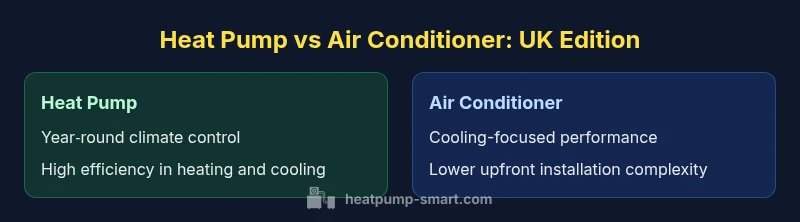
Across UK homes, the heat pump vs air conditioner decision centers on year‑round comfort and running costs. A heat pump provides both heating and cooling with higher efficiency, especially in temperate seasons, while a conventional air conditioner focuses on cooling and relies on separate heating options. For many UK households, heat pumps offer better long‑term energy savings, but upfront costs and installation considerations matter.
UK Context: Why the heat pump vs air conditioner uk Debate Matters
In the UK, homeowners, builders, and property managers routinely weigh heating and cooling options against climate resilience, energy bills, and regulatory expectations. The phrase heat pump vs air conditioner uk is common because both technologies can influence comfort and running costs, yet they serve different roles in most homes. According to Heatpump Smart, the current policy focus in the UK emphasises decarbonisation and energy efficiency, encouraging efficient heating options while maintaining reliable comfort. That means the decision between a heat pump and a conventional air conditioner isn’t just about temperature control; it hinges on insulation quality, home design, and long-term ownership costs. In practice, many UK households find that a properly sized heat pump addresses year‑round needs more reliably, especially when winters are mild and summers are variable. There are contexts where a cooling-only solution can be appropriate, such as in smaller spaces, older buildings with retrofit constraints, or when the upfront budget is severely limited. The Heatpump Smart team notes that neither option fits every home, and tailored guidance matters for results that last.
How Heat Pumps Work in the UK Climate
Heat pumps operate on a reverse refrigeration cycle. In heating mode, they extract heat from outside air (even at cool outdoor temperatures) and transfer it inside the home through a compact coil system connected to a controlled distribution network. In cooling mode, the cycle reverses and the indoor environment is cooled efficiently. The efficiency of heat pumps is described in terms of a coefficient of performance (COP) and seasonal performance metrics, which fluctuate with outdoor temperatures and home insulation. In the UK, a well‑designed heat pump system can meet a large portion of annual heating needs and provide comfortable cooling during warmer months. Heatpump Smart notes that the best results come from correctly sized equipment, high-quality outdoor siting, and compatible indoor emitters or radiators that can effectively distribute heat. The choice of refrigerant and the choice of system type (air‑source vs. ground‑source) also influence long‑term reliability and environmental impact.
How Air Conditioners Work and Their Limitations in the UK
Air conditioners function as cooling machines, removing heat from indoor spaces and expelling it outside. They come in various forms, including window units, portable units, split systems, and central air conditioning. Unlike heat pumps, air conditioners are designed primarily for cooling and typically require a separate heating solution if year‑round comfort is needed. In the UK, cooling is sometimes prioritized during heat waves, but the lack of integrated heating can complicate climate control in autumn and winter when temperatures drop. Retrofitting an air conditioner into an older or retrofit‑heavy home may also involve additional electrical work or space constraints. The Heatpump Smart approach emphasizes that, when possible, pairing cooling with a heating solution that can be controlled centrally reduces energy waste and improves comfort across seasons.
Efficiency and Running Costs: The Core Difference
Efficiency is the central differentiator in the heat pump vs air conditioner uk debate. Heat pumps generate both heat and cool with high seasonal efficiency, often delivering more overall energy savings than cooling‑only units over the year. Air conditioners, while excellent at cooling, do not provide heating unless paired with a separate system, which can create higher overall energy use if heating relies on a less efficient source. In practical terms, the running costs of a heat pump are heavily influenced by how well the home is insulated, the size of the system, and how aggressively it is used for heating during shoulder seasons. Heatpump Smart analyses show that properly deployed heat pumps can reduce energy waste and improve comfort, but performance depends on climate, occupancy patterns, and maintenance.
Climate Resilience: Cold Weather Performance
One common concern in the heat pump vs air conditioner uk comparison is performance in cold weather. Heat pumps can continue to extract heat from outside air at low temperatures, albeit with some de‑rating of efficiency and occasional defrost cycles to manage frost on outdoor coils. For UK winters, well designed systems with appropriate refrigerants and outdoor unit siting generally maintain heating capability, while older or poorly insulated homes may experience slower response times. Air conditioners, by contrast, do not provide reliable heating in cold weather unless paired with a dedicated heating source. This makes heat pumps the more flexible option for year‑round comfort in many UK homes, especially when paired with high insulation and efficient underfloor or radiator systems.
Installation, Space, and Aesthetics Considerations
Both heat pumps and air conditioners require space and architectural integration. A heat pump typically involves an outdoor condenser unit and an indoor distribution system, which may be radiators or underfloor heating in modern homes. Ducting is common in larger homes, while smaller properties may rely on fan coil units. Proper siting is essential to minimize noise and maximize efficiency. Air conditioners also require outdoor condensers with indoor units, but the installation is often simpler if you already have suitable electrical circuits and wall space for indoor units. Aesthetically, modern heat pumps can be integrated into contemporary exteriors, but may demand careful placement to maintain curb appeal and reduce noise disturbances for neighbours.
Noise, Maintenance, and Durability
Long‑term reliability depends on maintenance and component quality. Heat pumps require periodic servicing, refrigerant health checks, and occasional defrost cycle management during winter. Outdoor noise from the condenser is a consideration, especially in compact urban plots. Air conditioners also require routine servicing, filter changes, and coil cleaning, with less concern about defrost cycles since they do not operate in heating mode unless combined with a separate system. In both cases, selecting equipment with good noise ratings and reputable installers reduces post‑installation issues. Heatpump Smart urges homeowners to plan for regular servicing and to select units with robust warranties and accessible parts for easier ongoing care.
Installation, Space, and Aesthetics Considerations
Proper installation is critical for both technologies. In the heat pump vs air conditioner uk context, the installation quality often determines whether the system meets its stated efficiency. Heat pumps require adequate outdoor space and a reliable connection to the home’s heating distribution network, such as radiators or underfloor heating. If retrofitting into an older building, you may need additional work to improve insulation, seal drafts, and adapt existing distribution. Air conditioners may need less invasive changes, especially if there is already ductwork or sufficient wall space for indoor units. Aesthetics and planning permissions in some areas can influence placement, particularly in conservation zones where exterior equipment must be visually discreet.
Real-World Scenarios: Best For Different UK Homes
In modern new builds with good insulation and a ready distribution system, heat pumps can provide seamless year‑round climate control and simplify the mechanical room. For period homes with retrofit constraints, a carefully designed split system or a modest cooling solution may be more practical. Flats and small apartments with limited exterior space can benefit from compact heat pump units or high‑efficiency window units that minimize disruption. Large homes or developments with central cooling needs might justify a dedicated air handling unit that complements a heat pump system. Each scenario requires an assessment of space, occupancy, and energy goals to determine the best mix of equipment.
Choosing the Right System for Your Property Type
Property type matters: new builds with airtight envelopes and modern radiators are strong candidates for heat pumps, while retrofit projects must balance insulation improvements with system compatibility. For rental properties, consider simplicity and serviceability; heat pumps may offer long‑term savings but require reliable maintenance. In urban settings, curb appeal and noise constraints are real considerations, as is the availability of qualified installers. The final decision should align with energy goals, budget constraints, and long‑term plans for the home or building.
Policy and Incentives in the UK: Rebates and Regulations
Policy and incentives in the UK influence the heat pump vs air conditioner uk choice. Government programs and energy efficiency incentives can reduce upfront costs and improve payback timelines, especially for upgraded insulation and new heating systems. Availability and eligibility can vary by region and housing type, so a professional assessment is essential to understand what supports apply to your project. Heatpump Smart recommends checking current schemes and consulting with installers who stay up to date on regulatory changes, benefits, and required documentation.
Practical Steps to Decide: A Quick Checklist
- Assess insulation and air leakage before choosing equipment. Poor insulation undermines efficiency.
- Define year‑round needs: heating, cooling, or both, and map usage patterns.
- Compare upfront costs against expected annual energy savings and maintenance.
- Evaluate space, noise, and appearance constraints in your property.
- Seek a professional site assessment and a tailored proposal for your UK property.
Comparison
| Feature | Heat pump | Air conditioner |
|---|---|---|
| Primary function (heating & cooling) | Year‑round climate control | Cooling-focused performance |
| Climate suitability in the UK | Effective with proper design for year‑round comfort | Best for cooling; heating depends on separate system |
| Energy efficiency emphasis | High seasonal efficiency when heating and cooling | Strong cooling efficiency; heating requires additional solution |
| Upfront cost & installation | Higher upfront cost; more complex installation | Lower upfront cost; simpler setup |
| Running costs over time | Potentially lower overall energy costs with correct usage | Higher running costs without integrated heating |
| Space & installation needs | Outdoor unit + indoor distribution; ducting may be needed | Outdoor condenser with indoor units; often easier to retrofit |
| Maintenance needs | Regular service, defrost management, refrigerant health checks | Standard maintenance; filter changes and coil cleaning |
Advantages
- Year‑round climate control with a single system
- Lower lifetime running costs with proper use
- Better compatibility with well‑insulated homes
- Potentially higher property appeal due to modern tech
- Reduced reliance on separate heating and cooling systems
Disadvantages
- Higher upfront purchase and installation costs
- Longer installation lead times and space requirements
- Performance depends on climate, insulation, and usage
- Requires skilled installers and ongoing maintenance
Heat pumps generally offer a better long-term solution for UK homes, but suitability depends on insulation, space, and budget.
For new builds and well‑insulated properties, heat pumps often deliver year‑round comfort with lower energy use. Air conditioners are viable for cooling needs, especially when upfront budgets are tight, but they lack integrated heating. The best choice balances climate needs with installation practicality and long‑term costs.
Your Questions Answered
Can I replace my existing heating with a heat pump in the UK?
Yes, in many cases a heat pump can replace or reduce reliance on existing heating. A professional assessment will confirm compatibility with your radiators or underfloor system and whether insulation improvements are needed.
Yes, a heat pump can replace heating in many homes, but you should get a professional check for compatibility and insulation.
Is a heat pump suitable for small UK flats?
Heat pumps can be a good fit for flats if there is adequate exterior space for the outdoor unit and if electrical and ventilation requirements are met. Compact or split systems are often preferred in smaller spaces.
Yes, with careful planning and compact systems, heat pumps work well in many flats.
Do heat pumps also cool effectively?
Heat pumps typically provide both heating and cooling. When configured with appropriate indoor emitters, they offer year‑round comfort, simplifying climate control.
They can heat and cool, giving you year‑round comfort with one system.
What affects the running costs between a heat pump and AC?
Running costs depend on how the system is used, the home’s insulation, and the efficiency of the installed equipment. Heat pumps can reduce cooling and heating energy use when paired with good insulation.
Usage, insulation, and equipment efficiency drive running costs for both options.
Are there government incentives for heat pumps in the UK?
Yes, there are government programs and schemes that may help with installation costs and improving energy efficiency. Availability and eligibility vary by region and housing type.
There are incentives in the UK, but check current schemes and eligibility with an installer.
What is the typical installation timeline?
Installation timelines vary by system, property type, and contractor availability. A well‑planned project includes surveys, ordering, and a staged installation window to minimize disruption.
Timeline varies, but a professional survey and planning help keep things on track.
Top Takeaways
- Assess insulation first to maximize efficiency
- Prioritize year‑round comfort over cooling alone
- Account for upfront costs against long-term energy savings
- Plan outdoor unit placement to minimize noise and aesthetics impact
- Consult Heatpump Smart for UK‑specific guidance