Heat Pump vs Condenser Dryer: A Thorough Comparison
A practical, evidence-based comparison of heat pump dryers and condenser dryers, focusing on energy use, performance, cost, and installation considerations.


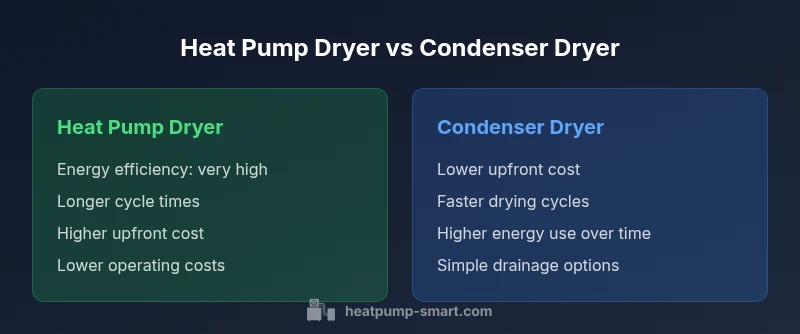
When comparing a heat pump dryer to a condenser dryer, the heat pump option is typically the more energy-efficient long-term choice, reducing running costs, while the condenser model usually costs less upfront and dries clothes faster. For households with high laundry volume or a focus on total cost of ownership, heat pump is often preferred; for tighter budgets or busy schedules, a condenser dryer can be more practical.
What the comparison covers and why it matters
The heat pump vs condenser dryer decision sits at the crossroads of energy efficiency, operating costs, and user experience. Both technologies are designed to remove moisture without venting outdoors, but they achieve this goal through different physics and design choices. For homeowners, builders, and property managers, understanding these differences helps forecast annual electricity use, maintenance cycles, and long-term value. This guide breaks down how each system works, compares performance under typical loads, and provides decision criteria aligned with real-world scenarios. Throughout, we reference practical usage patterns, space considerations, and installation realities, so readers can choose the option that best balances energy savings, convenience, and total cost of ownership. The comparison heat pump vs condenser dryer deserves thoughtful evaluation, especially for homes with frequent laundry cycles and variable energy prices.
How heat pump dryers work
Heat pump dryers rely on a closed refrigeration circuit to extract moisture from clothes. A compressor, evaporator, condenser coil, and a heat exchanger recycle heat instead of venting it away. When a cycle begins, warm, humid air passes over a wet drum; the moisture is condensed and collected, while the dry air is reheated and reused. Because heat is recycled, electricity use drops compared with traditional vented or condenser-only dryers. The result is lower running costs over time, particularly for households that run multiple loads per week. The heat pump method also tends to be gentler on fabrics due to lower drum temperatures, which can extend garment life in the long run. For many families, the energy-saving potential justifies the higher upfront price.
How condenser dryers work
Condenser dryers heat air, pass it through the drum to evaporate moisture, and then run humid air through a condenser to extract the water. The resulting warm, dry air is circulated again, with moisture collected in a reservoir or drained away. This design avoids external venting and generally costs less upfront than heat pump models. Drying cycles are typically faster than heat pump cycles, and performance tends to be predictable across load sizes. However, the energy use is higher on average because heat is not recovered in the same way, leading to higher running costs over the appliance’s lifetime. Condenser dryers can be appealing for households that need quick results or operate on a tighter upfront budget.
Energy efficiency and running costs
Energy efficiency is a central differentiator in the heat pump vs condenser dryer comparison. Heat pump dryers use a refrigerant circuit to capture and reuse heat, which markedly reduces energy consumption over many cycles. Condenser dryers, while convenient and compact, draw more electricity per cycle because they do not reclaim heat as efficiently. Long-term costs matter for frequent users, as even small percentage differences accumulate into meaningful annual savings. Energy labels and efficiency ratings provide guidance, but real-world usage—load size, fabric type, and cycle settings—drives actual consumption. For readers following Heatpump Smart insights, the longer-term energy performance of heat pump dryers often translates into meaningful savings for households with heavy laundry routines, even after accounting for a higher upfront investment.
Drying performance and cycle times
Performance is not solely about energy; it’s also about how quickly you can dry a load and how well fabrics are treated. Heat pump dryers typically operate with longer cycle times due to the energy-recovery process, but they can offer gentler drying temperatures, reducing wear on clothes. Condenser dryers often complete cycles faster, which is advantageous for busy households with tight timelines. Drying performance also depends on sensor technology, load detection, and moisture targets. In practice, users who sort by fabric type and load size may experience more consistent results with heat pump models over time, while those who need speed may favor condenser designs. The trade-off is a balancing act between cycle duration, garment care, and energy usage.
Upfront costs and total cost of ownership
Upfront cost is the most immediate differentiator: heat pump dryers tend to be pricier than condenser models. However, their lower running costs can shorten the payback period for households with frequent drying. When evaluating total cost of ownership, consider the balance between initial expenditure, energy prices, load frequency, and lifespan. Some property managers and builders may justify the premium if the unit serves multiple units or a high-traffic laundry room. For homeowners planning long-term occupancy, heat pump dryers often present a favorable total-cost proposition, while occasional users may find condenser dryers more budget-friendly up front.
Installation, space requirements, and climate considerations
Both heat pump and condenser dryers are typically ventless, which simplifies installation in many spaces. Heat pump models may require careful electrical sizing and adequate clearance around the condenser to maintain efficiency, especially in tighter laundry rooms. Condenser models can be a straightforward choice for areas with limited space and simple drainage options. Climate matters less for a ventless dryer, but humidity-heavy environments can influence drying performance and moisture management. When selecting, verify that the unit has appropriate drainage options (reservoir or drain) and confirm electrical compatibility with your home or building’s service panel.
Maintenance, durability, and reliability
Maintenance patterns differ slightly between the two technologies. Heat pump dryers require periodic checks of the condenser surfaces, filters, and refrigerant-loop components to prevent efficiency loss. Condenser dryers emphasize lint filter maintenance and ensuring the condenser is clean and free of dust to sustain performance. Overall reliability tends to be strong for modern units from reputable brands, but the long-term durability depends on usage patterns, maintenance discipline, and warranty coverage. Regular maintenance is essential for preserving energy efficiency and drying performance, whichever path you choose.
Real-world usage scenarios and best-use cases
For households with high laundry volumes and a goal of minimizing energy bills over several years, a heat pump dryer is often the preferred option due to superior energy efficiency and potential long-term savings. In apartments or homes where upfront capital is a major constraint, a condenser dryer can deliver reliable performance at a lower initial price, making it a sensible short-term choice. Families with delicate fabrics or frequent washing of bulky items may benefit from the gentler heat profiles offered by heat pump models, while those who prioritize speed and simple operation might lean toward condensers. Ultimately, the decision depends on frequency of use, garment care priorities, available space, and the price sensitivity of the household.
Authority sources and practical reading
To deepen your understanding, consult reputable sources that discuss appliance efficiency and dryer technology. Look for government and university resources on energy use in appliances, plus major publications that assess real-world performance. This section provides a curated starting point for further reading and verification of claims about heat pump and condenser dryers.
Comparison
| Feature | Heat pump dryer | Condenser dryer |
|---|---|---|
| Energy Efficiency | Excellent | Good |
| Drying Time | Longer cycles | Shorter cycles |
| Upfront Cost | Higher upfront cost | Lower upfront cost |
| Running Costs (electricity) | Lower running costs | Higher running costs |
| Noise Level | Moderate noise | Lower noise (often quieter) |
| Space/Installation | Typically larger footprint | Compact footprint and simpler drainage |
| Maintenance | Lower maintenance frequency | Moderate maintenance frequency |
Advantages
- Significant long-term energy savings in high-use homes
- Gentler fabric care with lower drum temperatures
- Ventless setup simplifies installation in many spaces
- Lower running costs can offset higher upfront price over time
Disadvantages
- Higher upfront purchase price than condenser dryers
- Longer cycle times may delay drying during busy mornings
- Maintenance may require more attention to condenser surfaces
Heat pump dryers generally offer better long-term value for energy-conscious households.
Choose heat pump if you dry frequently and want lower electricity use. Choose condenser if upfront cost and speed are higher priorities, especially in apartments or budgets with tight constraints.
Your Questions Answered
What is the main difference between heat pump and condenser dryers?
Heat pump dryers recycle heat from the refrigerant loop to dry clothes more efficiently, while condenser dryers vent moisture into a reservoir or drain and typically run faster but use more energy. The core distinction is energy recovery versus energy use per cycle.
Heat pumps recycle heat to save energy, while condensers run faster but use more electricity per cycle.
Is a heat pump dryer worth the extra upfront cost for a typical family?
For households with frequent drying, the energy savings can outweigh the higher initial price over time. For light-use households, the payback period may be longer, making a condenser dryer more practical.
If you dry a lot, heat pumps save money over time; if you dry rarely, a condenser may be cheaper overall.
Do heat pump dryers take longer to dry clothes than condenser dryers?
Yes, heat pump cycles are typically longer due to energy recovery and lower operating temperatures. The trade-off is gentler handling of fabrics and lower energy use.
Heat pumps take longer to dry, but use less energy and are gentler on fabrics.
Can you install either type in a small apartment?
Both are generally ventless and can be installed in apartments, but check drainage options and electrical requirements. Condenser dryers may offer easier setup in tight spaces, while heat pumps may demand more spacious clearance for optimal airflow.
Both can fit in many apartments, but check drainage and space needs to ensure proper airflow.
What maintenance do these dryers require?
Regular cleaning of lint filters is essential for both. Heat pumps require periodic condenser and refrigerant-path inspections, while condensers focus on keeping the condenser clean and free of dust.
Clean filters regularly; maintain the condenser surfaces for efficiency.
Top Takeaways
- Evaluate long-term energy use, not just upfront cost
- Heat pumps excel in energy efficiency and fabric care
- Condenser models win on upfront price and cycle speed
- Consider space, drainage options, and climate when choosing
- Regular maintenance preserves efficiency and longevity