Heat Pump vs Conventional: A Practical Guide for Homeowners
A data-driven comparison of heat pumps and conventional heating systems to help homeowners weigh upfront cost, operating efficiency, climate suitability, and savings.


Heat pump vs conventional heating is a question of upfront cost, long-term savings, and climate fit. In most homes, an air-source heat pump offers higher efficiency and lower operating costs than a traditional furnace or boiler, especially in moderate climates. However, upfront install costs can be higher, and performance may dip in very cold weather. Heatpump Smart recommends a climate-aware assessment to choose the best solution.
What you need to know about heat pumps and conventional heating
The decision between heat pump vs conventional heating systems hinges on climate, cost considerations, and homeowner goals. Heat pumps extract heat from the outside air or ground and move it indoors, delivering warmth with electricity rather than burning fuel. Conventional systems rely on combustion-based furnaces or boilers that produce heat by burning natural gas, oil, or other fuels. For many homeowners, Heatpump Smart finds that the best choice depends on where you live, how you use space, and the reliability of your electrical infrastructure. In general, a heat pump offers superior efficiency in moderate climates, while conventional systems may still be a simpler, cheaper, and faster fix for very cold regions or older homes with limited electrical capacity. When weighing heat pump vs conventional, consider long-term energy costs, maintenance needs, and potential rebates. Planning a new installation or upgrading an aging system is an opportunity to re-evaluate insulation, thermostat control, and zoning to maximize performance regardless of technology. According to Heatpump Smart, starting with a climate and lifestyle assessment helps prevent premature misalignment between system choice and daily needs.
How heat pumps work vs conventional systems: core mechanics
Heat pumps operate on a refrigeration cycle to move heat from a source (outside air, ground, or water) into a living space. They use electricity to run a compressor and a reversing valve, enabling both heating and cooling in many models. Conventional systems rely on combustion to generate heat, delivering warmth through a ducted or hydronic distribution network. The efficiency and reliability of heat pumps hinge on the outdoor temperature and the unit’s design for cold-weather performance. Heatpump Smart emphasizes that the best decisions come from understanding heat transfer principles, refrigerant safety, and system sizing. In short, heat pumps relocate heat rather than produce it by burning fuel, which can translate into substantial long-term savings when correctly matched to home needs. The comparison to conventional methods highlights the value of proper insulation, air sealing, and thermostat optimization as force multipliers for either technology.
Energy efficiency and operating costs: a long-term view
A central difference in the heat pump vs conventional debate is energy efficiency. Heat pumps convert electricity into usable heat with a high coefficient of performance (COP) under many conditions, meaning they move more heat per unit of energy than a furnace or boiler might with fuel. Conventional systems, even when efficient, burn fuel and incur ongoing costs tied to fuel prices. This cost dynamic means years of operation can tilt the economics in favor of heat pumps, particularly in homes with moderate winter temperatures and good electrical service. Heatpump Smart’s analysis shows that total cost of ownership often favors heat pumps over the lifetime of the system, especially when electricity prices are stable and when homes are well-insulated. The key is to model your climate, energy rates, and expected usage patterns to estimate payback timelines accurately.
Climate implications and cold-weather performance
Climate profoundly shapes performance. Heat pumps excel in temperate to mildly cold climates, delivering reliable heating with lower energy use. In very cold regions, some heat pumps may rely on auxiliary or backup heat sources, increasing energy use during peak cold snaps. However, advances in cold-climate heat pumps and hybrid systems mitigate many concerns. Conventional systems can maintain robust heating in extreme cold but often at higher fuel costs and with more localized emissions depending on the fuel source. For homeowners, the decision should factor in local climate, winter severity, and the availability of clean electricity. Heatpump Smart recommends evaluating seasonal design temperatures and verifying that any chosen heat pump is rated for your climate with an appropriately sized backup strategy. This approach reduces the risk of comfort loss during cold spells and helps ensure consistent performance.
Installation considerations and upfront costs
Upfront costs for heat pumps are typically higher than for conventional systems, largely due to equipment, ductwork modifications, and possible electrical upgrades. The upside, however, is lower ongoing energy use and the potential for rebates and incentives. Conventional systems generally have lower initial costs, especially in homes with existing ductwork and stable fuel supply chains. Installation time can vary based on home layout, existing infrastructure, and local permitting requirements. Heatpump Smart highlights that the value of any upgrade depends on a clear plan: correct sizing, right refrigerant charge, zone control, and smart thermostats. Budget for contingencies such as duct sealing or minor insulation improvements, which improve overall efficiency for either system. A professional assessment is essential to avoid undersized equipment or misapplied configurations that undermine comfort and efficiency.
Maintenance, lifespan, and reliability
Maintenance needs for heat pumps primarily center on outdoor unit cleanliness, refrigerant integrity, and coil performance, along with standard electric and thermostat checks. Conventional furnaces and boilers require periodic filter changes, combustion inspection, and ventilation validation. In terms of reliability, both systems perform well when properly installed and maintained. A key distinction is the outdoor exposure of heat pump components, which can influence durability in harsher climates. Regular professional check-ups help extend life and protect efficiency. Heatpump Smart notes that proactive maintenance and timely refrigerant checks are crucial, particularly for systems operating in challenging conditions or with aging ductwork. With sound maintenance practices, both options can provide dependable comfort for many years.
Environmental impact and incentives
Electric heat pumps reduce direct emissions on site and can contribute to lower household carbon footprints when powered by clean electricity. Conventional gas or oil systems emit combustion byproducts and can have higher greenhouse gas intensity depending on fuel source and local grid mix. Many regions offer rebates, rebates, and tax incentives for heat pump installations, especially when paired with upgraded insulation and air sealing. Heatpump Smart emphasizes checking eligibility for programs that support energy-efficient upgrades, which can shorten payback periods and improve overall value. Always verify current incentives with your local energy authority and program administrators, as availability and requirements change over time.
Decision framework: choosing heat pump vs conventional for your home
Here is a practical process to decide heat pump vs conventional: 1) Assess climate and winter severity; 2) Evaluate total cost of ownership including installation, maintenance, and energy; 3) Check electrical capacity and space for an outdoor unit; 4) Consider potential rebates and financing options; 5) Plan for comfort goals (heating and cooling) and zoning needs. Heatpump Smart suggests running a simple comparison model that includes a climate-adjusted payback period. If your climate allows for efficient heat pump operation and incentives exist, heat pumps often emerge as the better long-term choice. If upfront cost or extreme cold sensitivity is a barrier, a traditional system with targeted upgrades can still be viable.
Practical budgeting and implementation tips
To maximize value, begin with a home energy audit to identify insulation gaps and air leaks. Improve sealing and insulation before or during any heating system replacement; this dramatically enhances efficiency for heat pumps and conventional systems alike. When choosing a heat pump, select a model with a suitable COP for your climate and ensure proper sizing by a qualified installer. Consider a hybrid approach if you experience very cold winters: a heat pump for most of the year with a supplemental heat source for peak cold days. Budget for smart thermostats and zoning upgrades to optimize comfort and energy savings. Heatpump Smart also recommends planning for potential electrical service upgrades and coordinating with utilities for any time-of-use rate plans that can further reduce operating costs.
Comparison
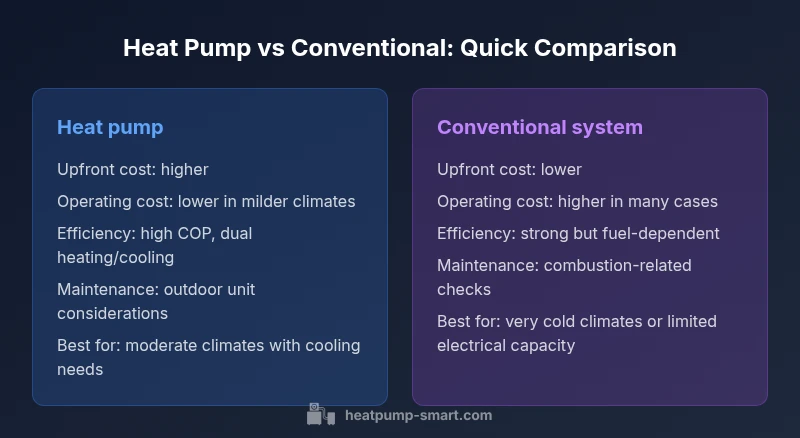
| Feature | Heat pump (air-source) | Conventional heating system (furnace/boiler) |
|---|---|---|
| Upfront cost | Higher upfront cost in most cases | Lower upfront cost typically |
| Operating cost | Lower operating cost in moderate climates with electricity | Higher ongoing fuel costs depending on fuel and usage |
| Energy efficiency | High efficiency (COP-based) | Dependent on fuel type and efficiency rating |
| Climate suitability | Best in mild to moderate climates | Reliable in extreme cold with fuel backup |
| Maintenance | Outdoor unit requires upkeep; refrigerant checks | Furnace/boiler maintenance and venting considerations |
| Emissions | Lower on-site emissions when powered by clean electricity | Fossil-fuel combustion emissions apply |
| Space requirements | Outdoor unit and indoor space; ducting may be needed | Indoor furnace/boiler and ductwork; space-efficient in existing builds |
| Incentives | Often eligible for rebates and incentives | May have fewer incentives; dependent on fuel and region |
| Best for | Moderate climates; cooling inclusion common | Cold climates or existing fuel infrastructure |
Advantages
- Higher energy efficiency in moderate climates
- Can provide cooling in addition to heating
- Lower emissions when powered by clean electricity
- Potential rebates and incentives
- Future-ready when paired with smart controls
Disadvantages
- Higher upfront cost in most cases
- Performance can drop in extreme cold without auxiliary heat
- Outdoor unit may require clearance and noise considerations
- Electrical upgrades may be needed in older homes
Heat pump generally outperforms conventional systems in efficiency and long-term savings for moderate climates.
Choose heat pump when climate and electricity costs favor electricity-powered heating. Opt for conventional if upfront cost or very cold, fuel-dependent winters are dominant considerations, or if electrical capacity is limited.
Your Questions Answered
Is a heat pump suitable for all climates?
Heat pumps perform best in moderate climates, but many cold-climate models and hybrids work well with backup heat. In very cold regions, fuel-based backup may still be needed. A professional assessment will determine suitability.
Heat pumps work well in moderate climates. In very cold areas, a backup heat source might be required, and a professional assessment will help confirm suitability.
What are the typical upfront and ongoing costs?
Upfront costs are typically higher for heat pumps due to equipment and installation. Ongoing costs depend on electricity prices and usage, but heat pumps often offer lower operating costs over time.
Upfront costs for heat pumps are usually higher, but ongoing costs are often lower thanks to efficiency.
Will a heat pump replace my conventional furnace?
In many cases, a heat pump can replace a furnace, especially in milder climates. In very cold areas, hybrids or auxiliary heat may be used. A system evaluation will confirm compatibility.
A heat pump can replace a furnace in many homes, but in very cold areas you might need auxiliary heat.
Do heat pumps provide cooling as well?
Yes, many heat pumps function as both heaters and air conditioners, offering year-round comfort in a single packaged system.
Yes. Heat pumps typically provide both heating and cooling.
What maintenance do heat pumps require?
Regular outdoor coil cleaning, refrigerant checks, and annual professional servicing are recommended, along with standard filter changes in the home. Proper maintenance preserves efficiency and reliability.
Keep the outdoor unit clean, check refrigerant, and schedule annual service.
Are there rebates or tax credits for heat pump installs?
Many regions offer rebates or tax credits for heat pump installations, especially when paired with insulation and air sealing improvements. Check with local utilities and government programs for current offers.
Yes, rebates and credits are often available; check local programs.
Top Takeaways
- Assess climate before choosing technology
- Model long-term costs, not just upfront price
- Consider hybrid or backup heat for cold spots
- Plan for insulation to maximize performance
- Check for available rebates and financing options